A vessel can disappear from tracking data, but Windward wants its visual signature to keep the story going. On November 3, 2026, Windward announced the acquisition of Azimut.ai, adding camera-based vessel identification to its Maritime AI platform and opening a new front in maritime visibility.
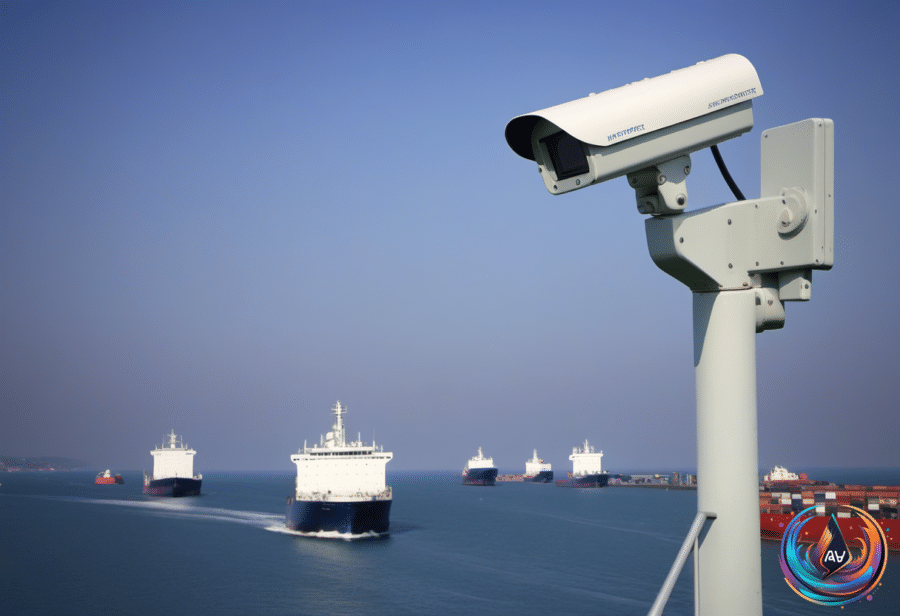
The deal gives Windward an optical sensing layer for ports and maritime chokepoints. Cameras placed at key thoroughfares are designed to identify and fingerprint vessels in real time, including ships that stop transmitting to evade detection. The result is a broader view of vessel activity, built from signals that do not depend on a ship continuing to broadcast its location.
A New Sensor Layer for Maritime AI
Ami Daniel, chief executive and co-founder of Windward, called the purchase “our first step in building a proprietary visual intelligence layer” intended to expand visibility at sea. That phrase points to the larger ambition behind the acquisition: visual identification should become part of a connected intelligence system, not a standalone camera tool.
Windward described the move as its first step into ground- and ship-based sensors, extending an all-source strategy that already uses AIS, satellite imagery and RF signals. The company plans to fuse visual identifications with ownership, sanctions, cargo and behavioral intelligence, adding those observations to the risk layers already available on its platform.
Why does that matter? A camera observation can show that a vessel is present, but Windward’s platform is designed to connect that sighting with a broader assessment of the vessel’s identity and activity. For government and commercial customers, the intended output is an explainable assessment from a single sighting rather than an isolated camera observation.
How Azimut.ai Turns Video Into Vessel Data
Azimut.ai’s product documentation describes software that works with existing EO/IR cameras, so the system does not require new hardware. It can combine multiple cameras and sites into one maritime-awareness map, creating a shared view across locations instead of treating every camera as a separate point of observation.
Its visual AI performs vessel detection, classification and sub-type identification in real time. A recognition function uses visual features to identify vessels and connect them with associated MMSI and ship details. The system also calculates a vessel’s position, course and speed from video alone, giving operators a set of navigational signals without relying on AIS transmission.
- Real-time vessel detection, classification and sub-type identification
- Visual recognition linked to vessels, MMSI and ship details
- Position, course and speed calculations from video alone
- Site-specific behavior learning over time
- Automated camera scanning patterns
- Real-time alerts for unusual activity
Azimut.ai reports that an Ashdod Port pilot detected and documented 464 targets and achieved vessel-detection ranges of up to 7,000 meters using standard day cameras. Those figures show the practical reach Windward is adding to its maritime platform, especially at busy ports and narrow maritime chokepoints.
From Camera Sighting to Explainable Risk Assessment
The acquisition fits Windward’s existing three-layer platform structure. Multi-source datasets form the operational picture; Maritime AI adds behavioral pattern recognition, vessel verification and anomaly detection; and customer-specific capabilities are designed around operational missions.
Visual identification now adds another input to that chain. A camera can detect a vessel, classify its type and estimate its movement, while Windward’s broader system can connect those details to ownership, sanctions, cargo and behavior. The platform is built to turn separate observations into one assessment that customers can understand and act on.
Privacy and security also shape the product. The system provides no raw images or video footage to customers, and it is intended to support analytics about vessel activity rather than identify or verify individuals. That keeps the focus on ships, movements and maritime risk.
Windward’s acquisition of Azimut.ai marks a clear expansion of what maritime intelligence can observe. AIS, satellite imagery and RF signals remain part of the all-source strategy, but cameras add a direct visual input at the places where vessels pass, gather and sometimes attempt to vanish from digital tracking.
The next phase will center on deployment at key thoroughfares and chokepoints, where visual identifications can feed the platform’s wider ownership, sanctions, cargo and behavioral analysis. If that connection works as intended, a single sighting will carry far more meaning than a camera alert alone—and Windward’s Maritime AI platform will see more of the activity unfolding at sea.
Based on
- Windward Acquires Azimut.ai to Add Visual Vessel Intelligence — unite.ai
- Seyond Expands Smart City Solution with LiDAR-Powered Operational Twin Capabilities and Technology Collaborations | Markets Insider — markets.businessinsider.com
- Watch How AI and Autonomous Aircraft Are Changing Warfare – Bloomberg — bloomberg.com
- NetApp Completes Acquisition of PEAK:AIO to Accelerate Zettabyte-scale AI Deployments | AFP.com — origin-zh9p7m-www.afp.com
- AI Is Moving Beyond Chatbots and Into the Systems That Keep People Safe | Currency News | Financial and Business News | Markets Insider — markets.businessinsider.com