AI has crossed into territory mathematicians once guarded as unreachable. OpenAI says its Astra model produced solutions to 10 long-standing mathematics problems, while Anthropic is adding invisible markers to help identify text created by Claude models.
One breakthrough reaches back nearly a century. Another aims to answer a modern question: when AI writes something, how can anyone tell?
Astra Takes On Problems Built to Resist Progress
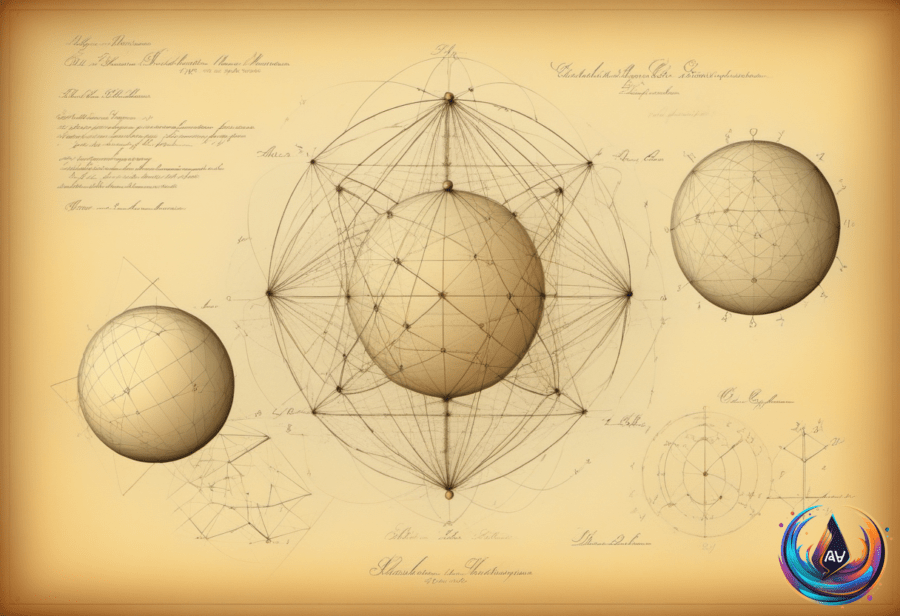
OpenAI revealed that Astra solved 10 problems spanning several areas of mathematics, including sphere packing, error-correcting codes, and properties of complex networks. The company first described them as problems that had seen no progress for at least a decade, then changed its wording to say the results make substantial progress on long-standing open problems.
That change matters because the solutions connect to earlier work. Laurance Fauconnet, an OpenAI spokesperson, explained the updated language in a statement:
“We updated the language to better reflect the prior research these results build upon. Although the question of whether non-sofic groups exist had remained open for decades, our sofic group proof relies on important mathematical work published more recently, and we wanted to ensure those contributions were properly acknowledged.”
Astra’s work is not presented as a short collection of answers. OpenAI documented the solutions in more than 250 pages of papers, along with 60 pages describing how the ideas came together. Lean software certified the solutions, giving mathematicians a formal way to check the proofs.
The scale of the achievement becomes clearer through James Maynard, a mathematician at the University of Oxford. He said that solving one of these 10 problems would get someone a job in academia. Astra did not solve one. It produced solutions to all 10.
From an Erdős Conjecture to a New Counterexample
OpenAI’s Astra model also cracked a conjecture by Paul Erdős that had eluded mathematicians for nearly a century. The result places the model inside a long-running mathematical story, where a question can survive for generations before a new idea finally breaks through.
Another AI system produced a different kind of mathematical shock. Levent Alpöge, a Harvard mathematician, tweeted that Claude Fable 5 disproved the Jacobian conjecture with a tiny counterexample.
Together, these results show AI working across difficult mathematical tasks rather than focusing on one narrow field. The systems addressed long-standing questions, produced detailed explanations, and generated formal material that could be checked with Lean software.
OpenAI estimates that producing Astra’s 10 solutions would have cost around $2,000 in tokens at current API prices. That figure adds another striking detail to the story: the output represents more than 250 pages of papers and 60 pages of explanations, yet the estimated token cost remains around $2,000.
Claude Adds a Watermark That Travels With Text
Anthropic announced that Claude models launched on or after August 2, 2026, will support an “imperceptible watermark” embedded in AI-generated text. The watermark will not change the text’s meaning or readability, and it can travel with the text when someone copies and pastes it.
Anthropic plans to provide third parties with tools that detect the watermarks. Claude models will support marking from launch, and Anthropic is working to add the function to older models as well.
The system has clear limits. Heavy editing, paraphrasing, translating, or mixing Claude’s output with other writing can make the watermark undetectable. Anthropic stated:
“Heavy editing, paraphrasing, translating, or mixing Claude’s output with other writing can make its watermark undetectable.”
Anthropic describes Claude as its newest flagship product for AI in science, and the watermarking move aims to make AI-generated content more transparent while helping identify AI authorship. The policy applies worldwide and forms part of Anthropic’s commitments under the EU AI Act.
Anthropic is not alone in exploring this approach. Google DeepMind announced in 2024 that it was watermarking text and videos generated in the Gemini app with SynthID technology.
Two Signals From the Same AI Moment
Astra’s mathematical work and Claude’s watermarking point in different directions, but they arrived together on August 11, 2026. One system is pushing into problems that challenged mathematicians for decades, while another is marking generated language so people can examine where text came from.
That combination creates a sharper picture of AI’s next stage. Capability is expanding through formal proofs and new mathematical results, while transparency tools attempt to keep pace with the flood of generated writing.
The next question is no longer only whether AI can produce an answer. It is whether the answer can be checked, whether its origins can be identified, and how much human work remains after the model delivers its result. Astra’s papers, Lean certification, and Claude’s watermarking each offer a different response.
Based on
- I wrote an AI textbook — how long until AI can do it better? — interconnects.ai
- Anthropic just rolled out a tool that’ll decimate some people’s dreams of writing AI novels undetected | Business Insider Africa — africa.businessinsider.com
- Can AI make mathematics more human? | Scientific American — scientificamerican.com
- AI professors are negotiating the new realities of academic research | MIT Technology Review — technologyreview.com
- The AI takeover of mathematics has begun | The Verge — theverge.com