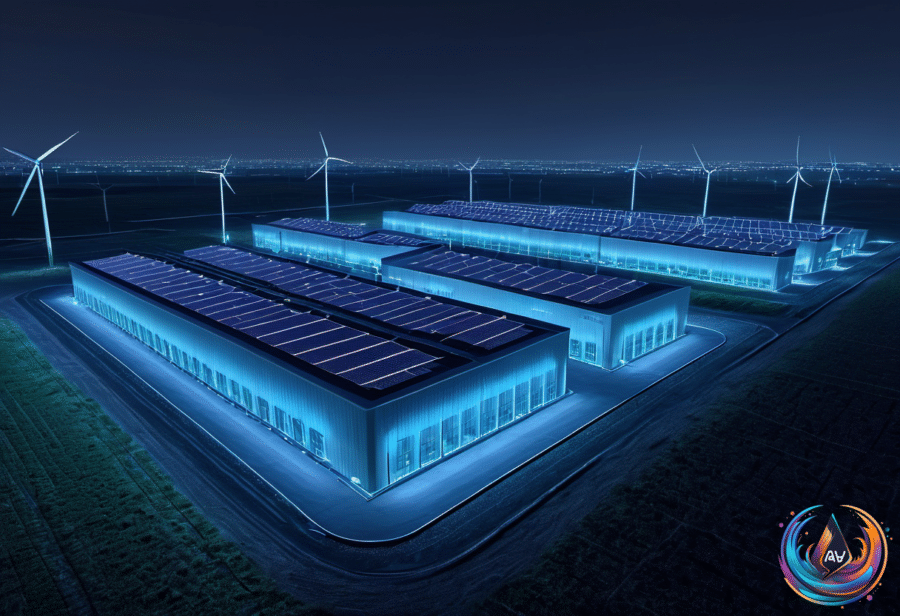
Artificial intelligence has taken over the conversation at Climate Week, where leaders are weighing a difficult question: can AI help solve the climate crisis while its own energy demands make the problem harder?
The debate began as Climate Week talks opened on September 21, 2026. On the first day of the assembly, UN Secretary-General António Guterres connected the future of AI with the worsening climate emergency. “The climate crisis fuels instability and displacement. Artificial intelligence could help solve all these challenges, or it could make them worse,” he said.
That tension is hard to ignore. The world has nearly passed the point where it could possibly keep warming below 1.5 °C above preindustrial levels, while the systems needed to run AI are driving new demand for electricity. Data centers are expected to use about 1.5% of global electricity, rising to 3% by the end of the decade.
AI investment is reshaping climate technology
Money is already moving toward the infrastructure behind the AI boom. Global climate-tech investment from venture capital reached $26 billion in the first half of 2026, and products and services for data centers are taking a massive slice of that total.
The shift has come as investment in other climate areas loses ground. Venture capital funding for carbon management and low-carbon fuels plummeted this year, while fundraising for climate-specialist venture firms in 2025 fell nearly 40% from 2024. Startups working in energy, critical minerals, and supply chains, however, are attracting more capital than ever.
Dawn Lippert, CEO of Earthshot Ventures, raised $250 million for a climate-focused fund in June. Her result stands out in a tougher fundraising market, where investors are directing more attention toward the systems that can support growing electricity demand and industrial supply chains.
The investment pattern has drawn attention from people across the climate and technology sectors, including Mike Schroepfer, founding partner of Gigascale Capital, and Tatiana Shalalvand, a partner at Cherry Ventures. Bill Hare, CEO of Climate Analytics, Francesco La Camera, IRENA’s Director-General, and Johan Rockström, Director of the Potsdam Institute for Climate Impact Research, are also among the named figures connected to the wider climate discussion.
The emissions problem behind the promise
AI could still speed progress in areas such as the search for new catalysts. That kind of discovery could help develop cleaner technologies, but the benefits will depend on how much electricity AI consumes and where that power comes from.
Microsoft, Google, and Meta all set ambitious goals to reduce greenhouse-gas emissions. Their emissions have risen instead, largely because they need more data centers to power AI. The companies’ experience shows why climate promises are becoming harder to separate from decisions about computing infrastructure.
MIT’s Evelyn Wang expects data centers to stop adding to planet-warming emissions in about a decade. Until then, the energy-intensive technology is putting pressure on governments, utilities, and companies to build more electricity supplies and make power grids more reliable.
“We need to move faster, electrify faster and build the systems to support it,” said Francesco La Camera.
That pressure is showing up in everyday concerns, too. “This is about what’s happening to my electricity bill,” said Mar Zepeda. The comment captures a central challenge for AI: its climate impact is not limited to distant emissions figures. It can also affect the cost and reliability of electricity.
Renewables are growing, but not fast enough
Global renewable power capacity increased by a peak of 693 gigawatts in 2025. That was a record expansion, but renewables are still not reducing oil, coal, or gas use enough to meet climate targets.
Military actions by the US and Russia have caused oil and gas shortages, driving up prices and accelerating renewable energy adoption. Even with that added push, the growth of clean power has not matched the scale of the climate challenge or the new demand created by AI.
That gap explains why skepticism toward AI remains strong in the climate sector. Critics worry about the technology’s environmental impact and whether it can keep public support while consuming more energy. UN climate chief Simon Stiell put the concern bluntly: “AI leaders are now on thin ice when it comes to license to operate, and sinking deep underwater when it comes to public support.”
Jennifer Morgan offered an even sharper assessment: “In some ways AI is becoming more vilified in climate talks than the fossil fuel industry, but the industry has always been good at deflection.”
The debate at Climate Week is not simply about whether AI is good or bad for the planet. It is about whether investment, electricity supplies, reliable grids, and emissions cuts can move together quickly enough. AI may help find new climate solutions, but its credibility will depend on what happens behind the screen: how much power its data centers use, how that power is generated, and whether the public sees a real climate benefit.
Based on
- AI is dominating the conversation at Climate Week — technologyreview.com
- Climate Week talks balance hope for clean energy against uncertainty over artificial intelligence – The Washington Post — washingtonpost.com
- World leaders in New York to grapple with climate. Fuel prices, AI and disasters complicate things | The Independent — independent.co.uk
- Climate tech VC fundraising is down almost 40%, but AI is driving deals | Fortune — fortune.com