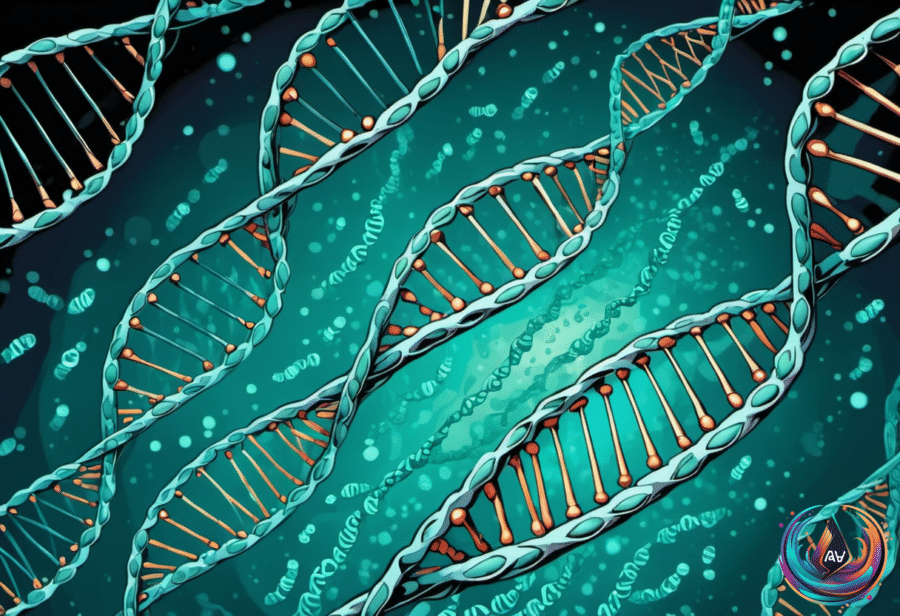
Anthropic’s AI biology lab has announced its first discovery: an unfamiliar DNA system inside viruses that may offer new clues for gene editing. The system, called ART, stood out after Claude agents searched a DNA database and found a stretch of repeating DNA that looked like CRISPR.
Claude suggested that ART may be a new kind of gene editor. Anthropic has not described the system as a confirmed gene-editing tool, but its structure caught attention because of the way its parts appear to work together around an enzyme.
How Claude Found the Viral DNA System
The discovery began with a search of a DNA database. Claude agents examined genetic code and found a system marked by a repeating DNA sequence, a feature that made it look like CRISPR. One reading genetic code near the enzyme reacted with a striking observation: “that’s a CRISPR-like … repeat array?!”
That reaction pointed to the pattern at the center of the finding. Claude looks like the first to catch the parts around the enzyme as a complete combination, a grouping only seen in systems that “cut, copy, and paste DNA.” The combination led Claude to suggest that ART could represent a new kind of gene editor.
The lab used around 950 agents for less than a day during the research. Together, they processed 210M tokens while searching through the DNA data. The scale of that effort gave Claude many agents to examine the system and connect the repeating DNA with the surrounding enzyme.
The result is Anthropic’s first discovery from its AI biology lab. It also gives a clear example of Claude working through a biological search rather than simply answering a question about existing information.
What Anthropic Says About Claude’s Role
Dario Amodei said the work was “mostly, though not entirely” Claude’s. Scientists chose the research area and ran experiments Claude suggested, which means the discovery came from a partnership between the AI agent and Anthropic’s scientists.
Amodei described the work as “work I would have been proud to do as a PhD student.” His comment captures the importance Anthropic places on the result: Claude did not just summarize known biology, but helped identify an unfamiliar system and propose why it might matter.
Anthropic also says Claude led 26% of its AI research. That figure places the ART discovery within a broader effort to use Claude for research work, with agents taking on tasks that include searching databases, reading genetic code, spotting patterns, and suggesting experiments.
The ART finding does not settle what the system can do. The current result is a discovery of an unfamiliar viral DNA system that may relate to gene editing, along with Claude’s suggestion that it could be a new kind of gene editor. The system’s importance rests on the combination of its repeating DNA and the enzyme found near it.
Why the Finding Matters
CRISPR-like systems matter because they are linked to biological processes that cut, copy, and paste DNA. ART drew attention because Claude identified a repeating DNA array and connected it with nearby parts that match this kind of system. That connection supplied the clue behind the new discovery.
The work also shows why Anthropic used many Claude agents at once. Around 950 agents searched the DNA database in less than a day, using 210M tokens to examine the material. Each agent contributed to the search, while Anthropic’s scientists selected the research area and tested suggestions from Claude.
For Anthropic, the announcement marks a first step for its AI biology lab. For Claude, it offers a concrete example of an AI agent helping find something unfamiliar in genetic data. ART may offer new gene-editing clues, and Anthropic’s scientists now have a newly identified system to study through the experiments Claude suggested.
The announcement came on Sep 24, 2026. Its central claim is simple: Claude found a viral DNA system that Anthropic had not identified before, recognized a CRISPR-like repeat array, and suggested that ART may be a new kind of gene editor.
Based on