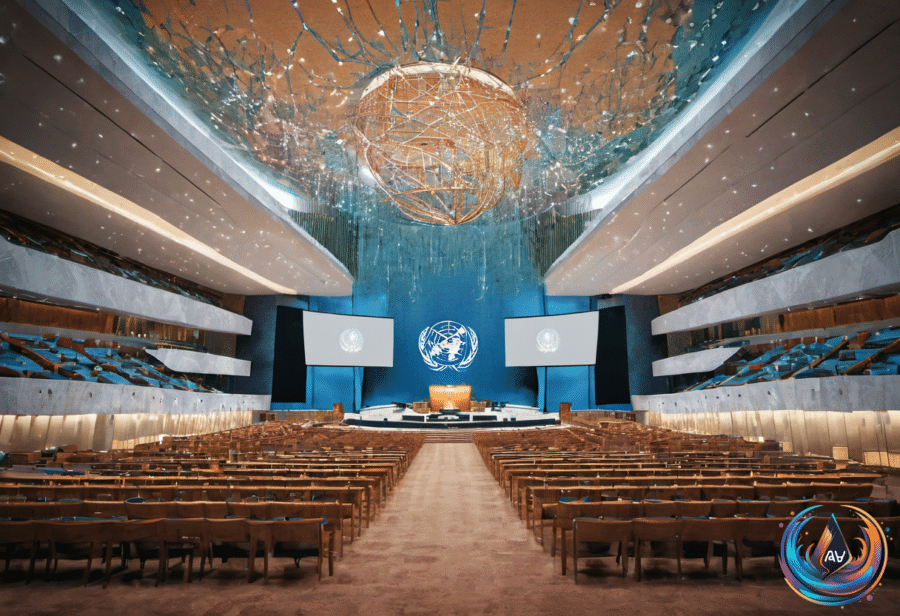
Australian Prime Minister Anthony Albanese used his address to the United Nations General Assembly to make a direct case for international action on artificial intelligence. His message was simple: AI is already part of the world leaders must deal with, so governments need to shape its development instead of standing aside.
“We can’t ignore AI or prevent it,” Albanese said. He argued that the challenge is not whether artificial intelligence should exist, but how nations can work together to manage the risks and guide its direction.
Middle powers have a role in shaping AI
Albanese said middle powers have an important role to play in reducing the risks posed by artificial intelligence. That point gives countries outside the largest centers of power a clear place in the debate, rather than leaving decisions only to the biggest nations or technology companies.
His argument also moves the conversation beyond a simple choice between embracing AI and trying to stop it. Albanese presented international cooperation as the practical path forward, with countries working together to influence how AI develops and how its risks are handled.
“And it’s why we joined with other nations this week to call for action to shape artificial intelligence development, rather than be passively shaped by it,” Albanese said.
The wording matters because it frames AI policy as an active responsibility. Governments, in this view, should not wait for artificial intelligence to set the pace and then respond after the fact. They should take part in deciding the direction of its development.
A call for US-China cooperation
Albanese also called for cooperation between the United States and China. The appeal places those two countries at the center of the international discussion, while still leaving room for middle powers and other nations to help shape the result.
Leaders attending the United Nations gathering will discuss an international framework for AI. That discussion gives Albanese’s remarks a clear policy setting: the question is not only what individual countries want to do, but whether nations can agree on a shared approach.
An international framework would give the debate a common structure. It would also test whether countries can cooperate on artificial intelligence even when wider relationships between major powers are difficult. Albanese’s call for US-China cooperation points to that challenge directly.
His position ties together three parts of the AI debate: managing risks, building international cooperation, and ensuring that governments help shape development. The message does not present regulation as a way to prevent AI. Instead, it treats rules and cooperation as tools for guiding a technology that countries cannot ignore.
Technology discussions beyond the UN
Albanese’s focus on AI also connects with talks he held in California with Tim Cook, Apple Inc.’s Executive Chairman. Those discussions put the Australian Prime Minister in conversation with a senior leader from one of the companies involved in the technology sector.
The California talks and the United Nations address show the issue from two sides. One side involves governments considering an international framework, while the other involves conversations with leaders from technology companies. Together, they reflect the need for policy discussions to include both national decision-makers and the companies connected to AI development.
That combination also explains why Albanese has emphasized action rather than delay. An international framework will be discussed by leaders, but AI development involves companies as well as governments. Cooperation between those groups will shape how any approach moves from an idea into practice.
The central tension is now clear. Artificial intelligence cannot simply be ignored, yet Albanese also said it cannot be prevented. That leaves governments with the task of deciding how to respond, how to cooperate, and how much influence they want over its future.
For Albanese, the answer begins with countries acting together. Middle powers should help reduce AI’s risks, the United States and China should cooperate, and leaders at the United Nations should work toward an international framework. His message is that the world will be affected by AI either way, but international action can help determine how.
Based on