Andy Burnham is heading for the global stage. As UK Prime Minister and G20 president-designate, he is preparing to lead the group when Britain assumes its presidency in 2027, with artificial intelligence regulation and food security among the priorities already taking shape.
The last UK G20 presidency came in 2009, when Gordon Brown chaired the group during the rescue of the global economy after the financial crash. Brown secured agreement on a $5tn fiscal stimulus among member states, increased International Monetary Fund lending to developing countries, and created the Financial Stability Board as a new global coordinator for financial regulation.
That record gives Burnham a useful benchmark, though the world has managed to produce a different pile of problems since then. The G20 has no headquarters, staff, or standing website, so its influence depends on whether leaders can turn a temporary gathering into decisions that survive the cameras.
The G20 has power without much machinery
The group’s structure makes the presidency both awkward and valuable. It offers no permanent institution to carry a programme forward, yet the summit gives the host country a rare platform to force issues into the centre of international politics and impress its domestic audience.
In 2009, that platform produced results. The $5tn fiscal stimulus helped coordinate the response to the financial crash, while the G20 later supported the suspension of developing countries’ debt during the Covid pandemic in 2020 and established a “common framework” for debt treatment.
That history also shows the limits of the format. Donald Trump boycotted the G20 in 2020, when Cyril Ramaphosa was South African president, and the group’s achievements depend on governments choosing cooperation over performance. A summit can create momentum, but it cannot manufacture agreement from leaders who arrive seeking only a backdrop.
The contrast with 2009 is clear in the words exchanged by the leaders. Barack Obama said, “Gordon has a plan.” Nicolas Sarkozy said, “none of us has a plan”. The difference was not literary. It described whether the summit looked like a place where governments could act together.
Burnham wants AI rules with domestic stakes
Burnham has said he wants to focus on domestic policy during the UK’s G20 presidency, while also pursuing a global treaty on the regulation of artificial intelligence. That combination gives Britain a chance to lead the world towards a global agreement on AI control rather than treating regulation as a collection of national arguments.
The challenge is political as much as technical. A treaty would need governments to agree on how artificial intelligence should be controlled, while the G20 itself has no permanent staff or headquarters to supervise the work. The presidency can put the subject on the agenda; it cannot make other countries sign up by sheer force of British optimism.
Burnham’s wider project is to restore hope within the Labour Party by presenting a future vision for the UK. His G20 priorities connect that domestic message to issues that reach beyond Britain: AI regulation, food security, debt treatment, and the conditions shaping work and economic security.
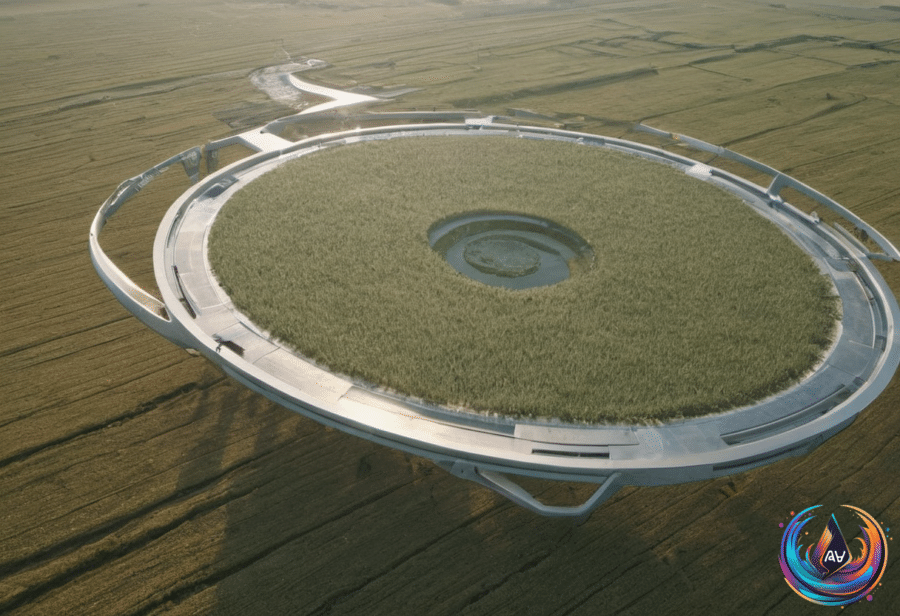
Food security gives the presidency another test with immediate consequences. The incoming “supersized” El Niño weather pattern is combining with the climate crisis, soil and biodiversity loss, and the impact of the war, while dried-up paddy fields in Jonggol, West Java, Indonesia, were recorded on 17 September 2026 as El Niño affected the climate.
Those pressures make food security a practical measure of whether the G20 can do more than issue polished declarations. Climate disruption, damaged soil, biodiversity loss, and war do not arrive in separate policy folders, however convenient that arrangement might be for summit communiqués.
The next G20 host is the US, with the 2025 summit scheduled for a venue near Miami in December. That meeting will provide an early indication of how much appetite remains for multilateral cooperation, with one assessment expecting “a show of personal and US power and very little attempt to achieve anything by way of multilateral cooperation”.
Burnham will inherit that unresolved question in 2027: can the G20 still coordinate action when its members disagree on almost everything else? The answer will depend less on the grandeur of the summit than on whether his presidency produces an agreement governments can use after the flags and podiums disappear.
Based on
- The UK’s G20 presidency will push Andy Burnham to the centre of the global stage. What will he use it for? | Michael Jacobs — theguardian.com
- Is this how Andy Burnham sees the future of work? | Andy Burnham | The Guardian — theguardian.com
- U.K.’s Burnham restores some hope, but near-term fixes prove elusive – The Japan Times — japantimes.co.jp