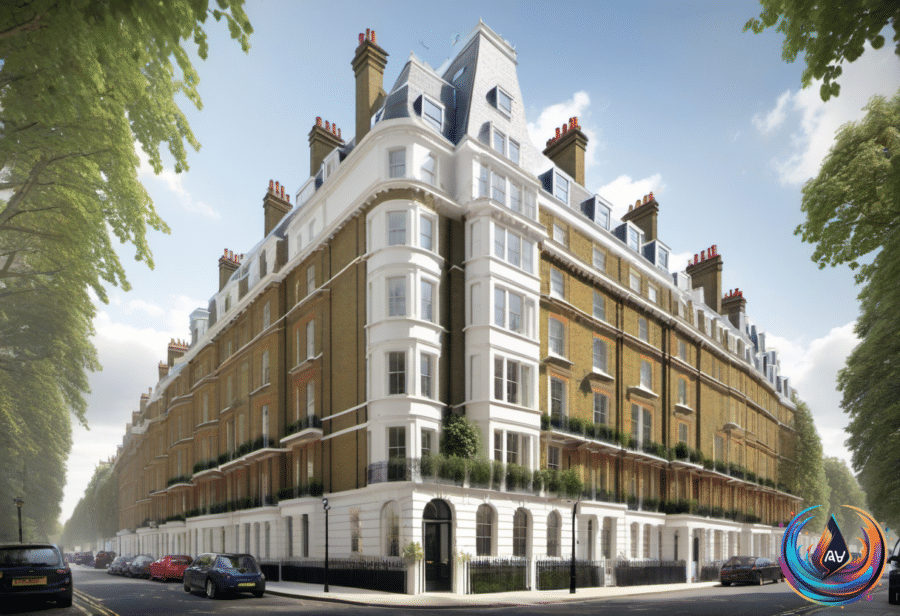
Anthropic’s IPO could mint a new class of London property buyers. The AI developer behind Claude is preparing to float on Wall Street at a valuation of up to $1.4tn (£1.1tn), creating paper fortunes for thousands of employees while putting fresh pressure on the city’s high-end housing market.
Jo Eccles, a buying agent who sources off-market properties for ultra-wealthy clients, says tech buyers already arrive with budgets from £2m to £40m. “We worked with a young tech entrepreneur with a substantial budget, who agents assumed was looking to rent a one-bedroom flat,” she said. Anthropic’s millionaire factory promises to expand that buyer group.
Anthropic employs about 5,000 people worldwide, including more than 200 in the UK. Its IPO is likely to turn more than 4,000 staff into millionaires as their stock options vest, while SaaStr, a California research firm, estimates the minimum value generated for staff at the AI lab will be $20m each.
Those figures sit beside a company that was founded in San Francisco in 2021 and now plans a London office capable of accommodating up to 800 people. Anthropic’s UK filings show that it spent £24.1m employing an average of 43 staff in 2024 alone — a mean average of £560,000 per person — while job listings this year advertised base salaries of up to £630,000 for research engineers before stock options.
London’s AI corridor gets richer
The flush of technology cash is already visible in London’s commercial property market. Shoreditch earned the nickname Silicon Roundabout, but US AI firms are expanding at pace in the UK and clustering inside the King’s Cross “knowledge quarter”, where Anthropic, OpenAI and Meta work a stone’s throw from each other.
OpenAI staff in London received £2.3m each on average last year, about 58 times median UK full-time employee earnings. That puts them on par with partners at top law firms such as Linklaters and Clifford Chance, and ahead of some City bankers — because apparently the old routes to wealth needed competition from chatbots.
Alex Gerko, the billionaire founder of the trading firm XTX and an early Anthropic investor through the business’s venture arms, is expected to make hundreds of millions of pounds in paper gains when the company joins the stock market this week. The area also carries the older success story of Demis Hassabis, who co-founded DeepMind in 2010 and sold it to Google for £400m four years later; Isomorphic Labs, an AI drug discovery startup now owned by Google parent Alphabet, is also there.
A huge valuation with expensive questions
Anthropic is aiming to sell 825m shares priced between $70 and $78, raising up to $64.4bn, while a separate private placement could provide another $26bn. Other estimates put the offering above $61bn or describe the total raise as $90bn, with the company seeking a valuation between $1.3 trillion and $1.4 trillion; the planned Nasdaq ticker is ANT.
That ambition falls short of the $2tn valuation once expected before investors began questioning the durability of the AI boom. Anthropic has reported over $16bn in revenue for the first half of the year, 14 times its previous year’s performance, but it remains unprofitable because AI development costs keep consuming cash.
Michelle Lowry, a finance professor at Drexel University, said investors usually value companies by discounting future money or comparing them with similar listed firms. “In the case of Anthropic, both of these approaches are quite difficult,” she said, because Anthropic is still burning cash and has few listed peers.
SpaceX is the closest comparison mentioned, after making a record Wall Street debut in June with a $1.77tn valuation. Minmo Gahng, an assistant professor of finance at Cornell University, said, “There’s some back and forth process” between companies seeking to go public and institutional investors, with investment banks acting as intermediaries.
The company wants its share price as high as possible; investors want confidence they can sell at a profit and hope for a first-day jump. Anthropic co-founder and CEO Dario Amodei offered the company motto “underpromise and overdeliver” when discussing the flotation, saying Anthropic is going public mainly because it needs funding.
Jay Ritter, an IPO specialist at the University of Florida, said investors accept huge valuations because companies such as Amazon, Alphabet and Nvidia have shown “you can earn profits of $100 billion a year or more without competition eroding those profits.” He added that there is “no guarantee” Anthropic will do the same, warning that within 10 years open-source models could become good enough and cheap enough to leave frontier language models behind.
Anthropic’s structure adds another test. The company is a public benefit corporation that pledges to pursue humanity’s long-term interests through responsible advanced AI development, dedicate at least 5% of its stock to a public benefit fund and donate 80% of its founders’ wealth.
Its Long-Term Benefit Trust is intended to operate independently, using a special Class T common stock — a single share with no economic rights — that lets five trustees vote as a unit. The trust generally has authority to elect and remove Class T directors, with three board directors elected by the trust, three by other shareholders including founders holding a 50.1% voting majority, and a seventh nominated by the trust and Class T holders.
The seventh director cannot be appointed or removed without the board’s nominating committee, expected to be controlled by the founders. The trust cannot determine everyday decisions by the directors or company management, leaving the central question intact: whether mission protections survive when public investors demand returns.
As Sarah Kreps put it, “I think then the real test emerges if and when the question of public benefit becomes costly” — or conflicts with profit. The listing will make Anthropic more transparent through required financial reporting, but transparency is not the same as control. London’s property market may get its new millionaires; the harder asset to value will be the company’s promise.
Based on
- Millionaire factory: Anthropic IPO set to fuel AI gold rush in London’s high-end property market — theguardian.com
- Anthropic’s IPO: How do you price the future of AI? | AFP.com — origin-zh9p7m-www.afp.com
- Anthropic targets valuation of up to $1.4tn in stock market flotation | Anthropic | The Guardian — theguardian.com
- Anthropic promises to pursue humanity’s benefit. Its IPO filing gives it wiggle room | The Independent — independent.co.uk
- Anthropic seeks IPO valuation. What we know about stock release date | The Independent — independent.co.uk