America’s past can feel distant until the same questions begin showing up again: Who holds wealth? Who holds power? And can a democracy survive when both gather in the same hands? Historian Beverly Gage has spent years exploring those questions across the country, tracing the people, places, and turning points that shaped America over its 250-year history.
Her book, This Land is Your Land, grew from that journey. Gage toured the Driehaus Museum and nearly 300 other sites around the country, looking at the physical places where American ambitions, conflicts, and movements took shape. Her route leads from grand cultural institutions to industrial neighborhoods and the home of a union organizer whose ideas still speak to modern debates.
A New Age of Wealth and Power
The Gilded Age brought new concentrations of wealth and power, along with a basic argument about the country’s future. Could America remain a democracy when so much influence sat with a small number of wealthy people? Gage describes that concentration as the central story of the era, not just a side effect of economic growth.
“The big story of the Gilded Age is not only about these new concentrations of wealth, but the concentrations of power that that produced,” Gage says.
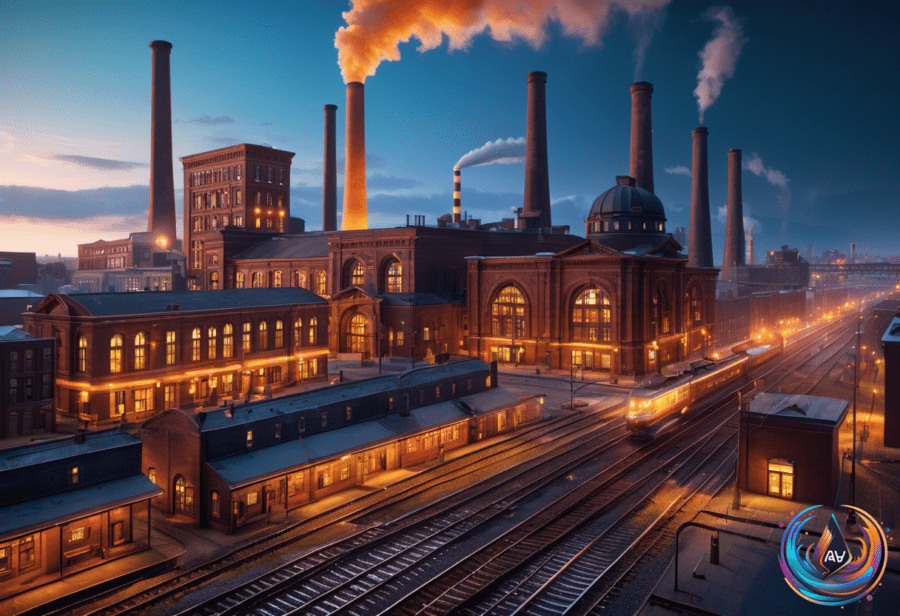
Chicago became a symbol of that transformation. Industrialization created fortunes overnight, and wealthy residents funded new cultural institutions, including public libraries, high art, and classical music. The city presented itself as a model of modern life, a place where ambition could be turned into grand buildings and public culture.
“People start to look to a place like Chicago and say, that’s the future. That’s the future of America. But then that’s the future of modern civilization,” Gage says.
The scale of those ambitions is still visible in the city’s cultural landmarks. Looking at one of them, Gage says, “This was the Palace of Fine Arts. And if you look at it, you can see the scale of ambition.”
But Chicago’s growth carried a heavy cost. The city faced class conflict, poor housing, pollution, homelessness, and employment insecurity. Movements emerged to criticize the concentration of wealth and power as unjust, showing that the Gilded Age produced not only fortunes and institutions but also organized resistance.
Pullman and the Fight Over Work
Pullman brought those tensions into one company town. Planned as an industrial community in Chicago, Pullman became known for luxury railcars and a strict housing system divided between executives and workers. The town reflected the hierarchy of the workplace, with company control reaching into the homes where employees lived.
That arrangement broke down during the Pullman strike of 1894. Workers faced wage cuts while company town rents remained high, creating a conflict over both pay and the cost of living. The strike began on May 11, 1894, and lasted until mid-July. The federal government broke the strike with the involvement of the National Guard, turning a local labor dispute into a national conflict.
Alfonso Quiroz, a 90-year-old former Pullman worker, is the last living Pullman worker in the community. His connection to that history gives the strike a human scale: this was not only a dispute over industrial policy, but a fight that shaped the daily lives of workers and their families.
Roderick Lewis of the Pullman House Project helps preserve that story, while the community itself remains a reminder of how employers could control both jobs and housing. The questions raised there still connect work, wages, security, and power in ways that are easy to recognize.
Eugene Debs and Questions That Remain
Eugene Debs came from Terre Haute, Indiana, where his two-story frame house remains tied to his legacy. A union organizer, Debs created the American Railway Union, whose support helped turn the Pullman strike into a national conflict. The strike led to his imprisonment, but it did not end his political life.
Debs later became a Socialist presidential candidate five times. At the Eugene V. Debs Museum, director Allison Duerk connects his work to questions about safety, wars, immigration, speech, and economic benefit. Those subjects may belong to another era, but they still shape arguments about what people owe one another and how power should operate.
“I think these are still fundamental questions about our role in this world today too,” Duerk says.
Gage describes the present as a second Gilded Age, pointing to labor statistics that resemble those of the original period. Labor power in the United States held a strong position in the mid-20th century, but it has declined since then. That change gives the comparison its force: the issue is not simply that wealth exists, but that workers may have less power to challenge the institutions controlling their pay, housing, and security.
History does not offer a simple script for the present. It does show how cultural achievements, industrial fortunes, social hardship, and labor movements can grow from the same period. Chicago’s museums and grand buildings tell one part of the Gilded Age story. Pullman, the strike, and Debs tell another.
Together, they point back to the question Gage places at the center of her work: whether democracy can withstand concentrated wealth and power. That question began in the Gilded Age, but it did not stay there.
Based on