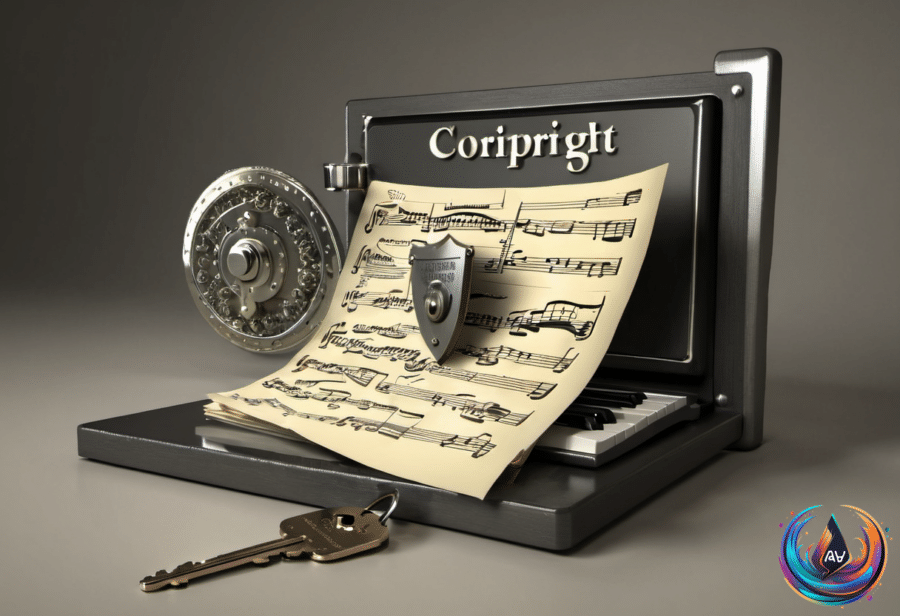
Australia is being asked to choose between copyright and AI investment. The International Federation of the Phonographic Industry (IFPI) has warned that weakening copyright protections for AI companies would be a “disaster for creativity”. The global peak body represents recording industry bodies worldwide and says the proposed bargain would let AI companies train on music without adequate protections.
The warning arrives as the Albanese government considers copyright changes within a broader package of AI policy overhauls. Labor is also examining policy covering datacentres, online safety, the workforce, energy and the economy — because apparently one complicated technology policy fight was not enough.
Victoria Oakley, IFPI’s CEO, said Australia should not accept demands that other nations have rejected. She described the prospect as “ridiculous and dangerous” and warned that Australia could become the weakest link in global copyright protection.
“Why would Australia do this?” Oakley said. “Why would a sophisticated, democratic country that has a phenomenal cultural power of its own, choose to make this very odd decision and buy into the promises of a few large AI companies, and throw away their own culture and creativity?”
The safe harbour problem
AI companies have requested changes that would allow them to train models on copyrighted material under Australia’s law. Some companies have rejected licensing agreements under the existing framework, arguing that negotiating permissions is too difficult, while large AI companies say they need legal certainty before investing in Australia or training models there.
Anthropic has suggested an “opt-out” model. Under that approach, AI companies could scrape content unless rights holders took action to signal an objection — shifting the burden from the companies using creative work to the people who made it.
Oakley said AI companies had made similar proposals in the US, UK and other nations. She argued that Australia should not give in to demands that could turn copyright relaxation into a global chain reaction.
“You just need one safe harbour, because then you can train on music from anywhere in the world,” Oakley said. “So this isn’t just about Australian music and Australian culture; it’s about music and culture everywhere.”
That is the central concern for the recording industry: a change written for Australian law could affect copyright material from anywhere in the world. IFPI members fear a “contagion” effect if Australia agrees to a model other countries have rejected, even if the immediate policy is presented as a way to attract investment.
“I just don’t think it’s true that you will only get investment or growth, or be seen as pro-innovation, if you entirely give in to the demands of AI companies,” Oakley said. She also warned that such a decision would damage Australia’s standing in the creative world and said she worried about AI and copyright “everywhere”.
Promises, pressure and public safeguards
Prime minister Anthony Albanese has promised “the strongest possible protection” for creators and warned it would be “theft” if creatives were not paid for their work. Attorney general Michelle Rowland said through a spokesperson last week that the government was “committed to supporting” creatives and pledged that “any future copyright changes deliver meaningful control and fair compensation”.
Those promises now face a test against the government’s wider AI agenda. Oakley said, “We’ve been talking to capitals around the world, saying ‘are you seeing what’s going on in Australia?’ We think this is a disaster for creativity.” She declined to speculate on possible legal or constitutional challenges.
The economic case for rapid AI concessions is also under pressure. Australians are yet to see the benefits of AI and datacentres, while the Reserve Bank said datacentres were part of growing “inflationary pressures” when it lifted interest rates to an 18-year high.
That does not settle the copyright debate, but it weakens the idea that every datacentre and model-training proposal arrives wrapped in guaranteed public benefit. Investment claims still need to be weighed against the cost of removing control from creators — a radical exchange disguised as paperwork.
Another warning concerns how AI systems already affect government decisions. Dr Catherine Williams, chief executive of the independent thinktank the Centre for Public Integrity, said the federal government was “sleepwalking its way into another robodebt” scandal amid a lack of transparency and legislation around algorithms and AI.
Williams launched the centre’s “Computer Says No” report on Thursday. The report examines automated decision-making tools used by government, calls for urgent reform and raises concern that Australians may not know whether automated decision-making has been used in decisions affecting them.
Together, the copyright and government-automation disputes point to the same policy failure: technology is moving faster than accountability. Australia can pursue AI investment without treating creative work as free training material or allowing opaque systems to make decisions beyond public scrutiny.
For IFPI, the immediate question is whether Australia protects its own cultural power or trades it for promises from large AI companies. Oakley’s answer is blunt: “I don’t think Australia wants to be the weakest link in this situation, the one that believed the promises and gave in and threw creativity under the bus on behalf of everyone else. That doesn’t feel very Australian to me.”
Based on
- Weakening AI copyright law will spell ‘disaster for creativity’, global music body warns Albanese — theguardian.com
- Australians are yet to see the benefits of AI and datacentres – and US midterms show they could be political kryptonite | Datacentres – Australia | The Guardian — theguardian.com
- Albanese government warned it is ‘sleepwalking into another robodebt scenario’ over use of algorithms and AI | Australian politics | The Guardian — theguardian.com
- To Save Australia’s Economy, Albanese Must Share the AI Gains and Budget Pains – POLITICO — politico.com
- First 10 Australian songs inducted into the National Songbook after ‘very robust’ judging | Australian music | The Guardian — theguardian.com