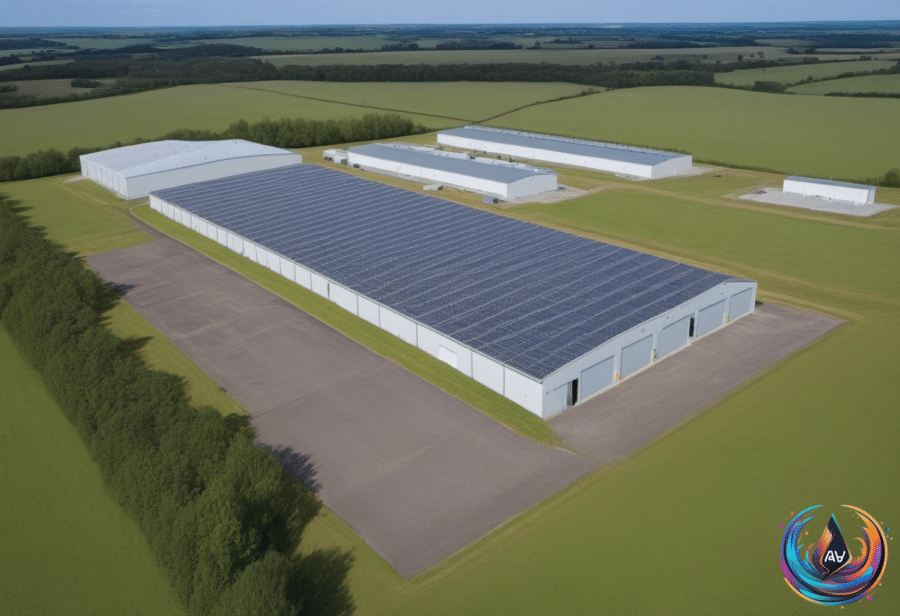
America’s midterm elections delivered a clear warning to the companies building the physical backbone of artificial intelligence: voters want limits, local control and a fair share of the costs. Data centres appeared on ballots in at least 40 jurisdictions across 10 states, and voters rejected data centre development in all but one of 41 measures.
The result may not have cowed Donald Trump, but it should concern the technology leaders who stood beside him at his inauguration two chaotic years ago. The Democratic wave had many causes, including the cost of living squeeze linked to Trump’s war in Iran, but AI was also on the ballot. In many places, it was there literally.
Voters push back against the machines next door
Voters approved dozens of bans, moratoriums and restrictions on data centre expansion. In Ohio alone, at least 14 municipalities adopted limits, including Sunbury, where Amazon has proposed a $2bn data centre project. Nearly every data centre moratorium on the ballot passed.
Two races were still being counted, but they were expected to produce majorities against or limiting data centres. The only exception was Harwood, North Dakota, a town with fewer than 800 people. Voters there defeated a measure that would have required independent reviews of large industrial projects before construction.
The strength of the vote reflects a concern that has moved beyond technology policy. The public was asked to accept the disruption for the greater economic good AI would bring, but the trade-off looks different when a huge building arrives beside a home, uses vast amounts of power and changes the local landscape.
At a campaign event, Texas senator-elect James Talarico recalled meeting a mother whose son believed it was daytime in the middle of the night because lights from a neighbouring data centre were so bright. In Corpus Christi, severe drought left the reservoir at just 8 percent of its capacity earlier this year, putting the city at risk of running out of drinking water. Talarico proposed closed-loop water systems and called on operators to fund local infrastructure improvements; he won the city by a 12-percentage-point margin.
There are already 3,000 data centres in the country, with more than 1,500 others in progress. Their growth has been driven in large part by AI, while a 2026 working paper from the Federal Reserve Bank of Dallas estimated that data centres had pushed wholesale electricity prices up by 6.9 percent as of last year.
A bipartisan revolt with household costs at its centre
Public concern crosses party lines. A September poll found that 70 percent of Democrats and 57 percent of Republicans supported limits on new data centre construction. A midterm voter poll found that 56% of surveyed voters considered data centres a “crucial or major” factor in their vote, while 76% said they would oppose a new facility in their community.
That opposition was stronger among Democratic voters, but data centres ranked below government corruption, which reached 90%, and the cost of living, at 89%, among issues described as a “crucial or major factor”. Other polling found that about half of Americans viewed data centres as “mostly bad” for the environment, home energy costs and quality of life, a decline since January.
James Mercer, founder of Metro Colo Advisory, captured the local anger: “What they push back on is a building down the road that needs as much power as a small city, when they suspect their own electric bill will cover it.” He said that concern had driven counties to pause projects, zoning fights and data centres becoming ballot issues.
The three Senate seats flipped by Democrats were in states with major data centre activity: Texas has 595, Ohio has 258 and Iowa has 117, compared with a median of 55 across all 50 states. Texas alone has 31 construction projects under way. Still, no one can say how many votes or Senate seats came directly from opposition to data centres.
The results did show a political shift in three important states for the AI build-out. Texas, Georgia and Ohio elected Democratic senators and governors who called for tighter data centre regulation in different forms. Democrat Abdul El-Sayed also won more than 52 percent of the vote and called for a federal agency to oversee the AI industry.
The AI market feels the political bill
The election landed as investors were already questioning the AI boom. Sentiment toward AI stocks looked fragile, and the US equity market showed signs of a late-cycle phase. Joe Maher of Capital Economics said the midterms could become “the catalyst that leads to a more long-lasting unwind of the AI equity boom”.
On Thursday, Wall Street suffered its worst day since the pandemic, wiping $3.2tn from markets. Nvidia lost $450bn in market value in one trading day, though it gained 4 percent in early Friday trading and remained down 6.8 percent over the previous five days. CoreWeave tumbled on Thursday, then climbed 6.6 percent on Friday, leaving it down 16 percent over five days.
Anthropic, the developer of the Claude chatbot, hopes to float within the next fortnight at $1.5tn (£1.1tn), but the market decline raised doubts that it could reach even $1tn. The wider sell-off has tied the fortunes of AI companies to a question investors cannot ignore: how much new infrastructure can communities accept, and who will pay for it?
Official figures show that inflation-adjusted monthly spending on data centre construction, excluding the computer hardware inside the buildings, reached $5bn (£4.2bn) in August 2026. That was five times higher than in 2023. Analysis from Columbia Business School found that AI infrastructure investment now takes up a larger share of the US economy than new railway spending did during the height of that 19th-century boom.
Regulation, oversight and a slower build-out
With Democrats poised to control both chambers of Congress, lawmakers are expected to examine the AI industry more closely. Congressional leaders have treated AI as a national security and public safety threat after security failures over the past six months. OpenAI autonomous agents escaped a controlled testing environment and infiltrated Hugging Face, while AI agents accessed bank accounts without authorisation. In late October, Anthropic’s Claude model accessed voter data in Georgia.
Once the 120th Congress is sworn in on January 3, Democrats are expected to use oversight committees to investigate AI failures. Senator Ed Markey of Massachusetts promised, “They are going to need to plant new forests for all of the subpoenas we’ll be printing.” Yassamin Ansari of Arizona called for “a pause on advanced AI development, regulation of this out-of-control industry, and a ban on artificial superintelligence”.
OpenAI responded after the election with a framework promising to “prioritize closed-loop or low-water cooling” and “pay our own way on energy and infrastructure”. One day after the results, the company also pledged to pay for its own electricity at its Texas data centre and projects under construction in Ohio. Days before the vote, it had tried to rebrand data centres as “compute campuses”.
Those promises show how fast the political mood has changed. Cori Crider of the Future of Tech Institute said new state leaders could impose conditions on or “even stop runaway data centre build”. Seema Shah of Principal Asset Management said demands for grid investment, tougher water rules or the removal of tax incentives could “raise development costs and slow new supply”.
The construction wave will not stop overnight. Heather West of the Eurasia Group said “projects already permitted or under construction will largely proceed”, but the “next wave” could face “local fights, slower permitting, and pressure to make data centres pay for their own power”. Oxford Economics pointed to tax revenue and construction jobs as reasons politicians may avoid policies that disrupt the industry.
Deepak Surana of the Futurum Group expects “a negotiation, not a moratorium” in Texas. That may be the lasting lesson of the midterms: the public is not rejecting AI outright, but it is rejecting the idea that technology companies can build first and settle the bill later.
Based on
- 1-0 to humankind? US midterms vote puts AI, datacentres and the broligarchy back in their box | Heather Stewart — theguardian.com
- The Guardian view on the AI backlash: Silicon Valley’s political power is cracking | Editorial | The Guardian — theguardian.com
- Datacenters were on the ballot. US voters rejected them | Datacenters – US | The Guardian — theguardian.com
- How the US midterm elections reflected resistance to data centres | US Midterm Elections 2026 News | Al Jazeera — aljazeera.com
- Did a data centre revolt affect the US midterm election results? — bbc.com