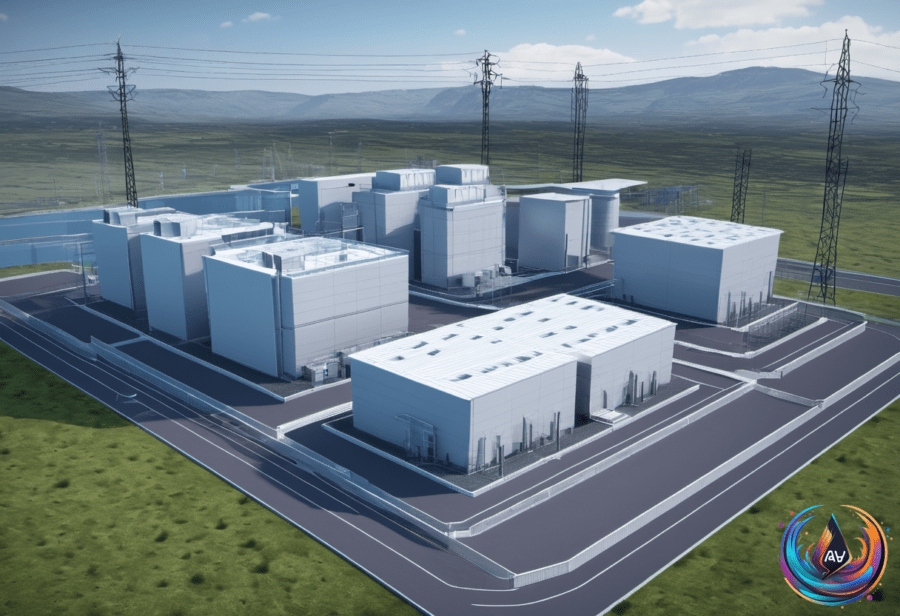
Britain’s AI infrastructure race has slammed into a fierce political fight over electricity, water and public control. Labour has rejected calls to pause construction, but Green Party leader Zack Polanski says the country should “slam the brakes on these energy-guzzling, water-guzzling datacentres”.
The argument reaches far beyond new buildings. Datacentres contain the processing chips that power billions of AI prompts every day, turning each site into a major part of the technology’s physical foundation. As demand grows, ministers and campaigners are now battling over whether the UK can expand this infrastructure without leaving communities to absorb the costs.
Labour backs expansion, but rejects a blank cheque
The UK government said pausing new datacentre construction would be “a disaster for jobs and national security”. Labour has also designated datacentres as critical national infrastructure, a decision Polanski called “outrageous”.
“To most people critical infrastructure means hospitals, water, electricity. It doesn’t mean artificial intelligence,” Polanski said. He also argued that the country needs “basically a moratorium other than local scale data centres for the local community”.
Labour MPs have warned, “We’re not remotely prepared”, while Mark Acton said, “We depend on these things massively.” Those comments capture the central tension: AI systems now depend on large physical facilities, yet the speed of construction is raising questions about whether energy and water systems can keep pace.
Datacentres currently use about 2.5% of the UK’s electricity supply, and that figure is predicted to rise fourfold by 2030. The government’s position is that development should continue, but its refusal to pause construction does not mean every proposal will receive approval.
Officials said the policy is not a blank cheque for big tech. Developers should prioritize clean power, use water responsibly, create British jobs and supply chains, and provide investment to communities.
Water turns the infrastructure debate urgent
Critical national infrastructure status does not give datacentres priority access to water or electricity, the government said. They also do not automatically receive priority during shortages, a distinction that matters as political pressure builds around drought and resource use.
In England, datacentres’ water usage represented less than 1% of non-household water consumption. The Water Research Centre estimated in February that centres in England use about 1.9 billion litres of drinkable water each year, while the Greens say large centres could consume 1.5 million litres per day.
The Greens argue that new facilities should be built on brownfield sites near renewable energy sources. They also cited research suggesting that Scottish datacentres powering AI already use enough water to fill 27 million bottles a year.
Polanski linked the issue to drought conditions, saying, “At a time when three-quarters of the country are in drought, it is outrageous that these are being considered critical infrastructure.” His call is not for every datacentre to disappear, but for a pause on large-scale development while the country weighs the demands on power and water.
Rosa Curling, co-executive director of Foxglove, said the government’s promise to avoid a blank cheque must lead to action. “But without urgent action, that’s exactly what will happen – the public and the planet will be left to foot the bill for the environmental and social costs of these energy-hungry giants,” she said.
America confronts the public scrutiny question
The same fight is unfolding in the United States, where the Environmental Protection Agency plans to scrap a federal rule requiring public notice and comment for certain industrial air permits. The proposed changes apply to New Source Review, a permitting process that has been in place since the 1970s.
The EPA announced in July that it would eliminate the federal public participation requirement for many polluters and leave the decision to states and local agencies. The proposal would remove that requirement for certain pollution sources, including facilities linked to the expanding data centre sector.
The EPA’s proposal could deprive agencies of community impact data and hinder evaluation of cumulative impacts. The public comment period ended last week, with more than 4,900 comments submitted.
Lee Zeldin leads the EPA, while the Southern Environmental Law Center and the Kentucky Resources Council are among the groups connected to the debate. Advocates say the Trump administration’s plan to scrap the federal air pollution rule would help data centre developers avoid public scrutiny.
A Microsoft-backed data center has reportedly been running on unpermitted generators, adding another flashpoint to the US discussion. The issue now extends beyond how many facilities get built: it also concerns who can question their pollution, how agencies assess their wider effects, and whether local communities get a voice before permits move ahead.
Britain and the United States are moving toward the same defining test for the AI era. Can governments build enough computing power to support billions of prompts while protecting water, electricity systems, jobs and public oversight? The answer will shape not only where datacentres rise, but also who controls the cost of the AI boom.
Based on