Coprod’s Modular Robot Stack Targets Faster Machines for Real-World Work

Robots built for one job may soon become much easier to design, test, and deploy. Swiss robotics startup coprod announced a $6 million pre-seed round on November 23, 2026, aiming to turn modular robot hardware and software into a commercial platform for task-specific machines.
The funding will support coprod’s first commercial component line and a new prototyping facility in Lausanne. The company wants to cut the time and cost required to build robots for specific tasks, giving smaller teams a faster path from an idea to a working machine.
A Modular Stack for Purpose-Built Robots
Coprod’s core argument is direct: robots designed around a clear job can outperform general-purpose systems on speed, cost, and reliability. “A robot with purpose-built hardware designed for a specific task will do that task faster, cheaper, and more reliably than any general-purpose robot ever could,” said CEO and co-founder Loïc Delineau.
The company says custom task-specific robot development has traditionally required large teams of domain experts and two to three years of work. Its modular stack is designed to let a small team complete the same work in a few months, with design iterations costing between $5,000 and $25,000.
That cost target matters because robot hardware remains expensive to develop and refine. Actuators account for 40% to 60% of a humanoid robot’s component costs, creating a large opportunity for a platform that can shorten design cycles and reuse proven building blocks.
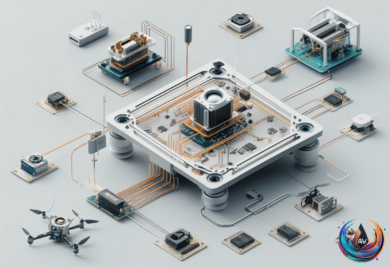
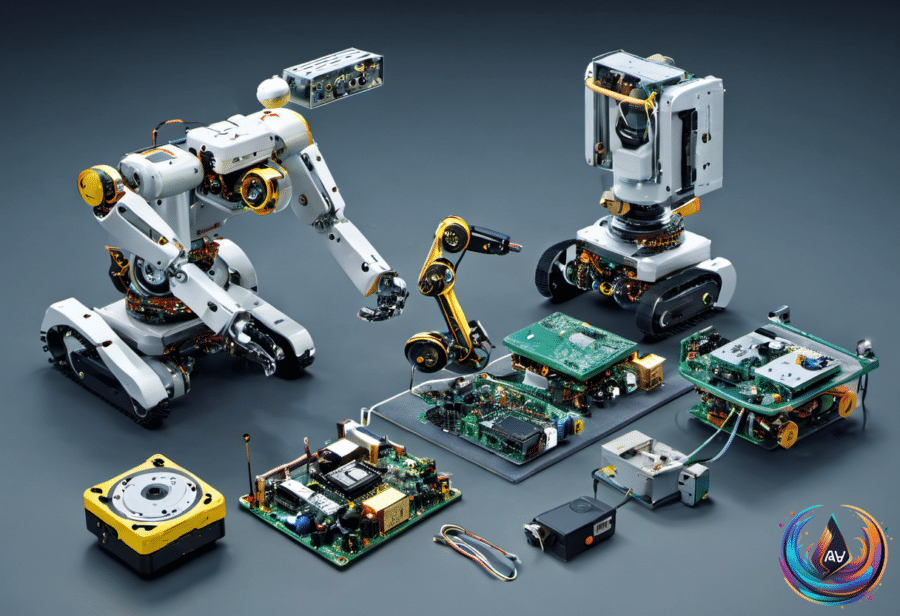
Coprod’s co:system combines sensing, motion, power, and battery modules on one EtherCAT bus. Centralized real-time control connects those modules, while a common developer API gives teams one software interface across the system. The software pairs a C++ core with Python bindings, and distributed clocks plus hardware timestamping coordinate connected devices.
- Published specifications list a 100 Mb/s bus.
- The typical control loop runs at 1 kHz.
- Jitter, or timing variation, stays below 20 microseconds.
- The hardware can form a complete robot or integrate into an existing machine.
- Coprod designs, builds, and tests the components in Switzerland.
This approach gives developers room to assemble only what a task requires. Instead of rebuilding every robot from the ground up, teams can combine modules into a complete system or add individual components to a machine that already exists.
From an Alpine Garage to Lausanne
EPFL graduates Loïc Delineau, Vincent Nguyen, and Matthias Schuller formed coprod in late 2024. They initially built a bipedal demonstrator in a garage in the Swiss Alps, turning evening and weekend work into an early test of their hardware and software ideas.
In an April 2, 2026 Venture Kick interview, the founders said their co:dodo robot became operational shortly before Christmas 2025 after about three months of evening and weekend work. An earlier CHF 40,000 Stage 2 award from Venture Kick supported market outreach, industry fairs, marketing, and the move from the garage into a dedicated workspace.
Coprod says its components are already used in Swiss robots. Switzerland’s first student-built humanoid from the ETH Robotics Club has taken its first steps in Zurich, and the company is establishing partnerships with robotics businesses.
The new Lausanne facility will push that development model further. It will house CNC lathes, mills, lasers, and electronic testing equipment, creating a single workshop for building and validating components. Coprod says the facility is designed to shorten development cycles from two weeks to 24 hours while producing datasheets and digital-twin models for each component.
That combination of physical tools and digital models could help teams test new designs without waiting through long manufacturing cycles. Faster iteration also gives robot builders more chances to tune hardware around the exact demands of a workplace, machine, or production process.
Funding Arrives as Robotics Scales Up
Founderful and PROTOTYPE led coprod’s pre-seed round. General Catalyst, Pace Ventures, Tiny Supercomputer Investment Company, Kima Ventures, SDAC, Unruly Capital, and Venturekick also participated.
Angel investors included Hugging Face founder Thomas Wolf, the Dassault Family, and Florent Perrichon. François Candelon, a partner at private equity firm Seven2 and an executive fellow at the HBS AI Institute, is connected to the wider physical AI investment landscape. Pierre Asséo, an entrepreneur and investor in physical AI, is involved in the European commercialization of robotics technologies, including AGIBOT, and holds investments in technology companies and venture capital funds.
Coprod is entering a market that is moving from demonstrations toward real deployments. China installed 354,000 industrial robots in 2025, representing 59% of the world total. Amazon deployed its one millionth robot in July 2025, while Swiss discounter Denner began rolling out 200 cleaning robots from Shenzhen-based Pudu Robotics, whose shipments have passed 130,000 robots worldwide.
Humanoid progress is also accelerating. At the World Humanoid Robot Games in August, Tiangong Ultra ran 100 meters in 8.64 seconds, compared with a winning time of 21.5 seconds at the event’s first edition a year earlier. In November, AgiBot ran six humanoids for 24 hours in a Shanghai convenience store, with four passing the final assessment, while Galbot opened three stores in Hong Kong managed by humanoids without a remote operator.
Yet modular hardware faces a serious obstacle: the supply chain still lacks predictable volumes and converging interface standards. Coprod’s platform must prove that its components can serve enough robot builders to justify that modular approach, while developers must decide whether shared interfaces deliver enough value for their specific machines.
The company now has capital, a dedicated facility, and a clear technical bet. If coprod can turn its 24-hour prototyping goal into dependable production hardware, robot builders may spend less time reinventing components and more time putting machines to work.
Based on
- Coprod Raises $6M Pre-Seed to Bring Modular Robot Hardware to Market — unite.ai
- The jagged frontier gets a body | Fortune — fortune.com
- Agon raises $70 million in Series A round to build Europe’s defence AI lab | AFP.com — afp.com
- Noitom Robotics Ranked No. 1 in Asia on The Information’s 50 Most Promising Startups of 2026 | Markets Insider — markets.businessinsider.com
- Ant Group bets on Simplexity to thrive in China’s humanoid race – The Japan Times — japantimes.co.jp