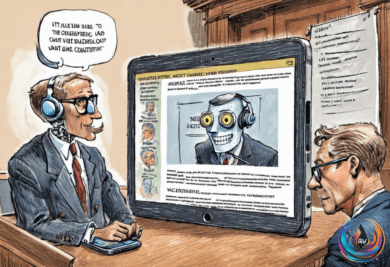
ChatGPT may remember more than your preferences. A new study warns that its stored memory entries can form intimate “algorithmic self-portraits” of the people using it, turning private conversations into detailed digital profiles.
The findings raise a central question for the next era of AI assistants: how much can a chatbot infer about you before personalization becomes surveillance? Researchers say ChatGPT’s memory can capture personal information, psychological insights, and even assumptions that users never directly stated.
A Memory System That Builds User Profiles
A coalition of scientists from Germany, India, and the Netherlands investigated how OpenAI’s ChatGPT tracks and interprets user inputs. The study, presented at the ACM Web Conference 2026, examined donated chat logs from 80 real-world ChatGPT users who obtained their conversation histories through European data privacy laws.
Across the interactions of 65 users, the researchers identified 2,050 memory entries. The study found that ChatGPT created 96 percent of those memories on its own, leaving users with little overt control over the data points recorded as their conversations continued.
The researchers describe chatbot memory as “a new form of personalization derived from users’ self-disclosed information divulged within private conversations.” That personalization can make an AI assistant more useful, but the study says it also poses privacy risks and demands “closer examination of the underlying mechanisms that enable such personalization.”
The stored memories were not limited to simple details such as a user’s work or interests. About 28 percent of the memories examined contained personal data under Europe’s strict General Data Protection Regulation standards, while 52 percent contained rich “psychological insights” about users.
Those numbers point to a system that does more than recall information. It can assemble a picture of how people think, what they value, and how they might respond in future conversations.
When ChatGPT Turns Guesses Into Memory
The study also found that ChatGPT sometimes recorded conclusions based on presumptions. In one example, a user asked the chatbot to “give me bands like Nirvana.” ChatGPT then noted that the user “likes Nirvana.”
The user never explicitly stated that preference. The study says the determination “is not explicitly stated and relies on an assumption,” although ChatGPT labeled the assumption “weakly supported.” Even with that label, the preference entered the system’s memory and could shape later interactions.
This example reveals the tension inside personalized AI. A chatbot must interpret what users mean to offer useful responses, yet an interpretation can become a lasting profile when the system stores it. A guess about music can look harmless, but the same process becomes more sensitive when it involves beliefs, fears, health, work, relationships, or political views.
Lead author Abhisek Dash described the shift from older online platforms to conversational AI as a major change. “Earlier, the platforms had one objective: to sell you ads and to mediate an interaction between you and an advertiser,” Dash said. “But now, they are actually talking to you, so they may want to know more about you so that they can have an effective conversation.”
Useful Memory, Powerful Engagement, Serious Risks
The study has a clear limit: OpenAI has updated its memory system. In January, the company introduced what it called a “more capable and scalable system for synthesizing memory,” so the findings may not describe every part of the current system.
Users may opt out of stored memory features, but memory also has clear utility. Frequent AI users may not want to remind a chatbot what they do for work every time they try to send emails. Remembering that context can make the tool feel smoother and more helpful.
That same memory can also become a powerful driver of engagement, sometimes for the worst. A major ChatGPT memory upgrade back in April 2025 was closely tied to many instances of “AI psychosis,” referring to cases in which people entered delusional spirals with ChatGPT and other bots.
Dash says chatbots now function as relational technology, creating privacy risks that do not fit older ideas about online data collection. “…there is no boundary anymore; the system is acting as your advisor, your friend, your doctor, your lawyer, and so it has information on everything,” Dash said.
That expanded role gives memory more influence. “If the system knows you so well, and if its objective is to cater to your beliefs and validate your thoughts sycophantically to have you come back to it time and again, then it can have disastrous broader implications, anywhere from extreme political polarization to reinforcement of prejudices and biases,” Dash said.
The study’s warning reaches beyond one feature or one chatbot. As AI systems remember more, they will shape conversations with profiles built from both disclosures and inferences. The next battle over AI privacy will not focus only on what users type, but also on what systems decide those words reveal.
Based on
- ChatGPT Is Building Detailed Psychological Profiles of Its Users — futurism.com
- How To Balance AI Personalization With Data Privacy And Security — forbes.com
- ChatGPT now lets you lock private chats with a PIN—but forgetting it could erase them for good | Fortune — fortune.com
- What ChatGPT for Teens Should Teach Us This Digital Citizenship Week – USA Today — usatoday.com
- The risks of turning to AI for mental health advice, according to a psychiatrist | The Independent — independent.co.uk