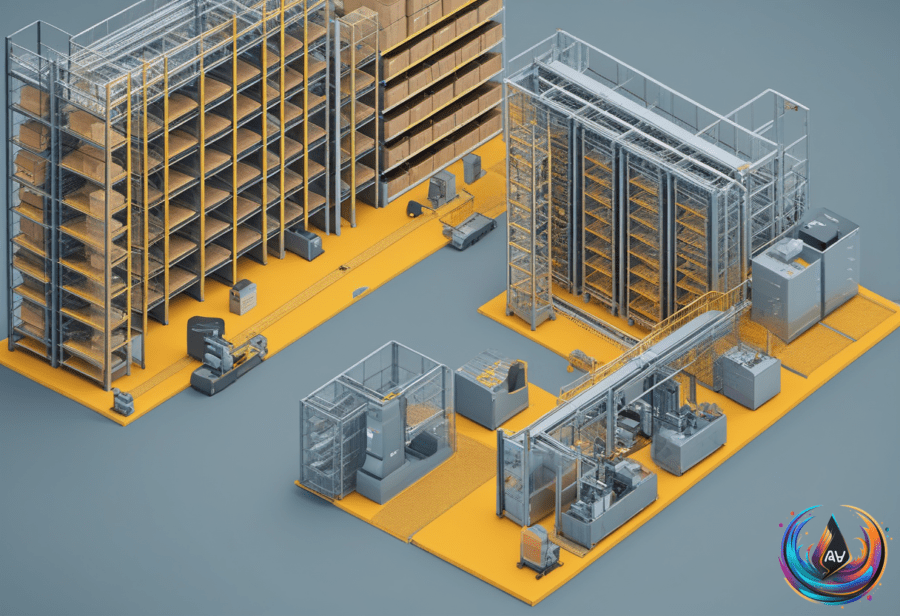
Warehouse automation has moved past the stage of software trials. Gartner now describes four operational AI tiers as logistics operators place these systems inside live facilities, where they must respond to changing orders, shifting inventory, and daily pressure on workers and equipment.
That shift marks a clear adoption threshold for logistics infrastructure. Three forces are pushing the sector forward: worker deficits that continue to affect operations, lower starting costs for software models, and algorithms paired with autonomous machinery that have reached production-grade reliability.
How Gartner frames the four AI tiers
Gartner evaluates warehouse AI across two main performance axes: intelligence sophistication and operational action orientation. The first asks how advanced a system’s reasoning and calculations are. The second focuses on whether the system only provides information or takes action across warehouse operations.
That distinction matters because a warehouse can use AI in several ways without giving the technology the same level of control. Modern calculation engines take in live floor telemetry and use it to direct facility operations, while warehouse management suites apply refined algorithms to four main workflows: demand forecasting, shift planning, travel routing, and stock placement.
These systems do not rely on one fixed plan for the entire day. They recalculate inventory movements as order profiles change during a shift, allowing operations to respond to new conditions instead of following a plan that no longer fits the work on the floor.
That dynamic adjustment can curb operating expenses and improve the productivity of physical assets. At the same time, the logic preserves deterministic audit trails, giving logistics directors the records they need for regulatory compliance. The result is a mix of flexibility and traceability, two requirements that can pull warehouse systems in opposite directions.
Federica Stufano, Senior Principal Analyst in Gartner’s Supply Chain practice, described the relationship among the four tiers this way: “These four AI trends are interconnected and reflect the evolution of a more intelligent, adaptive, and resilient warehouse environment.”
Visibility remains the key to enterprise deployment
More automation does not remove the need for human oversight. Stufano stated that enterprise deployment requires clear system visibility so supervisors can understand the reasoning behind automated decisions on the warehouse floor.
That visibility gives supervisors a way to follow how live telemetry affects operations, how algorithms change inventory movements, and why the system adjusts a plan during a shift. It also connects automated action to the audit trails that logistics directors need for compliance.
The four-tier model therefore describes more than a technology upgrade. It shows how warehouse operators are moving from experiments toward systems that influence labor planning, movement across the facility, stock locations, and the flow of inventory through daily work.
The broader manufacturing sector is still working through the same basic question: how to begin. Many manufacturing companies remain unsure about how to incorporate AI effectively, even though most recognize its potential. Many manufacturing enterprises are running disconnected projects instead of building a lasting AI strategy.
Nishkam Batta is CEO of HonestAI by GrayCyan. Anand Gupta is Senior Partner at Wipro, helping enterprises transform through AI-powered, ERP cloud-enabled Finance, Sales & Supply Chain. Their roles sit within a wider business conversation about moving AI from isolated projects into practical enterprise systems.
AI adoption sits inside a changing business landscape
The figures surrounding wealth and philanthropy also show how broad the current technology and business conversation has become. A record 590 U.S. billionaires are not rich enough to make the Forbes 400 list, while 10 billionaires under 40 make The Forbes 400, up from four last year.
America’s 400 richest people have donated just 4% of their wealth to charity. Those figures do not measure warehouse automation, but they underline the scale of the business environment in which companies are making decisions about AI, labor, software, and physical infrastructure.
For logistics operators, the immediate issue is more practical. They need systems that can act on live conditions, show supervisors why they acted, and leave a clear record of what happened. Gartner’s four AI tiers provide a way to view that progression as warehouses move from software trials to production deployments.
Based on
- Gartner outlines four AI tiers in warehouse automation — artificialintelligence-news.com
- Why Physical AI Needs A New Architecture To Scale — forbes.com
- Why Even Manufacturing Enterprise Companies Struggle With AI — forbes.com
- How AI Can Help Automotive Supply Chains Compete Through Volatility — forbes.com