India’s disease screening effort is getting an AI upgrade. Pune-based healthcare AI company Froncort.AI has secured $2.3 million from Google.org to expand its disease screening platform and build tools for frontline health workers.
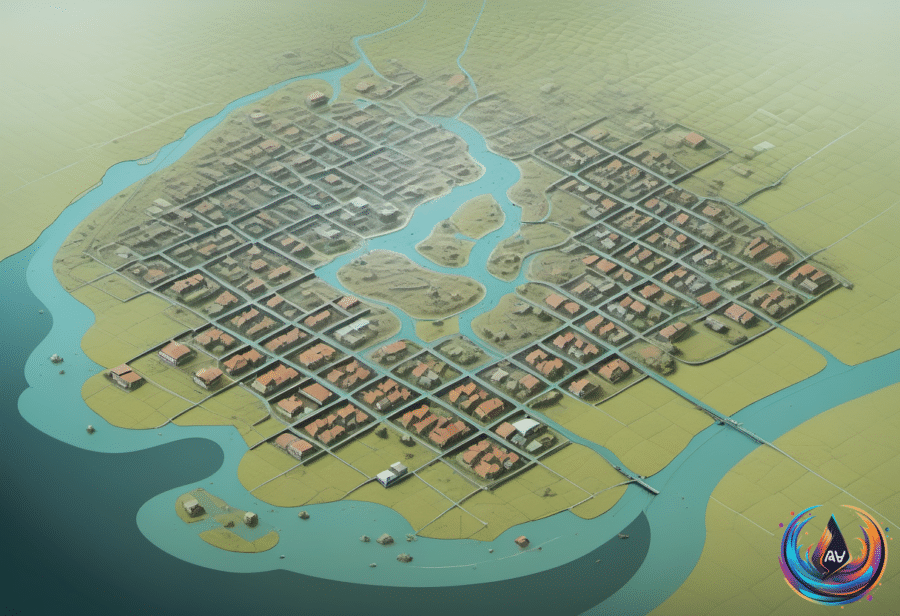
The funding will support mAI-NETRA, an offline, local-language mobile application designed to identify high-risk areas for tuberculosis and other infectious diseases. It will combine government health programme data with Google’s Earth AI models and local indicators, including settlement density, land use, rainfall and flooding.
Froncort.AI says the platform will identify high-risk areas within 300-metre zones, then convert them into ranked work paths, household clusters and routes. Health workers will access those screening plans on their phones, even without an internet connection — a practical feature in places where connectivity is still treated like a dependable utility.
All government health data will remain stored and processed locally in India, according to the company. That approach is intended to support compliance and security while keeping sensitive public health information within the country.
Dr Ujjwal Rao, founder and CEO of Froncort.AI, described the purpose of the system in blunt terms: “The world does not lack experts. It lacks their reach. AI-NETRA puts that expertise in the health worker's hands at the door: where to go, whom to screen, and when,”
Validation showed fewer screenings per confirmed case
The new application builds on Google’s previous backing for Froncort.AI’s AI-NETRA validation study, conducted with Maharashtra’s state TB programme. In that study, AI-guided teams screened 66,095 people and found 10 bacteriologically confirmed, NAAT-positive pulmonary TB cases.
The standard screening campaign covered 1,77,322 people and found nine cases under the same definition. The two approaches therefore identified a similar number of confirmed cases, but the AI-guided teams screened two-thirds fewer people to do it.
Froncort.AI reported 6,610 people screened per confirmed case in the AI-guided arm, compared with 19,702 under standard screening. The cost per confirmed case fell from approximately $29,000 to $10,000, while 92% of participating frontline workers reported a lower workload.
Those results explain why the next phase focuses on field deployment rather than another polished demonstration. The company plans to extend the platform across six diseases: TB, leprosy, malaria, dengue, cholera and leptospirosis.
From one study to a wider public-health blueprint
Froncort.AI plans to deploy mAI-NETRA across up to eight high-burden districts in three Indian states, covering two to three million people. The programme will be measured against five targets: finding at least 20% more cases, reducing the number of people screened per case by more than 50%, moving samples faster, lowering government costs per case detected and increasing performance-based earnings for frontline workers.
Google.org selected Froncort.AI as one of 15 recipients for its Impact Challenge: AI for Government Innovation. Alongside the $2.3 million award, the company will receive $200,000 in Google Cloud credits and pro bono technical expertise from Google.
Froncort.AI also plans to publish mAI-NETRA as an open-source blueprint. That would allow other governments to adopt and adapt the platform for their own public health programmes instead of building each system from scratch — an unusually sensible idea in a field that often mistakes reinvention for progress.
The project arrives alongside broader calls for governments to apply AI to global health. The second annual Global Health Congress concluded at the Yale Club of New York City after bringing together more than 625 healthcare leaders from 25+ countries, 125+ speakers and representatives from 350+ organizations.
Held October 9-11 under the 2026 theme “From Access to Impact: Equity, Capital, and the Next,” the Congress included 150+ C-suite executives, 150+ physicians and 100+ founders. Dr Nora Berra, former Minister for Seniors and former Minister of Health of France, initiated a Global Communiqué calling on the G20 and all governments to treat Alzheimer’s disease as a global health priority, make prevention the foundation of that action and establish a permanent mechanism to sustain political commitment.
With artificial intelligence at the heart of the G20 agenda, the communiqué also calls on governments to harness AI in the fight against Alzheimer’s disease and advance brain health worldwide. Froncort.AI’s work addresses a different set of diseases, but the underlying test is the same: whether AI reaches public health workers with useful decisions, not just impressive slides.
Based on
- Froncort.AI Gets $2.3M From Google.org to Expand AI-Based Disease Screening in India — analyticsindiamag.com
- Global Health Congress 2026 Draws 625+ Leaders From 25 Countries to New York, Names Venture Forum Winners and Announces National and International Expansion | Markets Insider — markets.businessinsider.com
- Tag – The Japan Times — japantimes.co.jp
- Former Ministers and a Former Head of Government Press the G20 to Put Brain Health Inside Its AI Agenda | Markets Insider — markets.businessinsider.com