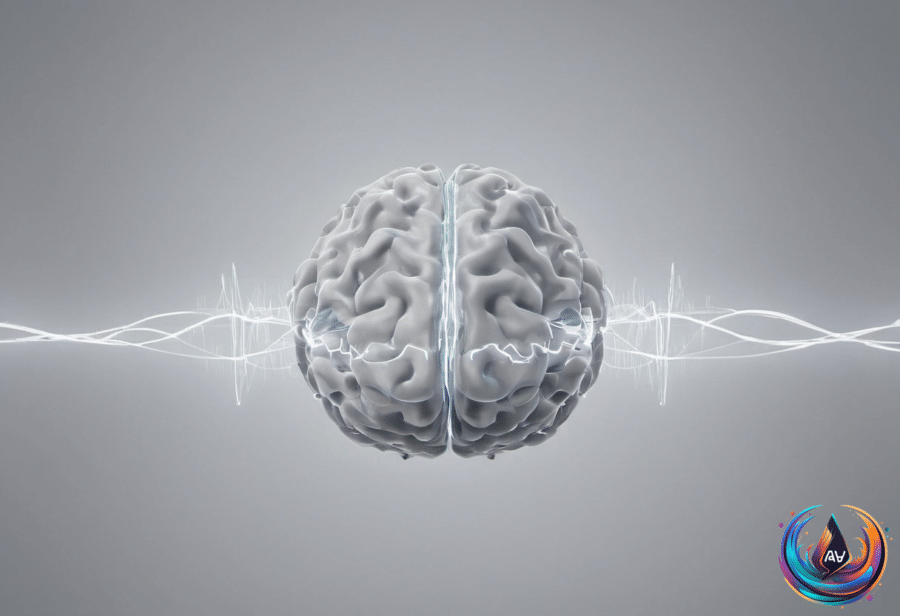
Bio Search has signed an agreement to acquire 100% of InnerEye, an Israeli company developing AI that analyzes brain signals in real time. The share-exchange deal, announced on November 9, 2026, would turn InnerEye into a wholly owned subsidiary of Bio Search.
The transaction has not closed yet. Completion remains subject to customary conditions, including approvals from relevant Israeli authorities, and the companies expect closing between December 2026 and early January 2027. If completed, the deal would add InnerEye’s expert-decision technology to Bio Search’s healthcare AI business.
The proposed combination brings together two parts of the same larger idea: capturing biological signals and using AI to understand the decisions behind human actions.
Turning expert judgment into an AI system
InnerEye’s product documentation describes a workflow called Minded A.I., which transfers aspects of expert judgment into AI models. An expert wears a device that serves as the interface, and the system converts elements of that person’s decisions into digital insights.
Those insights teach models to reproduce patterns in expert decision-making. They also support assessments of user performance and trust in an expert’s decisions. A continuing feedback loop is intended to improve both the models and the expert users working with them.
InnerEye applies this mentoring process through Sense.I, a system designed for AI training, personalization and optimization. Another product, SensePlus, focuses on the cognitive and emotional factors behind actions. Its functions include detecting fatigue, concentration and attention levels during tasks, with the goal of helping reduce human error.
That focus gives the deal a practical angle beyond brain-signal analysis alone. InnerEye’s technology is designed to capture how people make decisions, then use that knowledge to build systems that can support, assess or reproduce those decision patterns.
Where InnerEye fits into Bio Search
Bio Search says InnerEye’s proprietary algorithms interpret electroencephalogram, or EEG, readings in real time to distinguish cognitive states involved in perception and decision-making. InnerEye was established in 2014 by Amir Geva and Leon Deouell.
Geva is a professor of electrical and computer engineering at Ben-Gurion University of the Negev. Deouell is a physician and professor of brain sciences at the Hebrew University of Jerusalem. Their combined research underpins technology designed to learn decision processes rooted in personal experience and tacit knowledge before deploying trained models.
Bio Search already uses EEG, electrocardiogram, or ECG, heart-rate and electromyography, or EMG, signals in its healthcare AI operations. Its business spans biological sensing, medical-device engineering and business development in Japan and other Asian markets.
Pairing those capabilities with InnerEye’s software would connect signal capture and device design with models of expert judgment. At the center of the integration plan is a shared platform for pooling both companies’ EEG and other biological data to train AI models.
Bio Search projects that the combined platform will improve precision, robustness and analytical scope, but the company does not quantify the expected gains. The planned structure would also bring the two businesses together under a unified executive organization across Japan and Israel.
Potential uses stretch beyond healthcare
The companies identified several possible uses for the combined technology. These include visualizing cognitive function, supporting early diagnosis, industrial automation, affective computing, security and decision support for experts.
Each area depends on the same basic capability: interpreting biological signals and linking them to mental or emotional states, decisions and performance. In healthcare, that could support efforts to understand cognitive function and early signs of problems. In industrial settings, the focus could shift toward fatigue, attention and reducing human error during tasks.
InnerEye CEO Uri Antman described the planned combination as “the ideal partnership to elevate the Brain-AI technology we have cultivated over many years into a global commercial scale.” The wording reflects the central purpose of the deal: joining InnerEye’s brain-AI research with Bio Search’s sensing, device and business capabilities.
For now, the acquisition remains an agreement rather than a completed transaction. The next key steps are the required conditions and approvals, followed by the expected closing window between December 2026 and early January 2027.
Based on
- Bio Search Signs Share-Exchange Deal for Brain-AI Firm InnerEye — unite.ai
- Nature Medicine Publication Reveals How Human Movement Predicts Hidden Biosignals Spanning 18 Body Systems, from Heart and Liver Function to Metabolic and Mental Health | Markets Insider — markets.businessinsider.com
- Hologen and Sysmex establish Saibogen, a joint venture using AI to turn routine blood test data into clinical intelligence | Markets Insider — markets.businessinsider.com
- Why the Next Edge in Antibody Discovery May Be What Labs Remember | Markets Insider — markets.businessinsider.com