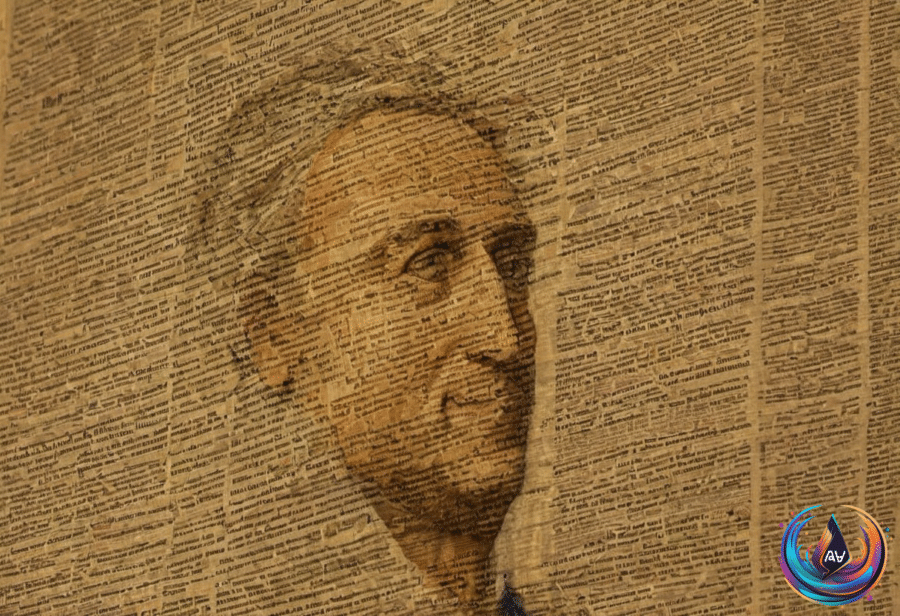
Google has updated its guidance to target a tactic that made machine-written articles look like the work of real reporters: fake bylines paired with AI-generated headshots and invented credentials. The change follows investigations into websites that used fictional journalists and subject matter experts to publish large volumes of search-focused content.
The issue has surfaced across Canada, the United States, and Google’s own platforms. Several Canadian websites removed articles linked to a suspected AI persona named Daniel Robson, while Brown Brothers Media sites stopped publishing and lost visibility in Google Search and Google News after an investigation.
Google Treats Fake Authors as Deception
Google’s updated guidelines say creators should not use false authorship information to make content look as if human experts wrote it. The company describes the practice in direct terms: “Fabricating creator profiles (such as by using AI-generated headshots, made-up names, or false credentials to make content appear as if it was written by human experts) is a form of deception.”
The guidance also says that deception makes a page untrustworthy to users and Google’s automated quality systems, marking it as a low-quality page. Google’s policies prohibit producing low-value content at scale to manipulate ranking systems, which puts fabricated authors inside a broader fight against search spam.
Google does not comment on individual sites, but its spokesperson said the company acts when sites violate those policies. The goal is to keep search results and Google News free from spam, while Brown Brothers Media’s sites have been delisted or downranked by Google.
Futurism published a story about the network on Sept. 17 and reported on Sept. 30 that its sites had stopped publishing. The company had achieved success by creating fake journalists and experts, often giving them fraudulent credentials, then using their bylines on SEO-optimized articles. Its network included 26 Canadian AI “correspondents” and drew tens of millions of page views per month, including 50 million page views a month.
Canadian Outlets Remove Articles by Daniel Robson
The Daniel Robson case shows how the problem reached established Canadian publications. The Ottawa Citizen, Montreal Gazette, and Policy Options removed articles written under that name after questions about the author’s identity. Policy Options editor in chief Les Perreaux said he could not confirm Robson’s identity after an investigation, and the Ottawa Citizen removed opinion columns after its own review.
On Sept. 24, Perreaux wrote an online post about the case. He said AI was part of the story, but not the whole story: “AI is definitely part of the story, but it’s a smaller part than the deception part where there was a human behind this, pretending to be someone he’s not, or at least refusing to be who he really is.”
Ottawa Citizen editor in chief Nicole Feriancek said Robson’s headshot appeared to be AI-generated, as did the writing he submitted. She said the publication wanted to verify his identity in person, but Robson ended communication after objecting to the questions. “When we were up front with our concerns, and said we wanted to verify his identity — in person — he declared he was incensed by our line of questions, and he ended all communication,” Feriancek said.
Robson also approached Turkiye Today with a story about a drug plot involving Turkey and Canada. Managing editor Ilker Sezer became suspicious when Robson refused a video call and his emails and work appeared AI-generated. Sezer said Robson pushed for the story to go out without delay, telling him, “He had this sense of urgency; he wants to get [the story] out ASAP.”
When Sezer asked for more information about the allegations from Istanbul, “alarm bells began to ring.” Robson refused, which Sezer described as the first moment he became suspicious. A digital research tool showed that Robson’s email had been used to register a Moroccan Microsoft account in March, and Sezer believes Morocco may be linked to the persona.
On Sept. 29, Türkiye Today published a story saying Robson’s purpose was to attack Moroccan dissidents. In his last email to Sezer, Robson warned that there would be repercussions for what Sezer had done to him. The episode led Sezer to say journalism is in a period of transition as AI expands globally.
A Wider Trust Problem for News
The Canadian cases were not limited to one identity. One publication’s nonexistent reporters malfunctioned and began producing error messages. Another Canadian publication was caught plagiarizing work under the name of a fabricated Indigenous journalist. Similar schemes have also surfaced in Florida and Rhode Island.
The Canadian Press analyzed more than 200 articles by Geneviève Tremblay and identified them as AI-generated. Western Standard said, “Daniel Robson’s columns were removed from the Western Standard website after multiple media organizations investigated his background, and he was unable to verify his identity.” Western Gazette said it had strengthened contributor verification procedures and added checks to guard against new forms of fraud.
Jon Gillham, CEO of Originality.ai, warned that industrial-scale AI content can damage confidence in journalism. “I think industrial-scale AI slop (sites) like this one run the risk of degrading the trust in the news,” he said.
Paul Deegan, president of News Media Canada, said Google has a reason to remove sites involved in stolen or deceptive content because people expect accurate information when they use the search engine. Chris Arsenault, a Western University assistant professor, agreed that technology companies should help remove material that is clearly untrue, but questioned whether Big Tech should make editorial judgments or act as an arbiter of truth.
That tension now sits at the center of the debate. Google’s rules give the company a basis to punish fake identities and mass-produced low-value pages, while publishers must decide how to verify contributors before their work reaches readers. The presence of AI is part of the challenge, but the deeper problem is deception presented as journalism.
Based on