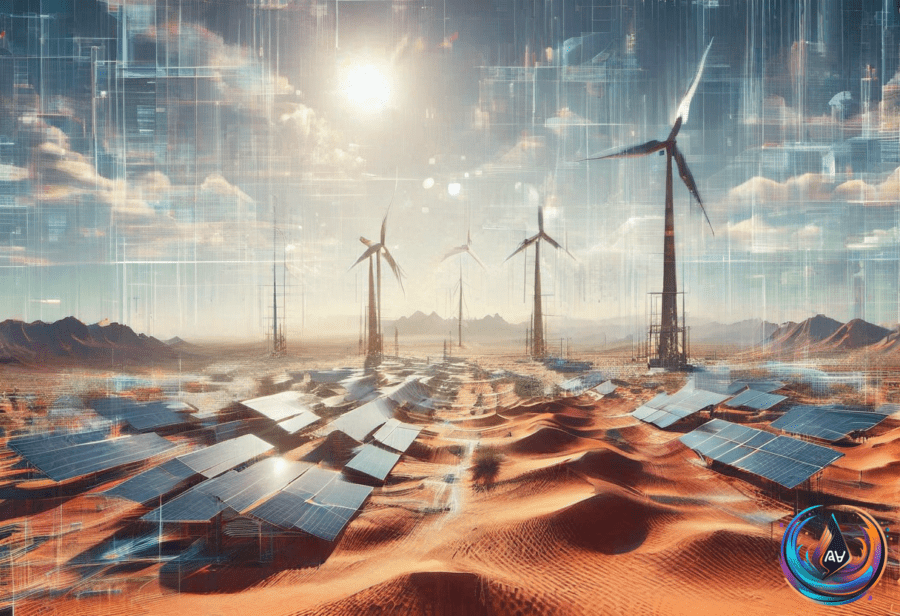
China is changing how its data centers get power. Instead of pulling electricity from coal-heavy grids, the country is wiring green energy straight to the computers. The first big test of this idea is happening in Ningxia, a desert region.
Near Zhongwei in Ningxia, four dedicated power lines run directly from a solar farm to a cluster of data centers. These lines do not connect through the public grid. This setup means the data centers use clean energy without relying on coal power plants.
The solar farm powering this project can generate 970 gigawatt-hours a year. That’s about half the energy the cloud base will need. To cover the rest, wind power from a nearby 1.5-gigawatt wind farm will kick in, especially in the evenings. Storage systems help fill any gaps. The site uses what’s called a dual-track structure: electricity flows through four 110-kilovolt lines straight to the computers, with extra power bought through market trades.
A Massive Green Power Effort for AI Data Centers
This project started green power supply in February 2026 and went into formal operation by early May. It marks China’s first large-scale green-power project built specifically to serve data centers directly. China Datang Corp commissioned the solar farm, which is part of a bigger plan to link renewable energy tightly with computing infrastructure.
Beijing’s 2026 government work report made this integration a priority. It requires new data centers in key hubs to source most of their power from clean sources. The first phase of the Ningxia project includes a 2-gigawatt capacity combining solar, wind, and storage. This phase cost about 8.7 billion yuan, or $1.27 billion. Once complete, it will generate 4.3 terawatt-hours annually. That exceeds the forecast demand of 2.29 terawatt-hours for the cloud base.
Scaling Up and Looking Ahead
The project’s second phase will expand capacity to 4.6 gigawatts. Wind turbines are scheduled to connect fully to the grid by September 2026. The goal is to have renewables supply roughly 80% of the AI data-center sector’s power by 2030. Today, that share is only about 10%.
China’s strategy shows a clear push to reduce the carbon footprint of its digital economy. If the desert’s wind and sun can match the data centers’ power needs without depending on the conventional grid, the model could spread to other regions. This approach could help power massive AI workloads while cutting emissions.
Solar energy leads during the day. Wind takes over in the evening. Storage smooths the supply between them. This mix aims to keep data centers running steadily on clean energy, avoiding coal-generated power. It’s a bold experiment in linking green power directly to digital infrastructure.
Based on
- China wants its green power wired straight into the data centre — thenextweb.com
- China’s AI Data Centres Face Green Power Integration Challenges | tech360tv — tech360.tv
- China Struggles to Power AI Data Centers With Green Energy | energynews.pro — energynews.pro
- Direct green power supply clusters have escalated to the gigawatt scale, intensifying divergence among data centers amid the trillion-yuan investment cycle for computing infrastructure. — news.futunn.com
- China’s Renewable Energy Challenge: Powering AI with Green Energy (2026) — frasensei.com