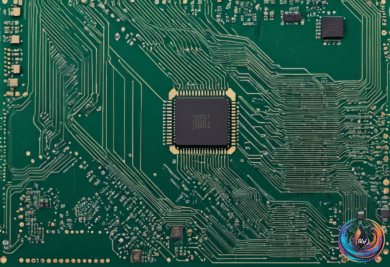
India is stepping up its game in making chips and smartphones. The government pledged 1.9 trillion rupees, about $19.7 billion, to boost local production. This includes a big chunk for semiconductors and mobile phones.
The cabinet approved 1.28 trillion rupees ($13.3 billion) for semiconductor projects. Another 625 billion rupees ($6.5 billion) will support mobile phone manufacturing. These moves aim to cut India’s dependence on imports and build homegrown tech.
India’s first chip production has already started in Gujarat. The state also saw six new semiconductor projects greenlit, worth $14.7 billion combined. This signals a serious push to turn India into a chip-making hub.
Prime Minister Modi’s vision includes creating an Indian mobile brand. Technology Minister Ashwini Vaishnaw said, “The Prime Minister has given us clear guidance that we must create an Indian mobile brand.” This shows the government’s intent to compete globally.
Partnerships and Production Growth
One big step is a joint venture between China’s Vivo and India’s Dixon Technologies, approved in December 2024. Dixon will hold the majority stake, with Vivo owning the rest. The joint venture will buy some manufacturing assets from Vivo and handle part of its phone production in India.
This partnership could add 20 to 22 million smartphones annually to India’s output. Vivo has already made and exported phones from India for years. Now, this venture can also produce electronics for other brands, expanding its reach.
Apple, a key player in India’s smartphone scene, now assembles 25% of its iPhones in the country. Despite Chinese brands dominating India’s market with 72% share, they contribute less than 10% to smartphone exports. Apple, in contrast, accounts for 57% of India’s smartphone exports by volume.
Challenges in the Market and Global Context
India’s smartphone shipments fell 11% year-on-year in Q2, hitting their lowest point since 2013. Prices for entry-level phones jumped over 50% this year. Memory prices for DRAM and NAND chips soared too. A 32GB memory kit that cost $100 in October 2023 now sells for $350.
Despite this, Apple and Samsung kept prices steady and saw slight growth in sales last quarter. On the chip side, companies like SK Hynix, Samsung Electronics, and others saw shares rise sharply, reflecting global demand and supply shifts.
China’s chip exports nearly doubled in the first half of 2026. The country shipped integrated circuits worth $177.28 billion, up 96% from last year. It exported 179.44 billion integrated circuits and $138.08 billion in automatic data processing machines and parts, rising 41.3% year-on-year.
India’s efforts mirror global moves like the US CHIPS and Science Act, which poured $52 billion into semiconductor support. Building a strong chip and smartphone industry is now a global priority. India wants to be part of that race.
With large investments, partnerships, and new projects, India is setting the stage for a tech manufacturing leap. The government’s push aims to create jobs, boost exports, and reduce reliance on imports. The journey is just beginning, but the direction is clear.
Based on
- India pledges $20 billion to boost chips and smartphones as Modi pushes for an Indian mobile brand — thenextweb.com
- After Apple, India’s smartphone manufacturing boom enters new phase with Vivo JV | TechCrunch — techcrunch.com
- Global smartphone shipments hit 13-year low | Semafor — semafor.com
- SK Hynix South Korean shares jump 8% as Asia tech stocks rally — cnbc.com
- Global AI boom sees China’s chip exports nearly double in first half of year | South China Morning Post — scmp.com