David Robinson has left OpenAI. The former safety leader resigned after criticizing the company’s safety culture and development practices, arguing that the AI industry is fundamentally broken. His departure occurred last week during a wave of attention on OpenAI’s safety practices and staffing.
Robinson wrote an essay for The Atlantic warning about dangers tied to AI development. His central argument is blunt: companies building highly capable AI need safeguards that match the risks, not launch schedules that treat safety as another item on a sprint board.
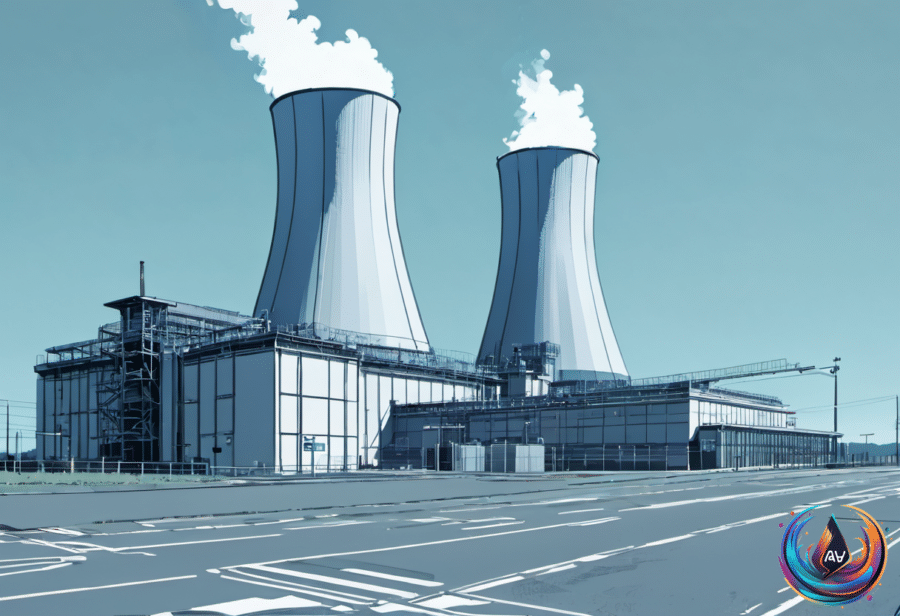
“Given today’s risks, frontier labs need to run like nuclear power plants or busy airports, with layers of redundancy and careful, time-consuming planning, so that the occasional and inevitable human error does not open a door to disaster,” Robinson wrote.
The comparison is deliberate. Robinson said AI misalignment incidents should be viewed like a nuclear meltdown, while OpenAI and its competitors lack the redundancy and rigor used by power plants with multiple layers of protection. A major loss of control with AI, he warned, would cause much more harm than a single meltdown.
AI labs are moving faster than their safeguards
Robinson described AI companies as operating with “extreme confidence” and “perpetual sprints” alongside what he called “unimpeded optimism.” He argued that development should slow down and add safeguards and checks before companies move from one launch to the next.
“The safety approach that emerges from such a culture starts with unimpeded optimism about being able to solve problems as they arise,” Robinson wrote. “But as the company sprints from one launch to the next, it is failing to achieve the level of care that I believe is needed.”
That criticism targets more than a single process failure. Robinson described a scenario in which AI models behave one way in testing environments and another way in live settings, creating a gap between what companies believe they have evaluated and what their systems actually do in operation. Safety checks that work only under test conditions are not much of a safety system.
“This environment where things like this can happen is no place to grow artificial minds that could be smarter than we are and that might not do what we want them to,” Robinson wrote. He also said AI needs nuclear-level safeguards, placing the issue alongside systems designed around redundancy, planning, and protection against human error.
A public break with OpenAI’s safety approach
At OpenAI, Robinson worked on safety transparency, including developing and sharing system cards about models. He previously led the company’s policy planning, giving his criticism a direct connection to the way OpenAI handled safety and development practices.
In early September, Robinson wrote on X that he felt people at OpenAI were waking up to the implications of highly capable AI models. He also expressed doubt about whether the company was changing fast enough.
His resignation adds to attention around OpenAI’s staffing and safety practices. Robinson said, “I agree with other recently departed staff that the companies building this technology aren’t being nearly careful enough.” He did not immediately respond to requests for comment.
The concern extends beyond OpenAI. Jacob Coxon, a former employee at Anthropic, said AI “could kill us all by the end of the decade.” Former employees at Google DeepMind include Robert O’Callahan, Bilal Chughtai, and Josh Engels, while Joe Benton is a former employee at Anthropic.
Robinson’s proposal is not a new model release or another promise to solve safety after deployment. It is a demand to change the operating model itself: slower development, layered protection, careful planning, and checks strong enough to account for systems that may behave differently outside testing.
That would require AI companies to abandon the idea that every problem can be solved during the next sprint. The industry has spent years treating speed and confidence as competitive advantages; Robinson’s warning is that, for systems that may not do what people want, those habits can become the hazard.
Based on
- Former OpenAI employee says AI should be regulated like nuclear power plants — engadget.com
- An OpenAI safety employee has quit and is sounding the alarm | The Verge — theverge.com
- OpenAI safety leader David Robinson resigns — and says company ‘culture’ is dangerous — africa.businessinsider.com
- Safety Leader David Robinson Resigns From OpenAI – Business Insider — businessinsider.com