AI is rewriting the rules of the job market. The usual tech skills no longer guarantee security.
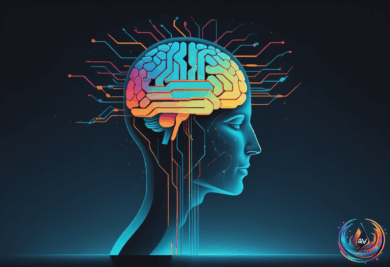
Philosophy is making a surprising comeback. Leading AI labs are hiring philosophers to tackle ethical dilemmas and questions about intelligence and consciousness. These aren’t just academic exercises. They shape how AI models behave in the real world, influencing safety, fairness, and moral competence.
Google DeepMind and Anthropic have built in-house philosophy teams to help navigate AI’s societal impact. Their work ranges from defining value alignment—ensuring AI acts “for the good”—to identifying edge cases where AI’s behavior could harm vulnerable people. This practical philosophy digs into ethics, cultural values, and the limits of AI consciousness.
Meanwhile, universities are reshaping curricula to mix computer science with philosophy and ethics. Critical thinking and ethical reasoning are becoming as vital as coding skills. AI can generate code, but it cannot replace human judgment on moral boundaries or complex social contexts.
Integral thinking is emerging as a prized skill in business. This approach integrates knowledge from diverse fields—biology, sociology, technology—to solve problems holistically. Companies leading the AI wave don’t just automate tasks; they redesign workflows and decision-making to blend AI’s speed with human creativity and judgment.
As AI handles more cognitive and repetitive tasks, human value shifts toward synthesis and judgment. Leaders must know when to trust AI and when to override it. They must pick what AI outputs deserve attention and design smooth hand-offs between machine and human work.
Adam Smith’s 18th-century moral philosophy is also gaining new relevance. His concept of the “impartial spectator”—empathy and moral sentiment—guides efforts to humanize AI systems. Embedding empathy into algorithms aims to reduce bias and prevent automation of cruelty in hiring, loans, and judicial decisions.
This philosophical pivot is urgent. AI systems now shape millions of lives but lack innate empathy. Researchers propose programming AI to consider human impact explicitly, using moral frameworks inspired by Smith and local philosophies like Ubuntu. This could also reshape exploitative global AI supply chains, especially in emerging markets like Kenya’s tech sector.
The rise of AI has hit traditional computer science majors hard. AI can write code, threatening the old career path. Yet philosophy offers an alternative by teaching students to analyze assumptions, handle ambiguity, and set ethical boundaries—skills AI cannot replicate.
Double majoring in computer science and philosophy is becoming a strategic move. It equips students to understand AI technically while mastering critical thinking and ethical reasoning. Other interdisciplinary fields like cognitive science also offer valuable insights into human cognition and behavior—key to designing better AI.
The future belongs to those who embrace AI, not resist it. Jobs won’t disappear overnight but will transform. Humans excel in creativity, empathy, and complex judgment. AI will handle data, measurement, and automation.
Successful workers will fracture their roles into tasks, identify what AI can do, and double down on what only humans can manage. The gig economy will expand, fueled by entrepreneurs who leverage AI to scale creativity and innovation.
Governments lag behind this shift. Universal basic income remains politically and economically unlikely. Instead, social safety nets must evolve to support a new class of gig workers and independent creators. Political leadership must catch up or risk irrelevance as AI reshapes economies and societies.
AI is not coming for jobs; it’s coming for tasks. The winning edge lies in integral thinking, moral philosophy, and the ability to synthesize across disciplines. This is the new job security in an AI-dominated world.
Based on
- To Land a Job in AI, Try Reading Kant — wired.com
- Why Integral Thinking is the Most Valuable Skill in the Age of AI – Archynewsy — archynewsy.com
- Adam Smith’s Hidden Philosophy Provides Surprising Antidote To AI | Streamline — streamlinefeed.co.ke
- Computer Science Major Under Threat From AI, But Philosophy May Be The Answer — opronews.com
- AI Is Interested in You, So You’d Best Be Interested in It — whchronicle.com
- AI-Proof Your Career: Future-Proof Your Job in the Age of Automation (2026) — delaguarigue.com