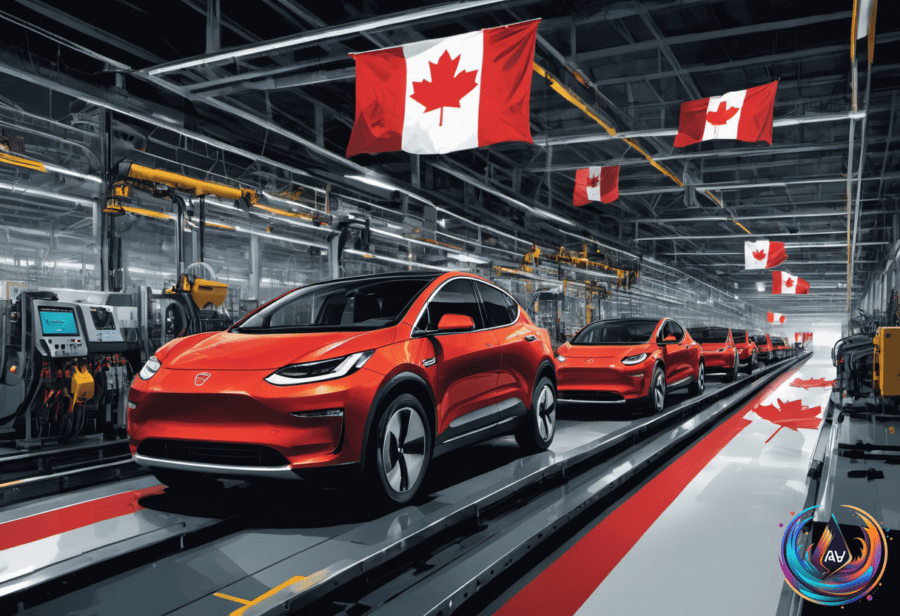
Stellantis is positioning itself as a bridge between Chinese EV innovation and North American manufacturing—just not in the United States. CEO Antonio Filosa confirmed the automaker sees clear opportunities for Chinese-branded electric vehicles in Canada and Mexico but none in the US. Politics, not market demand, draws this dividing line.
The company holds a 21% stake in Zhejiang Leapmotor Technology and controls a joint venture that grants exclusive rights to produce and sell Leapmotor vehicles outside China. Stellantis plans to use its idled Brampton, Ontario plant to build these Chinese-designed EVs, bypassing tariffs on imports. Canada allows 49,000 Chinese EVs yearly at a 6.1% tariff, but locally assembling them means cutting that cost entirely.
This partnership is more than just cost-saving. Stellantis wants to absorb Leapmotor’s rapid engineering, lean production, and software-first vehicle architecture. Leapmotor’s T03 hatchback and B10 SUV have already debuted in Europe through Stellantis dealers, priced well below legacy competitors. It’s a strategic move to catch consumers who balk at $49,000 average US car prices but can afford sub-$20,000 Chinese models elsewhere.
However, US political resistance to Chinese automakers remains stiff. Over 120 House members backed legislation to block Chinese vehicles and connected components. Filosa acknowledged that the US market is off-limits for Leapmotor products for now. Instead, Stellantis is exploring partnerships with non-Chinese brands like Jaguar Land Rover for US-focused product development, sticking to legacy brands at home.
The strategy is clear: expand Chinese-powered EV production in politically welcoming markets—Canada, Mexico, and Europe—while focusing on traditional brand revivals like Ram and Chrysler in the US. Stellantis unveiled a $70 billion plan aiming for a 35% sales increase in North America and positive cash flow by 2027. Leapmotor and Dongfeng partnerships run parallel to that, spreading Chinese engineering expertise globally without crossing US political red lines.
In Europe, Stellantis plans to produce Leapmotor-derived models, including electric SUVs under Opel, at its Zaragoza plant. This move helps Leapmotor dodge EU “Made in Europe” rules and import tariffs. It also signals a broader industry trend where Western automakers lean on Chinese EV makers for technology and manufacturing partnerships. Ford and Volkswagen reportedly consider similar deals to cut costs and boost competitiveness.
Industry experts warn this approach is a double-edged sword. Short-term factory optimization and market access come at the risk of empowering Chinese brands to build long-term brand loyalty in Western markets. Once consumers realize Chinese EVs meet their expectations, legacy automakers may find it hard to reclaim lost ground. The gamble is whether partnerships will accelerate legacy brands’ electrification or hasten their decline.
For now, Stellantis walks a tightrope. It embraces Chinese innovation as a growth lever abroad while shielding the US market from political backlash. The dormant Brampton plant might soon produce cars embodying both strategies—a legacy automaker’s bet on Chinese engineering to remain relevant in a fiercely competitive global EV race.
Based on
- Stellantis wants to build Chinese EVs in Canada and Mexico. Just not in the US. — thenextweb.com
- Stellantis CEO Identifies Growth Opportunities for Chinese Vehicles in North American Market – Internewscast Journal — internewscast.com
- Stellantis CEO sees potential in Chinese vehicles in North America — cnbc.com
- Stellantis CEO sees opportunity in growing partnerships, bringing China-branded vehicles to North America – Asia Insider — asiainsiders.net
- Autos: Why Stellantis’ China play points to a wider industry gamble – France — europesays.com
- CEO says Stellantis may produce Chinese-branded cars in Mexico, Canada (STLA:NYSE) | Seeking Alpha — seekingalpha.com