Voyager 2 just bought another year.
NASA changed the spacecraft’s settings through an operation called “Big Bang.” The maneuver should let Voyager 2 continue operating and doing science for one more year.
Voyager 2 has been in space for almost 50 years. It launched in 1977 and now sits roughly 13 billion miles from Earth.
That distance equals about 21.35 billion kilometers. At this range, every watt matters.
A power-saving maneuver with a blunt name
Voyager 2 gets electricity from a radioisotope thermoelectric generator. The device converts heat from decaying plutonium into electricity.
Since its launch, plutonium depletion has reduced the spacecraft’s available power. Voyager 2 loses around 4 watts each year.
The probe launched with 10 functional scientific instruments. Only three remain operational today.
NASA’s Jet Propulsion Laboratory in Pasadena, California, performed the “Big Bang” operation. The process addressed both power and heat problems affecting the Voyager spacecraft.
Engineers turned off three powered devices and switched on three lower-power alternatives. The change reduced power demand by nearly 10 watts per year.
NASA completed the full maneuver in July 2026. The work finished by midmonth.
Kareem Badaruddin called the operation “the most important thing we’ve done on the Voyager spacecraft in decades.” He also said the power test went “extremely well.”
That assessment leaves little room for launch-event theatrics. The spacecraft needed a smaller electricity bill.
NASA plans the same process for Voyager 1 in coming months. Voyager 1 is about 16 billion miles from Earth, or 25.40 billion kilometers.
The twins keep separating from history
Voyager 1 launched weeks after Voyager 2 in 1977. It reached Jupiter in 1979 and flew past Saturn and Titan in 1980.
Voyager 2 conducted flybys of Jupiter, Saturn, Uranus, and Neptune in the late 1980s. Those encounters gave the spacecraft an unusually broad tour of the outer planets.
Voyager 1 entered interstellar space in 2018. It has been sending back data about plasma outside the heliosphere.
Both spacecraft now operate under strict power limits. Their teams must replace old routines with choices that match current needs.
“We can’t do things the way they were always done,” Badaruddin said. “Every process, every command, everything we have to evaluate.”
The “Big Bang” gives Voyager 2 another year. It does not restore lost power or return the missing instruments.
The mission continues because engineers keep removing costs from an aging machine. Space hardware rarely gets a retirement party.
NASA also sketches a nuclear-powered lunar rover
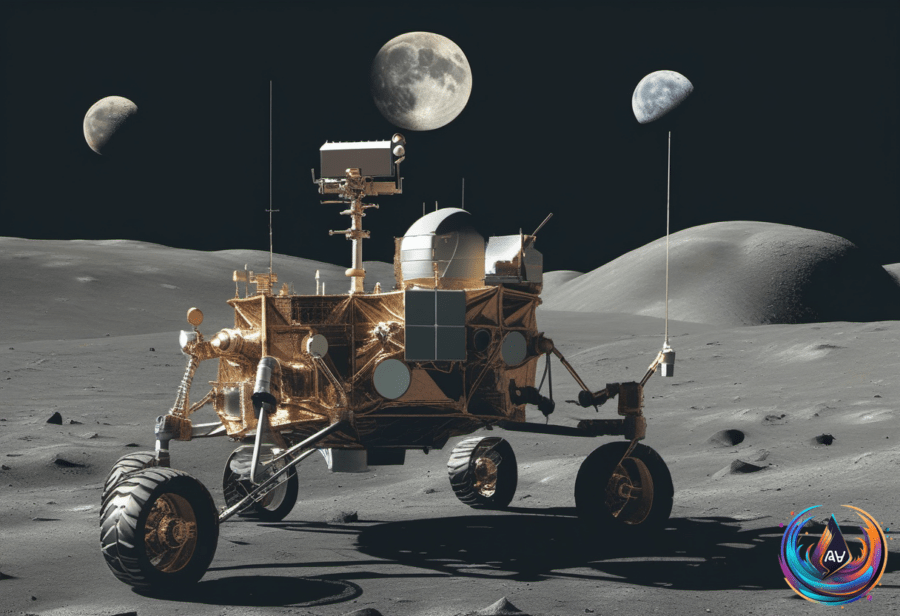
NASA announced a proposal in late June 2026 for a lunar rover called PROMISE. The name means Polar Rover for Observation, Mapping and In-Situ Exploration.
PROMISE would use a repurposed version of Perseverance’s engineering test model. That model was previously called OPTIMISM.
The proposed rover would carry a multi-mission radioisotope thermoelectric generator. The MMRTG would use plutonium as fuel.
Like Voyager 2’s power system, the MMRTG would convert heat from natural plutonium decay into electricity. PROMISE would not need sunlight to explore the moon.
That capability would help during the lunar night. Carlos García-Galán identified surviving that period as a major challenge.
PROMISE remains a concept. It has not received the upgrades needed for lunar deployment.
NASA estimates the rover would cost between $700 million and $1.3 billion. The planned launch window falls in the early 2030s.
The proposal and Voyager update share the same basic logic. Plutonium-powered systems can keep working when sunlight disappears.
Voyager 2 uses that advantage far beyond the planets. PROMISE would bring it to the moon.
Based on
- NASA updates Voyager 2 to extend the 1977 probe’s lifespan yet again — engadget.com
- NASA extends life of Voyager 2 via effort dubbed ‘Big Bang’ — thehill.com
- Ambitious fix extends Voyager 2’s mission and could help its twin | CNN — cnn.com
- NASA’s Voyager 2 survives daring ‘big bang’ maneuver | Scientific American — scientificamerican.com
- One Of NASA’s Mars Rovers Could Find Itself Promised To The Moon Instead — engadget.com