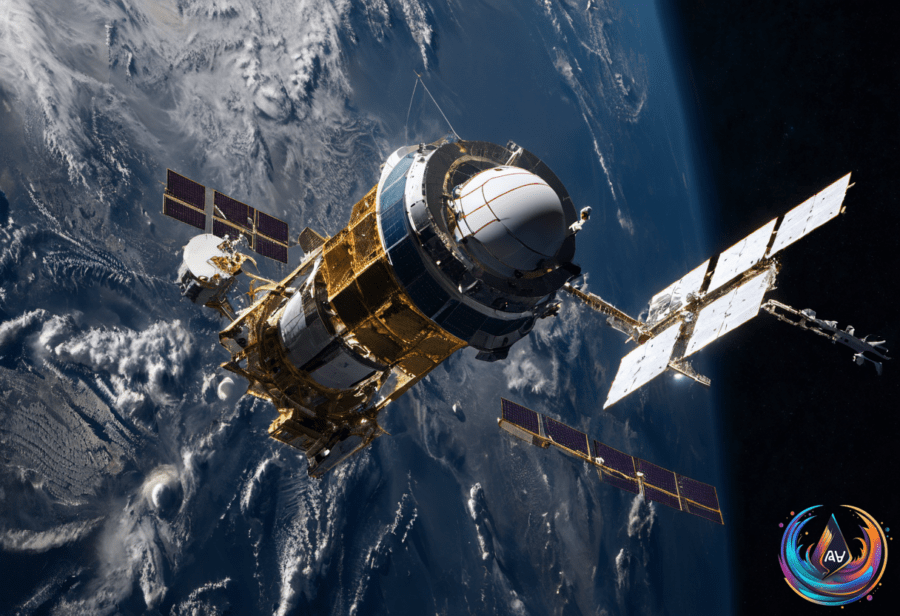
NASA launched Google’s Gemma 3 large language model into orbit. This marks the first in-orbit test of a vision-language AI analyzing satellite images directly from its own sensor.
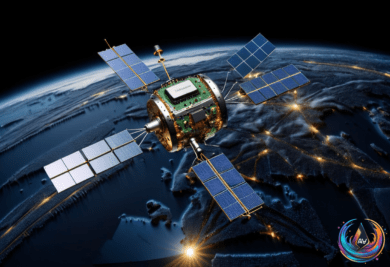
Gemma 3 analyzed images captured by Loft Orbital’s YAM-9 satellite. In benchmark tests involving 7,960 images, the AI achieved 88 percent accuracy. It classified images without any prior training or fine-tuning on the dataset or categories.
NASA conducted two live image capture tests from YAM-9. One test took place over Toulouse, France, and the other over the coast of Argentina. These real-time demonstrations show AI can process and classify images autonomously in space.
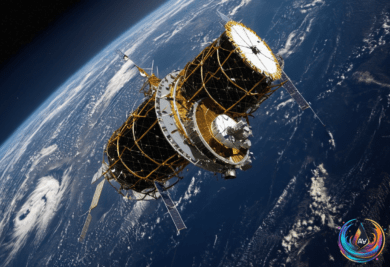
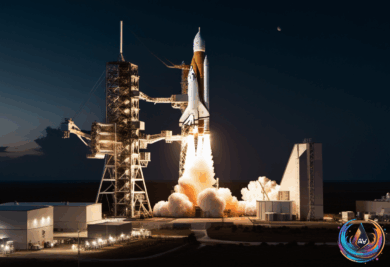
Meanwhile, SpaceX launched a robotic spacecraft on July 21, 2026, designed to service aging satellites and reduce space debris. Developed by Northrop Grumman, it rode a Falcon 9 rocket from Cape Canaveral.
The robotic spacecraft will operate in geostationary orbit—about 36,000 kilometers above Earth. Its three-meter-long arms, built by the US Naval Research Laboratory, can install Mission Extension Pods (MEPs) on satellites. These pods boost satellites’ ability to reposition and extend their operational life by up to eight years for typical 2,000 kg satellites.
Northrop Grumman explained, “Once installed, the MEP uses electric propulsion to provide orbit control and momentum unloading for a client satellite.” The robotic servicing mission is expected to begin operations within weeks after reaching geostationary orbit.
Space debris remains a pressing issue. The European Space Agency estimates over 1.2 million pieces larger than half an inch orbit Earth. Some debris are dead or disabled satellites that spin uncontrollably, complicating capture.
Servicer spacecraft must estimate the position, motion, and orientation of these tumbling satellites to dock successfully. Many older satellites lack docking plates, beacons, or navigation markers. Prepared satellites have built-in “tow hooks” to aid capture, but these remain rare.
The ESA’s ClearSpace-1 mission aims to capture the unprepared Proba-1 satellite in 2029 and drag it into Earth’s atmosphere to burn up. These efforts show the growing need for standardized satellite fixtures to streamline rescue and debris removal.
In related launches, a commercial spacecraft named LINK lifted the Neil Gehrels Swift Observatory telescope to a safer orbit on July 3, 2026. The U.S. also launched 29 more Starlink satellites on July 14, 2026, marking the 600th flight of a reused Falcon 9 booster from Cape Canaveral.
NASA’s integration of AI and robotics in orbit signals a new era for satellite maintenance and debris management. Juan M. Delfa, NASA’s technical group lead, said, “This is a major shift. Now, a scientist can write a prompt, upload it to the spacecraft, and that will be taken into account by the system.”
Loft Orbital’s tech lead Andrew W. Herson and AI researcher Taran Cyriac John at NASA JPL have proven that AI can operate beyond Earth with minimal human intervention. The robotic arms’ designer Sarah Downs noted the unique challenges of zero gravity, where “the arm’s reaction torques on the satellite” must be carefully managed to avoid “flinging it into space.”
These advances mark a decisive step toward autonomous space operations. Robotic servicing will keep satellites functional longer and help clear hazardous debris. AI models like Gemma 3 will enable spacecraft to make decisions on the fly, reducing reliance on Earth-based commands.
Based on
- NASA Puts Google’s Gemma Large Language Model in Orbit — spectrum.ieee.org
- Sarah Downs Equips NASA’s Robots With Assembly Skills – IEEE Spectrum — spectrum.ieee.org
- Robot heads to space to fix satellites and tackle space junk | The Independent — independent.co.uk
- Rescuing satellites is harder than it looks — a growing space junk problem will make doing so more important – UPI.com — upi.com
- Trump administration announces hundreds of “Genesis Mission” AI science projects. | The Verge — theverge.com