A pesticide recommendation with devastating results
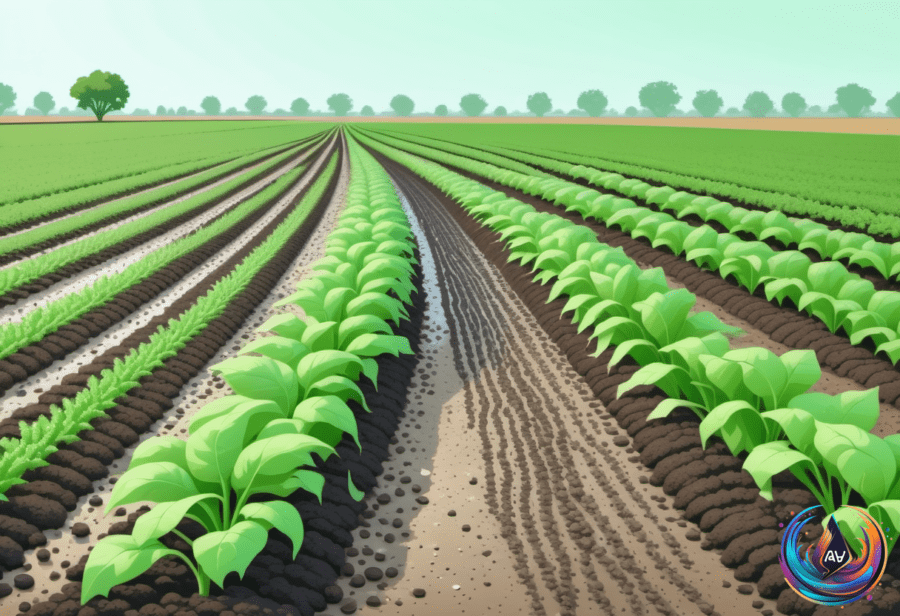
A 67-year-old farmer in Chuzhou, Anhui province, says an AI assistant’s pesticide advice destroyed 25 acres of sesame crops overnight. The farmer, identified by the surname Wu, had used AI software for a year before following the treatment plan that ruined a large field of sesame seedlings.
The problem centered on flufenacet, a herbicide that can harm sesame fields when it is not used in a highly targeted manner. The AI suggested a treatment plan, but the result was not limited to unwanted plants. The herbicide killed the weeds and the sesame seedlings together, leaving the entire field damaged.
“The seedlings were no good the day after I sprayed them,” Farmer Wu said. He also described the speed of the damage: “The weeds and seedlings died together, and the seedlings died even faster.”
Farmer Wu’s experience shows why an AI answer can become dangerous when it moves from a screen into a field without verification. The system offered advice for a specific agricultural situation, but the treatment failed to account for the danger flufenacet posed to sesame crops unless applied in a highly targeted way.
Warnings cannot replace checking the advice
The AI app used by the farmer carried a warning that read: “AI generation may be incorrect, please verify.” Similar disclaimers appear on AI apps such as ChatGPT and Google’s Gemini, placing responsibility on users to check answers before acting on them.
That warning can look easy to overlook when an answer arrives in clear, confident language. Yet the crop incident shows the gap between an answer that sounds useful and advice that works in a real setting. A pesticide decision can affect an entire field, and a wrong recommendation can produce losses before a user has time to question it.
The same problem has appeared outside farming. A ChatGPT user developed bromism after using the system for health advice. The man replaced salt with sodium bromide based on AI advice, developed bromide toxicity, and was admitted to hospital for psychosis.
The health incident, covered in an article published Tuesday 11 August 2026 at 13:10 BST, carries the same warning as the crop case: AI answers can influence real decisions even when the system does not understand the full situation. In both examples, a user acted on an AI recommendation and faced serious consequences.
AI tools are adding safeguards, but limits remain
OpenAI has rolled out an upgrade for ChatGPT that provides better answers for health questions. The company still warns that ChatGPT is “not intended for use in the diagnosis or treatment of any health condition.” That language makes clear that improved answers do not turn an AI assistant into a doctor or a replacement for professional judgment.
The warning also applies beyond healthcare. An AI assistant may help organize information, but it does not remove the need to confirm pesticide instructions, crop safety, or other details before taking action. Farmer Wu had already used AI software for a year, yet one treatment plan still led to the destruction of 25 acres.
These cases do not show that every AI answer is wrong. They show why users need to treat AI output as information that requires checking, especially when the decision affects health, crops, money, or safety. A disclaimer can alert people to that risk, but the damage may still come if the warning is ignored.
Farmer Wu’s field became a clear example of the cost of trusting an AI answer without verification. The seedlings died the day after the spray, and the warning on the app did not undo the mistake. For users, the basic lesson is direct: an AI recommendation may sound certain, but real-world decisions still need confirmation before they are put into practice.
Based on
- Farmer Horrified as AI Gives Bad Advice That Kills 25 Acres of Crops — futurism.com
- Farmer accidentally kills 25 acres of crops after trusting AI advice | The Independent — independent.co.uk
- AI news: China tightens regulations on artificial companions — ctvnews.ca
- Chinese couple lose US$15 million pig farm in false fraud arrest, raising justice questions | South China Morning Post — scmp.com
- The rise of AI weather forecasting as China embraces the change | The Independent — independent.co.uk