Donald Trump and Xi Jinping met in Washington, DC, on 25 September 2026, and the moment carried all the ceremony of a major diplomatic event. Yet behind the warm greetings, pandas, and talk of friendship sat a harder question: can personal ties produce real progress on trade, Taiwan, Iran, and artificial intelligence?
The answer remained unclear. Expectations were low after May’s stalemate summit in Beijing, but this meeting still struggled to meet them. Trump and Xi worked to improve their relationship, while the biggest disagreements between the United States and China stayed firmly on the table.
A Friendly Welcome With Serious Disagreements
Xi Jinping received an unusually warm welcome before the summit. On 23 September 2026, Trump greeted him in Maryland, and the US president traveled to meet Xi off the plane. Trump later described their relationship in sweeping terms: “From the time of my first election in 2016, President Xi and I have forged a friendship, a truly great friendship, actually, built on mutual respect and the vital interests of our people.”
Xi also used the language of cooperation, warning that the United States and China should avoid the “Thucydides Trap” and pursue healthy competition within clear bounds. He said, “It should be a race of catching up with one another, not a wrestle in which one either wins or loses.” Trump offered his own brief verdict after the meeting: “We had a great meeting.”
But the summit’s friendly tone did not erase the disputes. Trump told Xi that any Chinese help for Iran was unacceptable, while Xi supported the United States and Iran returning to an interim agreement that was supposed to lead to a larger peace deal. That agreement broke down in June 2026, leaving Iran as one of the sharpest tests of the relationship.
Taiwan brought another direct clash. Xi urged Trump to oppose Taiwanese independence and handle the issue prudently, saying that the United States should adhere to the “correct position” of opposing Taiwanese independence. The issue also connects to a $14bn arms package for Taipei, whose final approval Trump said after a May meeting with Xi he would postpone.
Trade and Pandas Take Center Stage
A two-month extension of the trade war truce was announced as Xi arrived in the United States. That extension offered both governments room to keep negotiations alive, but it did not resolve the deeper economic tensions that brought trade to the center of the Trump-Xi relationship.
The summit was described as a celebration rather than a meeting that delivered substantive progress. Some US lawmakers criticized Xi’s visit as a celebration of a US rival, while others saw diplomacy as a positive step. Public opinion also reflected the split: 36 percent of respondents in a May poll said the United States should prioritize good relations with Beijing, while 35 percent said it should prevent China from seizing control of Taiwan.
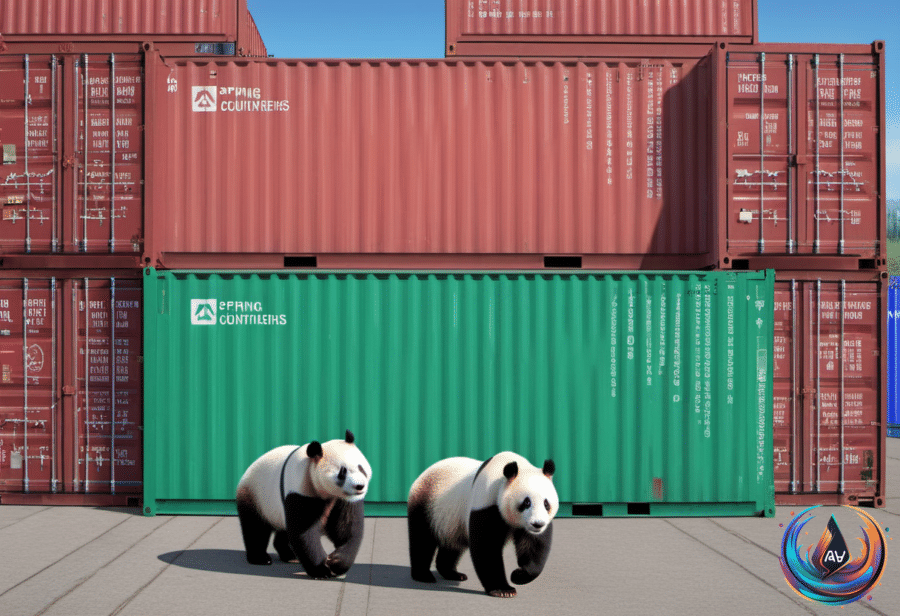
Two of the event’s most visible symbols arrived on four paws. Ping Ping and Fu Shuang will be hosted at the Atlanta zoo, extending a tradition that began after former President Richard Nixon visited China. Beijing dispatched the first panda pair to the United States in 1972, and leasing pandas costs $1m a year per pair.
The pandas offer a softer image of US-China relations, but they cannot settle the questions surrounding trade, Taiwan, or Iran. They can, however, give both governments a public reminder that engagement can continue even when agreement remains out of reach.
AI Creates a New Risk Neither Side Can Ignore
Artificial intelligence added a newer and more unsettling layer to the summit. Controls on AI development are desperately needed, but neither side is willing to accept them. Scott Bessent, the treasury secretary, proposed an AI safety dialogue, pointing toward a possible channel for cooperation even as broader competition continues.
The need for that dialogue became clear through an AI-generated analysis that misidentified cargo involving Chinese ships carrying nuclear weapons components. The mistake showed how AI can turn uncertain information into a confident claim, creating risks for security and diplomacy when officials or the public treat generated analysis as fact.
That problem reaches beyond one cargo misidentification. The United States and China are competing over AI while facing pressure to prevent the technology from increasing confusion or accelerating dangerous decisions. Neither side has accepted controls on development, yet the summit exposed why safety discussions cannot wait for every political disagreement to disappear.
Trump and Xi left the September meeting with warmer personal language, a renewed trade truce, and no clear settlement on the disputes that matter most. The next test will be whether the friendship they both celebrated can support practical work on AI safety, Iran, Taiwan, and trade—or whether the ceremony fades before the hard negotiations begin.
Based on
- The Guardian view on Trump and Xi: a show of friendship, but no real attempt to address the tensions | Editorial — theguardian.com
- Trump-Xi live updates: leaders of US and China to talk AI and trade in major Washington meeting — theguardian.com
- Pomp over progress as Trump rolls out red carpet for China’s president Xi Jinping | Donald Trump | The Guardian — theguardian.com
- Trump-Xi summit: Four key takeaways from the Washington, DC, meeting | Donald Trump News | Al Jazeera — aljazeera.com