MIT Technology Review has opened nominations for its 2027 Innovators Under 35 competition, inviting people around the world to put forward young scientists, entrepreneurs, and inventors whose work is changing what technology can do.
The deadline is January 19. Nominees must be under 35 on October 1, 2027, which means they must have been born on or after October 2, 1992. People can nominate themselves or someone they know.
Who belongs on the 2027 list?
Each year, MIT Technology Review selects 35 honorees for the Innovators Under 35 list. The competition looks for researchers and founders engineering solutions to difficult problems, including human disease and climate change. It also recognizes clever and useful inventions, important scientific discoveries, and technological breakthroughs made early in a person’s career.
The work must go beyond an interesting idea. The competition wants people responsible for a major finding or advance who can show real-world impact. That open scope means nominees can come from anywhere in the world and from many different areas of science and technology.
After nominations close, editors will review the entries and select a group of semifinalists. Those semifinalists will be invited to complete a formal application, and dozens of expert judges will help evaluate the applicants before the finalists are chosen.
MIT Technology Review began producing the list in 1999. The annual project helps its reporters find promising young minds in the fields they cover and introduces readers to rising stars worth watching in the years ahead. Subscribers can explore the 2026 list and the full archives.
A prosthetic hand that can feel
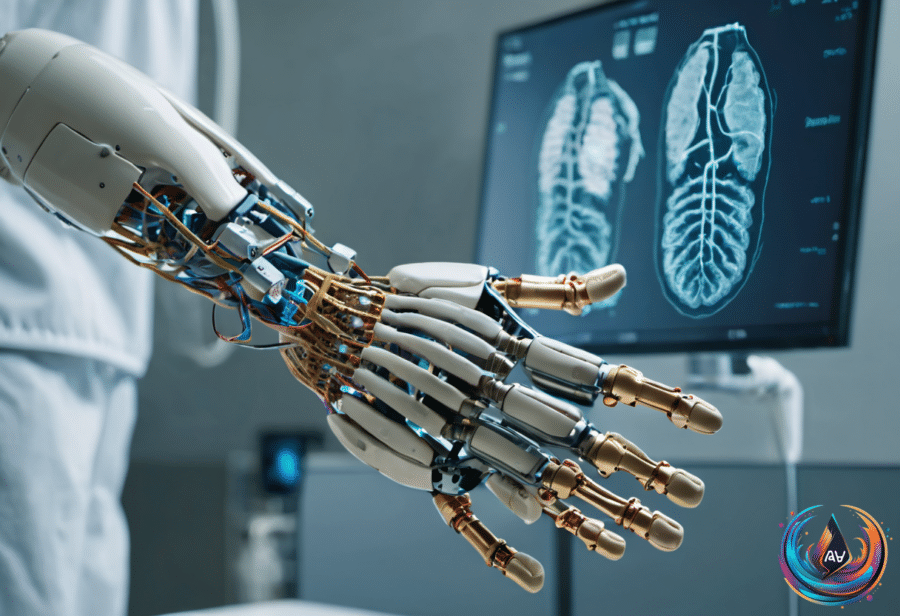
One story in the same technology coverage follows Avi Davidson, who lost his left hand and became paralyzed after a horrific injury as a teenager. Seventeen years later, he works as a trauma therapist and is taking part in a clinical trial of a prosthetic hand that lets him move and feel.
The experimental device connects directly to nerves in his forearm. Wires come out of his arm so he can plug the hand into the system, a setup unlike standard prosthetics. Davidson is the ninth person to receive the implanted technology, but he is the first to take it home and use it independently.
At home, he has used the prosthetic for everyday tasks such as drinking from a cup and writing. It lets him feel pressure and handle delicate objects, including grapes, eggs, and a loved one’s hand. He has learned to use about seven different prosthetics since his accident, but this device offers a different kind of connection.
Taking part has required hundreds of hours of lab training and physical therapy alongside his demanding job. He also had surgery to place electrodes in his arm and will need another operation to remove them. The hand will not remain his long term, and the research team at the University of Utah expects him to have it until at least late January 2027, with another year possible.
“While it’s unfortunate at times, and irritating at times, I do not regret what has come from [the accident], or the fact that it happened,” Davidson said.
What the trial may reveal
The University of Utah team wants to learn how the technology performs outside a laboratory, what people use it for in daily life, and where the design needs improvement. Davidson has already noticed that the prosthetic wrist can feel sore and stiff after overuse, much like a flesh-and-blood wrist. Stretching it relieves the feeling.
The bigger question concerns the brain. Scientists do not know whether using the bionic hand will change how Davidson’s brain represents his missing left hand. Before the trial began, researchers performed brain scans to record that representation. His experience may help show how a device connected to nerves affects the brain and nervous system over time.
Davidson has made his reason for joining clear: “I am not going to benefit from this … I wanted to be a part of this in the context of being able to help push the technology forward.”
The prosthetics story first appeared in The Checkup, MIT Technology Review’s weekly biotech newsletter. It sits alongside coverage in The Download, the weekday newsletter that has also featured stories about AI, climate, space technology, cybersecurity, and scientific research.
Recent must-reads in that coverage include SpaceX winning approval to launch 1 million data center satellites, Neuralink winning approval for a brain-implant trial in ALS patients, and hackers reportedly using an AI tool called Artex to breach US spy agencies. Other items examine AI’s effect on public records, data centers linked to hundreds of premature deaths, AI moderation mistakes at Meta, and an immune-calming pill that healed severe eczema in a clinical trial.
Another feature follows researchers investigating Arctic fires and permafrost. In July 2021, a wildfire burned through a forest on the University of Alaska, Fairbanks campus, stripping away moss and soil that insulated the permafrost below. As climate change fuels more frequent and severe fires, the thaw can release greenhouse gases, creating a cycle researchers are trying to break. The story is also available as an MIT Technology Review Narrated podcast on Spotify and Apple Podcasts.
For now, the 2027 Innovators Under 35 competition offers a chance to spotlight the people building solutions at the edge of science and technology. The bionic hand trial shows why that search matters: progress can be measured not only in discoveries, but in whether a person can use them to drink, write, and feel the world again.
Based on
- The Download: Innovators Under 35 nominations are open, and a bionic window into the mind — technologyreview.com
- Our 2027 Innovators Under 35 competition is now open | MIT Technology Review — technologyreview.com
- How cutting-edge prosthetics can help probe the human mind | MIT Technology Review — technologyreview.com
- The Download: Better bionic hands and AI’s natural-gas boom | MIT Technology Review — technologyreview.com
- The Download: AI swamping open records, and firefighting for permafrost | MIT Technology Review — technologyreview.com