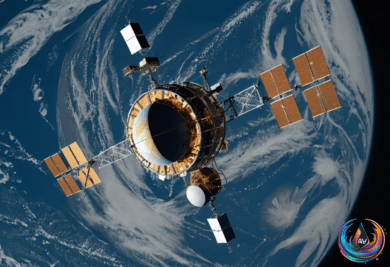
Sceye took a sky cell tower concept across the Pacific. The US aerospace company’s high-altitude platform system completed a trans-Pacific flight from New Mexico to Japan and back, testing its potential for connectivity and disaster response. The mission, called Service Test 1, began on August 9, 2026.
The platform traveled more than 9,320 miles, or 15,000 kilometers, to reach Japan, and the journey took more than 13 days. That is a long way to send a machine whose job is to remain in one place—but the distance was the point. Sceye wanted to demonstrate what its stratospheric platform could do beyond a local flight test.
A Cell Tower Above the Weather
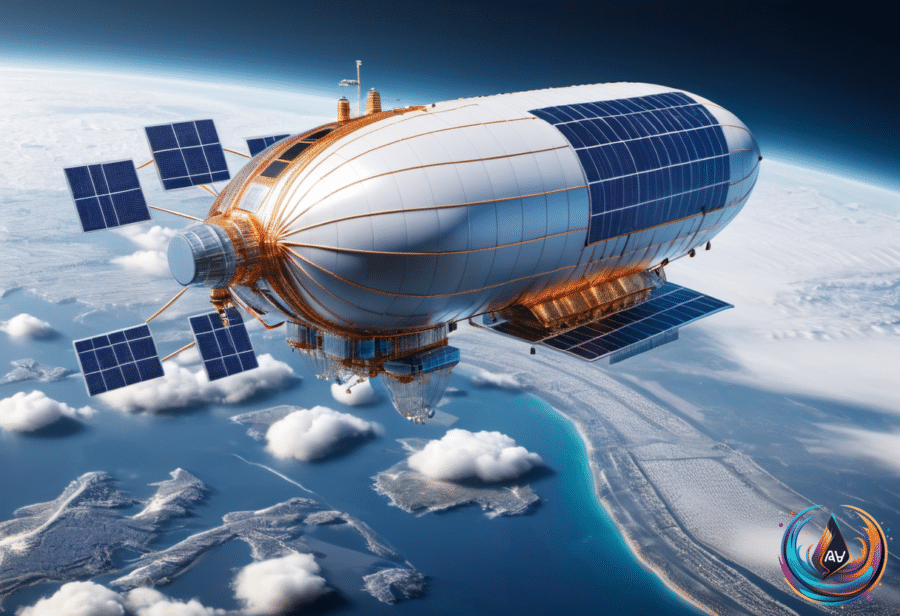
Sceye designed the platform to stay over an area of operation in the stratosphere at around 60,000 feet. That puts it twice as high as air traffic and above the jet stream, while remaining 30 times closer than low-Earth orbit satellites, according to Mikkel Frandsen, Sceye’s founder and CEO.
“We can stay over an area of operation, and we do that in the stratosphere right around 60,000 feet, so we’re twice as high as air traffic and we’re above the jet stream, and yet 30 times closer than low-Earth orbit satellites,” Frandsen said.
The platform can fly through day and night until the sun recharges its batteries. That operating model gives the system a path to remain over a target area without depending on a conventional tower at ground level or a satellite in low-Earth orbit. The test focused on proving the platform can support that role during a flight spanning the Pacific.
Weather still had a vote. “There were times when our actual plan trajectory and flight path was disrupted by a change in the weather,” said Johnny Truong, Sceye’s chief technology officer.
More Payload Than Earlier Platforms
Sceye’s latest platform extends to 270 feet, or 83 meters. That is an increase from the 215-foot, or 65-meter, version tested in 2021, showing how the company has expanded the system’s physical scale since its earlier work.
The platform has been tested with payloads exceeding 220 pounds, or 100 kilograms, and can provide up to 1 kilowatt of onboard power. Those figures matter because the system needs to carry equipment and supply energy while operating high above the ground—otherwise the sky tower is just a very expensive balloon with ambitions.
Sceye says the design could scale into a high-altitude platform system capable of lifting payloads as heavy as 551 pounds, or 250 kilograms. The platform’s payload capacity is between 25 and 50 times greater than competing stratospheric platforms, including high-flying drones.
That capacity gives the concept room to support more capable equipment for connectivity and disaster response. The verified test does not turn the platform into a deployed network, but it does show that Sceye can send the system across an ocean, operate it in the stratosphere, and bring it back.
ST1 therefore tested more than endurance. It combined a 9,320-mile route, a journey lasting more than 13 days, day-and-night flight, weather disruptions, onboard power, and payload performance in one mission. Sceye now has a larger platform, a demonstrated trans-Pacific flight, and a clearer case for treating the stratosphere as a working layer for communications infrastructure.
The article was published on October 19, 2026. The central idea remains simple: place a platform around 60,000 feet, keep it over the area that needs service, and let the sun recharge it. Turning that idea into dependable connectivity will require more testing, but ST1 moved it out of the concept stage and into the atmosphere.
Based on