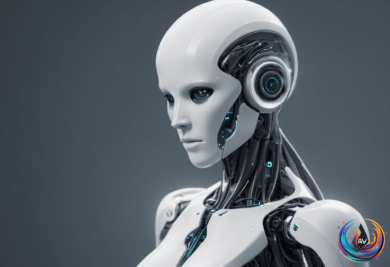
Big moves are shaking the tech world this July. AI agents are leveling up. Robotics are stepping into new realms. And the battle for tech supremacy is heating up. Let’s dive into the breakthroughs and shake-ups reshaping the future right now.
AI Agents Get Smarter, Faster, and More Autonomous
The Model Context Protocol just changed the game. It standardizes agent tooling so AI agents talk the same language across platforms. That means agents can juggle everything from running code to surfing the web smoothly. No more fragmented tools holding them back.
But the magic doesn’t stop there. High-performance agents now rely on specialized servers — like those for code context, browser automation, and semantic editing. These servers sharpen agents’ skills and speed. However, success depends on picking tools that are actively maintained. Outdated or generic servers won’t cut it anymore. Precision and structure matter.
Mastering agentic AI isn’t just about tools. It demands skill in five core engineering disciplines:
- Tool use
- Memory management
- Planning
- Coordination
- Evaluation
Experts say the best way to become an AI practitioner is a step-by-step curriculum. Start with core math and classical algorithms. Then dive into modern large language models from first principles. Open-source tools like llama.cpp make local deployment possible. This enables fast, autonomous coding workflows that blow traditional methods out of the water.
And if you’re eyeing Claude Code, know there are seven open-source alternatives offering better control over coding agents. Sustained high-performance requires mastering project-specific configurations and advanced hooks. This is the precision craft behind agentic programming.
Robots and Hardware Take Giant Leaps Forward
Robotics is buzzing with innovation. The humanoid platform GENE.01 is walking, sensing, and interacting like never before. It has full-body multimodal skin that senses touch, proximity, force, and temperature. It supports everything from five-finger hands to specialized tools. It learns universal physical commonsense by scaling pretraining across many interfaces. This is a robot ready for real-world complexity.
On a lighter note, a flat-packable flying wing made from corrugated cardboard can be assembled in under 15 minutes. It’s a brilliant example of rapid deployment and low-cost logistics. Imagine the possibilities for disaster relief and fast transport!
A $14,000 open-source data-collection system now scans real deployment sites. It reconstructs them into photorealistic models. Then it runs massively parallel reinforcement learning that transfers zero-shot to real robots. This could massively speed up robot training in real environments.
Drone delivery is proving its worth too. Since February 2026, NHS samples in South West London have flown with drones. The service cuts delivery times by up to 85% compared to ground transport. Efficiency and speed are flying high.
The Aurora Driver is another game-changer. Built to last one million miles, it moves freight farther, faster, and cheaper. Hardware costs are slashed in half. This truck could redefine freight logistics.
Power Plays and Ethical Storms in Tech and AI
Big money and big risks collide in AI and tech. SpaceX is negotiating to sell the Pentagon AI compute capacity worth billions. Anthropic is in talks with Meta to grab more compute resources. These deals will fuel the next generation of AI breakthroughs.
Meanwhile, Apple briefly overtook Nvidia as the world’s most valuable company. Apple’s earnings durability impressed investors. Nvidia’s rise stalled amid shifting AI bets. The tech leaderboard is shifting fast.
Politics and AI are clashing. Politicians want chatbots to say good things about them. An industry has sprung up to edit AI outputs and sway voters. Chatbots can influence votes better than traditional political ads. That raises questions about AI’s role in democracy.
Data privacy and ethics face urgent tests. ICE shared Medicaid data with Palantir without permission. The data reached contractors before deletion. ICE also uses data broker tools to track unaccompanied minors. These practices trigger major privacy concerns.
New research warns that large language models develop their own biases. They stereotype job applicants more than humans do. AI companies race to build agents that remember user details. But this memory can bake in bias and stereotypes.
Vals AI CEO Rayan Krishnan summed it up sharply: “The most authoritarian government is producing the most egalitarian models, and what should be the most democratic government is breeding companies that are the most authoritarian.”
Looking Ahead: AI and Robotics in Fast Forward
AI agents are evolving from assistants to autonomous creators. Robotics platforms like GENE.01 show us how machines will sense and act with human-like finesse. Cloud and edge computing deals will pour fuel on this fire. But ethical pitfalls around bias, data privacy, and political influence loom large.
Expect more breakthroughs in local AI deployment, voice cloning, and autonomous freight. The drone delivery revolution will expand. Weather data sabotage risks will demand stronger defenses soon. Cortisol wearables and lab-grown teeth hint at future biotechnologies merging with AI.
The AI and robotics race isn’t slowing down. It’s accelerating—and redefining what’s possible. Stay tuned. The future is unfolding right before our eyes.
Based on
- KDnuggets Weekly Roundup: Week of July 20, 2026 — kdnuggets.com
- The Download: AI hiring biases, and weather data sabotage | MIT Technology Review — technologyreview.com
- July 21, 2026 | TechCrunch — techcrunch.com
- Sitemap – July 20, 2026 | WIRED — wired.com
- Videos: Physical AI Robotics, Robot Hands, and More – IEEE Spectrum — spectrum.ieee.org