Anthropic delivered the biggest IPO in history this week, but its debut could not rescue the AI trade from a broad market selloff. The company listed on the Nasdaq under the ticker ANT on Thursday, Nov. 19, 2026, after raising $81.3 billion through the sale of 980 million shares at $83 each.
The opening looked like a victory lap. Anthropic shares opened at $111.50, or 34 percent above the IPO price, briefly implying a fully diluted value near $2 trillion. The stock faded during the session and closed at $97.17, still up 17 percent, for a $1.27 trillion valuation. By Friday, though, it had given back most of that gain and closed about 9 percent lower, ending only narrowly above the offer price after falling as much as 14 percent.
A blockbuster debut in a battered market
Anthropic priced its shares at the top of expectations, above the $70-to-$78 range covered in #347. An underwriters’ option to buy up to 147 million more Class A shares pushed the total raised to $93.5 billion, topping the $85.7 billion SpaceX raised in June. Anthropic also paid $550 million in fees to the banks involved in the offering.
Dario and Daniela Amodei attended the debut at the Nasdaq MarketSite in New York. Before the opening bell, Dario Amodei warned about AI’s risks and called machine intelligence one of the most significant developments in human history. President Trump called the opening “very successful” and said he has a “lot of respect” for Dario Amodei.
Investors had hoped the listing would give markets a boost. Instead, the rest of the market broke sharply. On Thursday, the Dow fell about 1,100 points, or 2.19 percent, while the Nasdaq Composite lost 2.25 percent. The Cboe Volatility Index jumped almost 16 percent to nearly 29.
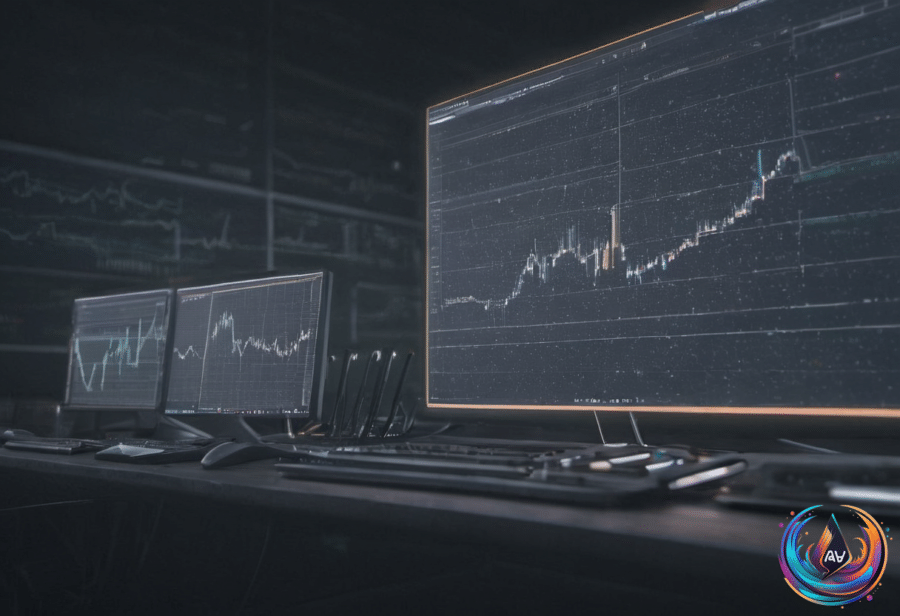
Friday brought a deeper slide. The Nasdaq fell 5.28 percent to 22,617.73, erasing its gains for 2026 and finishing down 10% for the week. That was its worst weekly performance since the onset of the COVID-19 pandemic lockdowns in March 2020. The S&P 500 lost 3.7 percent, and the Dow fell 1.93 percent to its first close below 50,000 since June.
Both the S&P 500 and the Dow ended more than 10 percent below their record closing highs, confirming corrections. All three major indexes posted their steepest weekly losses since April 2025.
Why investors are questioning the AI trade
Chip and AI infrastructure companies led the decline. Nvidia fell 13 percent after Reuters reported an SEC inquiry into its accounting. AMD dropped 13 percent, Micron fell almost 14 percent, and CoreWeave and Nebius each lost more than 10 percent.
Nvidia also faced a leadership shock. Jensen Huang resigned this month after allegations of marital infidelity, including an allegation involving a woman believed to have been spying for China. Nvidia still posted strong quarterly results on Tuesday: revenue rose over 100 percent from the same quarter last year, and the company raised its projection for next year’s revenue. Even so, its share price was down over 20% from the previous Friday’s close and nearly 40% over the past month.
That combination has left investors asking whether the AI boom can keep supporting the market. AI-related stocks helped push indexes to record highs and supported the broader economy, with AI investments helping the U.S. economy grow at an annual rate of 3.4% in the most recent quarter. They also account for a substantial portion of the S&P 500.
The concern is not only whether AI will work, but whether the money pouring into chips, data centers and top talent will produce enough profit. David Hsu, a professor at the University of Pennsylvania’s Wharton School, said the industry still faces a basic question: “There’s going to be this period in which we kind of say, oh, this is great for reasoning and solving crazy, you know, math proofs. But then, actually, how does that translate down to the real managers, employees, organizations?”
The financing structure adds another layer of risk. Nvidia owns shares in other big AI companies such as Anthropic and lends money to companies that buy its chips. CoreWeave, a major Nvidia investment, is borrowing heavily to build data centers. That circular system links chip sales, company investments and infrastructure expansion across the AI sector.
Rates, regulation and a longer market repair
Higher interest rates have made the mood harder to ignore. The Federal Reserve raised rates for the first time in over three years in September, and traders are pricing in a 90.1 percent chance of another increase in early December. Gil Luria, head of tech research at D.A. Davidson, put the concern plainly: “Interest rates are going to go up.” He also pointed to geopolitical uncertainty, the possibility of an escalation in Iran over the weekend and hedge funds liquidating technology stocks.
Politics is adding pressure too. Democrats took over both chambers of Congress in the midterm elections and vowed to take a tougher regulatory approach toward AI while slowing the build-out of data centers. Democrats also won governorships in states central to that build-out, including Texas.
Dan Ives called the week a “perfect storm,” citing the midterm victories, “fears about an anti-AI/anti-datacenter DC,” Jensen Huang’s departure and Anthropic’s IPO “being a massive success but marginally reducing liquidity from other tech names.” He also said “hawkish” Federal Reserve rhetoric contributed to the losses, while maintaining that the $4 trillion AI build-out he expects to reshape multiple industries is “still happening.”
Hank Smith of Haverford Trust expects recovery to take time and said AI could fall “out of favor” through next year. “It’s just going to take a little bit of time to heal,” he said. Smith still sees a difference between today’s leaders and the weaker companies of the dot-com era, pointing to Meta and Apple and saying AI’s future is “not based on a pie in the sky.”
For now, Anthropic’s debut has delivered a clear warning: strong demand for an AI company can exist at the same time as deep doubts about the sector. The company’s shares opened like proof that the AI trade had returned, then slid back toward $83 as the Nasdaq turned red for the year and the S&P 500 entered a correction.
Based on
- Last Week in AI #348 – IPO->Correction, new GPTs and Geminis, Nvidia’s Fate — lastweekin.ai
- The AI boom had a bad week — and it’s raising loud alarms : NPR — npr.org
- Tech stocks end the week on a down note, despite Anthropic’s mega-IPO : NPR — npr.org
- Stocks plunge as Anthropic’s record IPO fails to halt market slide — thehill.com
- Why Anthropic’s Big IPO Couldn’t Revive the AI Trade – Business Insider — businessinsider.com