Apple has opened a concert hall in London. The new venue sits at the company’s UK headquarters inside Battersea Power Station, on the former power station’s north side with views overlooking the Thames. It is built for live performances, recordings, and the kind of polished video streaming that makes a music service feel less like a playlist warehouse.
Apple Music Hall can hold up to 600 people in standing and seating configurations. It will host one-off shows by major recording artists and new bands, with every performance filmed and broadcast live online for audiences worldwide.
The room contains 48 speakers and 16 camera locations, along with a Spatial Audio live-recording facility. Apple Music vice president Oliver Schusser said the venue contained “more cameras and speakers than any venue of its size, anywhere in the world.” That is an ambitious claim, but the hardware list suggests Apple did not open a room merely to hang a logo above a stage.
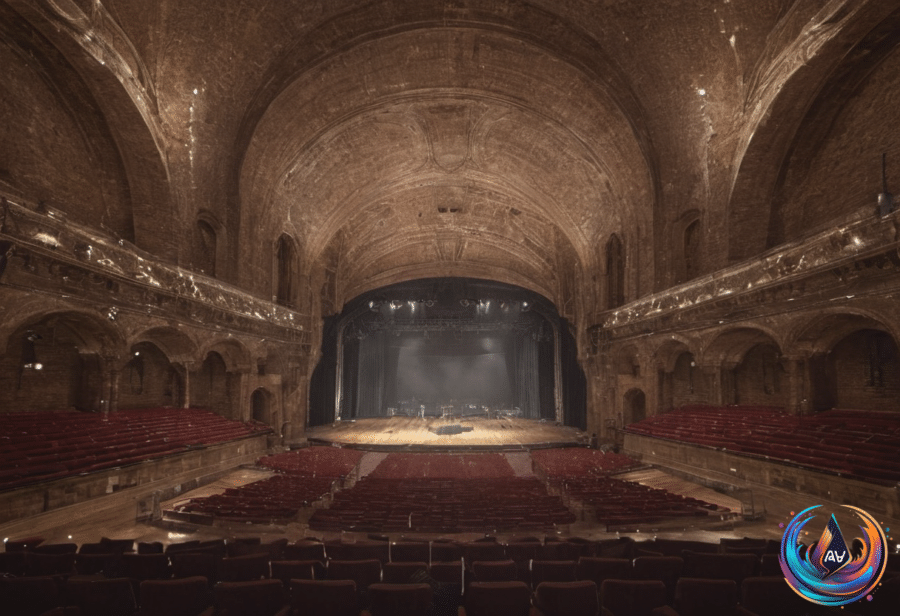
The venue is designed as an “intimate concert hall,” with main and balcony seating arranged to keep the audience close to the performance. Its 38-foot-wide stage can support traditional front-facing sets or in-the-round experiences, giving Apple room to change the format instead of forcing every show into the same familiar rectangle.
A concert hall built as a production facility
Two dedicated recording and mix studios support multitrack recordings in Spatial Audio, either during a performance or after it ends. A purpose-built broadcast control room handles iPhone video capture and other cameras, while the whole building is wired for video and audio recording, podcasting, and live streaming.
That infrastructure makes the building more than a place for artists to perform. It also gives Apple a controlled pipeline for capturing sound, producing video, mixing recordings, and sending the finished result to its music services without relying on a collection of unrelated spaces.
Apple Music’s radio stations will move into new studios at the venue from King’s Cross. The facility also includes dedicated rooms for DJ mixes, writing camps, and band rehearsals, creating a single site for several parts of the company’s music operation.
The interior takes cues from Battersea Power Station, using heritage brickwork, fluted arches, and bronze balconies. The design keeps the building connected to its location while the equipment points toward Apple’s preferred future: live music captured as a complete audio and video product.
Apple wants music to feel less anonymous
Apple will be the primary beneficiary of the new venue, though up-and-coming artists will also gain access to a platform that can record and promote their work. Apple hopes to support new and upcoming bands that might struggle to make headway, alongside one-off performances from major recording artists.
Schusser framed the project as a response to the limits of streaming. “For most artists, it’s kind of sad in streaming. There’s nothing for them to do. The music gets delivered by the labels, and then it’s a bunch of playlists.”
That criticism is blunt, but it explains the venue’s purpose. Apple wants bespoke content that distinguishes its service from competitors such as Spotify and Amazon Music, while giving fans a reason to engage with performances rather than simply start another track.
“We want our music services not just to be an anonymous place on the internet where you press a button and music starts playing,” Schusser said. He also expressed a desire for fans to meet artists and understand their music better—an objective that is easier to pursue when Apple controls the room, the recording process, and the broadcast.
Jimmy Iovine described music streaming in harsher terms: “It’s one dimensional. It’s an ATM machine.” He also stated that music streaming services are “minutes away from being obsolete” because they do not foster a connection between the listener and the music.
Schusser said Apple is not trying to enter the live business or compete with anyone. “We’re not trying to be in the live business. We’re not trying to compete with anyone.” The distinction matters: Apple Music Hall is designed to feed the company’s music service with exclusive performances and recordings, not to become a separate concert promoter.
That strategy also reaches beyond established names. Schusser said, “There are too many artists who rely on [their back] catalogue. Catalogue music is great, but we need to make sure we have a new era of catalogue music in 10, 20, years from now.” Apple Music Hall is Apple’s answer—a physical venue designed to turn new performances into the catalogue it believes future listeners will want.
Schusser called the opening “an unprecedented step further” in Apple’s commitment to artists and fans, saying Apple Music Hall supports live music “in ways only Apple can do.” The real test will be whether the venue produces music people return to hear, not simply another very expensive room full of cameras.
Based on