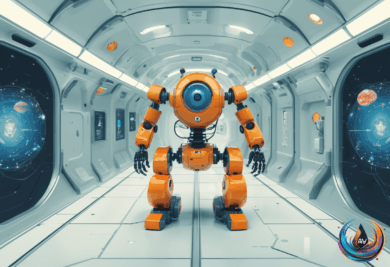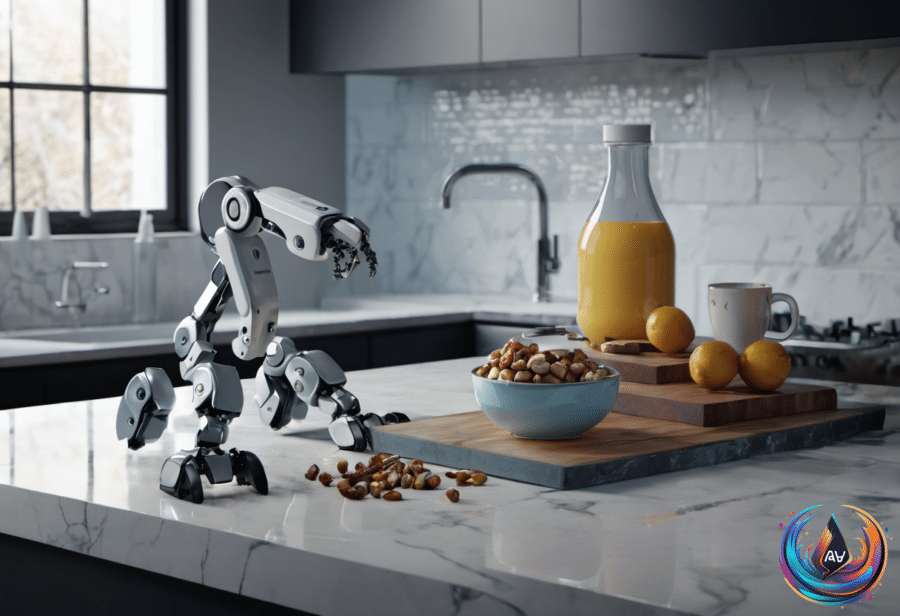
Robots need more than cameras and clever algorithms to handle the messy physical world. Physicl is betting that the missing ingredient is a much richer training ground, built from realistic 3D environments and synthetic data.
The startup has raised $10 million in seed funding from Inovia Capital to help world model designers and robot builders solve difficult training problems with more realistic simulations. At the same time, Physicl is releasing Studio, a product with 10,000 3D environments and 100,000 assets that lets users create scenes for robot training.
From Online Products to Physical AI
Founder and CEO Alex de Vigan spent the last decade building nfinite, a company that made it easy for brands and retailers to create 3D models of their goods and display them online. The arrival of transformer-based AI models pushed nfinite toward generative imagery, and de Vigan’s last business was swamped by the rise of generative AI.
That disruption also revealed a new direction. De Vigan saw a purpose for the team and technology stack built to render 3D environments with high fidelity: helping physical AI models understand, interact with, and manipulate space and objects.
“What we were super unique about doing in 3D, AI was going to replace, but something was missing in AI: its ability to understand, interact, and manipulate space and objects,” de Vigan said.
Researchers building physical AI models want robots to handle tasks such as picking up diverse, small objects, but training those systems remains difficult. Video training has frustrated researchers, and gathering data through remote operations can be expensive. Digital simulations offer a promising path, yet making those simulated worlds match real-world physics has proven difficult.
De Vigan believes the pipeline from his previous company can help make physical AI models more effective by producing detailed environments and training data for the situations robots struggle to recognize.
Studio Targets the Hard Cases
Physicl is entering a crowded category of startups that collect, label, or generate data for foundation model builders and robot operators. Companies are testing different data types as customers search for the methods that will make robots live up to their promise.
“The space is very young and very blurry sometimes,” de Vigan said.
Physicl wants to focus on post-training models for difficult edge cases. Studio represents various objects across 10,000 3D environments and 100,000 assets, giving users the pieces to build scenes around specific robot problems.
- A robot that struggles to discern a cup on a cluttered countertop.
- A cup that becomes difficult to identify while sitting in shadow.
- Specific scenes that generate synthetic data for training on those problems.
That focus moves beyond simply supplying a fixed dataset. Physicl wants to become the tooling for ongoing synthetic data generation, allowing training data to change with a model’s needs.
SpAItial, a world model builder, collaborated with Physicl as an early customer to improve the fidelity of its products. SpAItial’s latest product, Echo-3, was released last week and generates 3D simulations from 2D imagery. Its CEO and founder, Matthias Niessner, is also a professor of robotics at the Technical University of Munich.
Niessner said SpAItial needed the kind of high-fidelity synthetic data Physicl offers. The challenge, he explained, is that teams must curate data by hand, creating a long cycle before new training material reaches a model.
Training Data That Responds to the Model
Niessner sees the strongest opportunity in generating data during the training process itself rather than waiting for people to prepare every example.
“The real challenge is, you have to curate the data by hand, and this is a very long cycle,” Niessner said.
He described a system in which a model identifies a gap, then creates the data needed to address it: “To us what seems very attractive is you can just do this on the fly [ … ] You’re running Claude, and it checks, ‘Oh, I need more data of this in my training,’ and then it auto generates that data, depending on the training state. That, to me, is super exciting, and this is exactly what Physicl is offering.”
De Vigan sees the company’s future platform handling enormous inputs, including trillions of images or millions of hours of LIDAR capture data. The goal is to turn those materials into high-quality 3D representations, then use them to generate billions of permutations for model training.
“What we created 10 years ago, without knowing it, was basically an agentic workflow to transform unstructured information into high fidelity 3D,” de Vigan said.
That vision gives Physicl a role beyond data delivery. Instead of treating synthetic data as a one-time resource, the company is building around a repeatable workflow that can create new environments and examples as robot training demands change.
The $10 million seed round gives Physicl room to push that workflow into a field still searching for dependable ways to connect digital simulations with physical performance. If Studio can help models learn the edge cases that video and remote operations miss, the digital world may become a far more useful proving ground for robots.
Based on
- Physicl raises $10M to make the digital world real enough for robots — techcrunch.com
- TechCrunch Mobility: A new, bigger AV boom is here | TechCrunch — techcrunch.com
- Agility is the first pure humanoid robot company on the stock market. Are you buying? | TechCrunch — techcrunch.com
- A YC startup is putting $1M behind 5 unsolved materials science problems for AI | TechCrunch — techcrunch.com
- November 2026 | Page 2 of 4 | TechCrunch — techcrunch.com