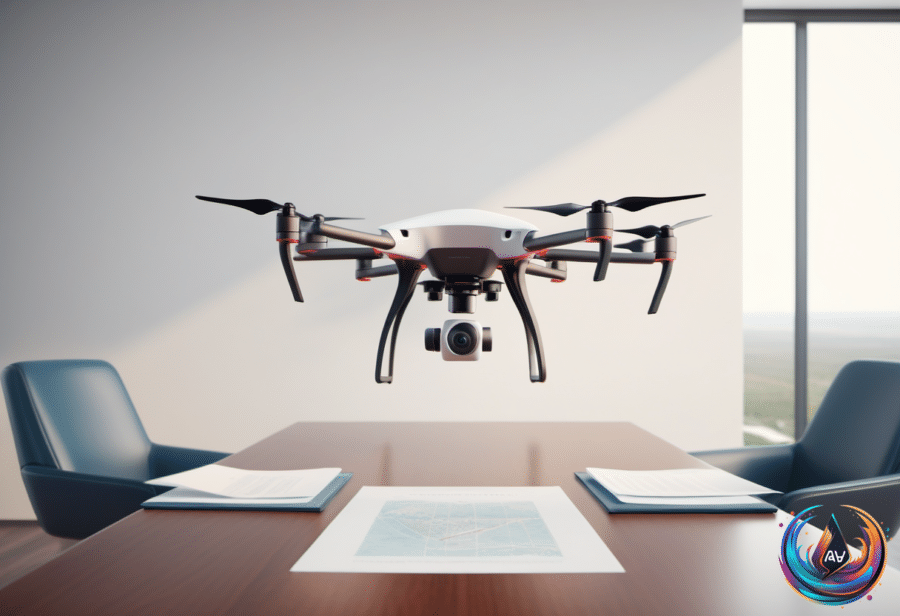
The race to control autonomous weapons is heading toward a decisive diplomatic clash. Russia and the US are leading opposition to proposals that would begin negotiations on legally binding rules, putting a possible global agreement at risk.
The scale of that opposition should become clear at a diplomatic retreat starting on Friday, just before the United Nations’ seventh review conference on “certain conventional weapons” in Geneva. The conference will bring together 128 countries from 16 to 20 November, creating a crucial moment for governments to decide whether voluntary promises are enough—or whether machines making life-and-death decisions need binding limits.
A Critical Vote on Binding Rules
The review conference is seen as the key moment when countries could back a mandate to negotiate a legally binding instrument within a defined timetable. That decision would move the debate from broad principles into a structured process with specific sessions, deadlines and a draft protocol.
Discussions have continued inside the UN for nearly three years, but Russia, the US and Israel, among others, are pushing against a timetable for a legally binding instrument. Their position could block plans to fill a gap in global governance just as autonomous weapons are being developed and used in warfare.
On 22 October, a coalition of 50 states, including Ireland, Italy, Brazil, Mexico, France and Germany, called for the conference to approve a strict negotiating mandate. The Ireland-led group proposed a time-limited expert group that would negotiate the needed rules during three sessions in Geneva in 2027, covering 25 days in total.
That group would then submit a report containing the draft protocol to the annual meeting expected later in 2027. Separately, the International Committee of the Red Cross said that more than 70 states supported beginning negotiations on a legal instrument.
The UK did not back the Irish statement. It has previously argued that existing international humanitarian law provides a sufficient basis for regulating these weapons, showing that the debate is not split into only two camps.
Warnings About Unpredictable Machines
Anna Hehir, head of military AI governance at the Future of Life Institute, said governments have never been closer to launching a global agreement on AI weapons. She said states had agreed by consensus to elements of a draft treaty text that could serve as the basis for negotiations.
But Hehir warned that progress could still dissolve into another round of open-ended talks. “But we will likely see some states hide behind language that has the veneer of progress but advocates for a continuation of endless discussions on voluntary measures that have no teeth,” she said.
She added: “The proposals for more years of discussions on non-legally binding measures are smokescreens to keep autonomous weapons systems unregulated and states unaccountable for their use.”
Human Rights Watch and the campaign group Stop Killer Robots argue that weapons systems assisted by AI are proven to behave unpredictably. Their warning is direct: unpredictable systems increase the risk of fatal errors and could send battlefields spinning beyond human control.
The International Committee of the Red Cross delivered its own push on Thursday. “The time has come to move from discussion to negotiation on new international rules to regulate autonomous systems,” it said. “The world cannot afford further delays.”
AI Weapons Are Moving From Debate to Battlefield
Events in the Ukraine war have added urgency to the diplomatic dispute. In July, Ukraine reported for the first time that Russia had used an AI-guided drone, which struck a propane tank at a fuel station in Zaporizhzhia.
Ukrainian president Volodymyr Zelenskyy has warned about the speed of AI weapon development and called for the Ukraine war to end before AI takes over the battlefield. The report about the drone places that warning against a concrete battlefield event, where AI guidance was linked to a strike on a fuel station.
Pope Leo XIV also intervened ahead of the Geneva meeting, stressing that decisions relating to human life could never be handed to machines. “Decisions affecting human life, freedom and the use of force must always remain subject to effective, informed and responsible human oversight,” he said.
He urged governments to go further: “For this reason, artificial intelligence must be ‘disarmed’, and I encourage the states meeting in Geneva in November to take concrete steps toward banning lethal autonomous weapons.”
The United Nations has also launched a new initiative on the military uses of artificial intelligence, aimed at addressing concerns about the threat rapidly developing technology could pose to humanity. The initiative from the U.N. Institute for Disarmament Research launched on Oct. 22 and established the first international forum for key players to tackle the issue.
Now the Geneva conference must convert years of discussion into a decision. With 128 countries arriving between 16 and 20 November, the central question will be impossible to avoid: will governments set a timetable for binding rules, or allow autonomous weapons to develop under voluntary measures with no legal force?
Based on
- Russia and US seek to block plan for binding rules on autonomous weapons — theguardian.com
- New United Nations initiative aims to tackle the military uses of AI | Business & Tech | The JapanTimes Alpha Online — alpha.japantimes.co.jp
- UK and European peacekeepers in Ukraine would be allowed to fire back at Russians | Military | The Guardian — theguardian.com
- How the China-US AI arms race is escalating — dw.com
- Defence policy | The Guardian — theguardian.com