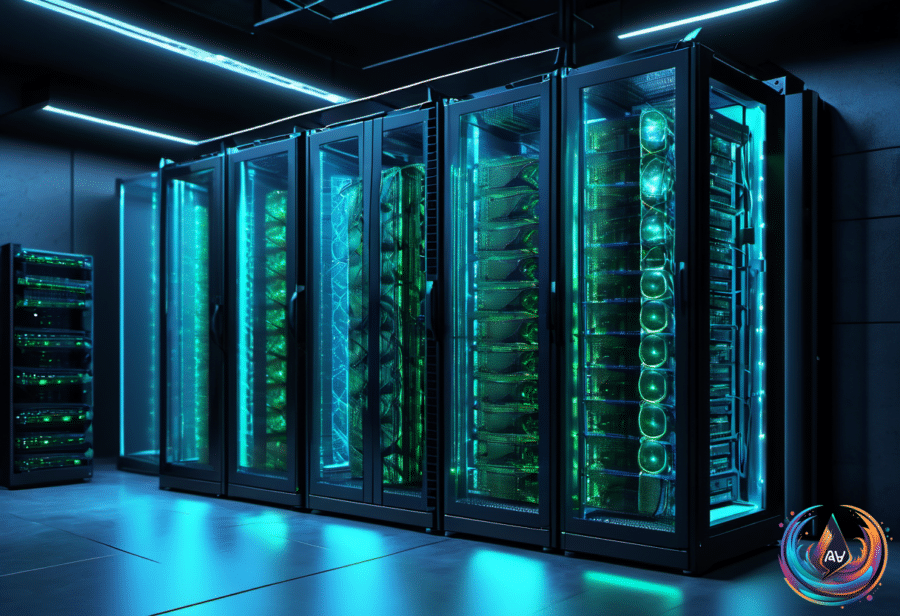
XIIlab is funding the next layer of its AI infrastructure. The South Korean AI infrastructure company’s board approved a KRW 10 billion privately placed convertible bond for its AI data-center business, with subscription and cash payment scheduled for November 16, 2026. The disclosure records an approved financing, not a completed raise—a small distinction that tends to matter once money and shareholders enter the room.
XIIlab plans to use the full amount as operating funds, assigning KRW 5 billion to 2027 and KRW 5 billion to 2028 and later. The company said the money will secure construction working capital ahead of expected demand for newer GPUs, including Vera Rubin, while supporting broader AI data-center operations.
The plan extends beyond building GPU clusters. XIIlab intends to apply its AstraGo software to the infrastructure it builds, pursue operations and management contracts, and generate recurring revenue alongside construction work. It also plans to expand GPU-cluster construction in its role as an NVIDIA Elite partner, giving the financing a business model beyond simply pouring concrete around expensive hardware.
A zero-interest bond with several moving parts
The first-series bonds are bearer, unsecured and privately placed. Both the coupon and maturity interest rates are 0%, with no separate interest paid before maturity; principal is repayable at 100% of the electronically registered amount on November 16, 2031.
Conversion is set at KRW 8,106 per share. If investors convert the full issue, the transaction would produce 1,233,654 registered common shares, and conversion requests can begin on November 16, 2027, through October 16, 2031.
The bonds exclude a share-price-decline refixing clause, so the conversion price will not receive that specific downward adjustment. Separate adjustments apply to certain corporate actions, including below-market share issuance, mergers, capital reductions, stock splits and consolidations.
XIIlab or its designee can call up to 50% of each investor’s original subscription, capped at KRW 5 billion in total, on quarterly dates from November 16, 2027, through November 16, 2028. The company presents the call as a way to reduce potential dilution if its share price rises, while investors retain a counterbalancing put and can request early repayment at 100% from May 16, 2029, and on subsequent quarterly dates.
Institutional funding meets a volatile AI market
The planned subscriptions comprise KRW 8 billion from National Growth Fund sub-funds managed by Korea Investment Value Asset Management, DB Asset Management, Susung Asset Management and Orion Asset Management. Another KRW 2 billion comes from other Orion-managed funds.
XIIlab characterizes the National Growth Fund as a policy vehicle created to foster advanced strategic industries, including AI, semiconductors and biotechnology. The company places its AI infrastructure business within the fund’s principal investment targets, tying the bond to a broader industrial policy push rather than a standalone construction project.
A separate deal shows the same infrastructure race from a different angle. XMax Inc. announced a five-year AI infrastructure services agreement with DSH HYPER PTE. LTD. of Singapore, under which XMax will obtain dedicated high-performance computing services deployed in Korea through DSH, using infrastructure provided by kt cloud Co., Ltd.
That expansion is arriving as AI-related shares face a less cooperative market. Beijing is trying to prop up Chinese technology stocks after sharp drops, with AI remaining a central strategic priority. On Tuesday, net capital inflows into nine exchange-traded funds reached 120 billion yuan ($18 billion), while officials reactivated liquidity-injection tools aimed at encouraging share purchases and increased the trading volume of state-backed investment funds.
Chinese technology shares have taken repeated hits. Unitree went public in August and its shares skyrocketed on the Shanghai debut, but almost three months later they were down 40 percent from that peak; chipmakers Moore Threads and MetaX plunged around 50 percent over the past six months, while Shanghai’s tech-focused Star50 index fell around six percent over the same period.
Charu Chanana said Chinese technology shares have faced pressure from weak domestic demand, intense competition and disappointing earnings. She also said fresh policy support, lower valuations and hopes of improving sentiment are encouraging investors to revisit a sector that has struggled for much of the year.
Ajin Jin said weekly roadshows in Beijing and Shanghai remain packed, with people sitting in the aisles. Li Daxiao called the industry’s development “unstoppable” and said it should be distinguished from “share price fluctuations,” while also saying technology shares had fallen alongside counterparts in the US, Japan and South Korea because of external risks.
Stephen Inness said a state-backed effort would add to measures China took last month to stabilise its equity market, but warned those steps have so far proved insufficient against a weak domestic economy and doubts over AI earnings. The Nasdaq’s 5.5 percent plunge on Thursday offered a reminder that AI infrastructure plans can look sturdy even when the market beneath them does not.
Based on
- XIIlab Approves KRW 10B Convertible Bond to Expand AI Data Center Business — unite.ai
- XMax Announces AI Infrastructure Services Agreement, Expects Over US$100 Million in Revenue Over the Next Five Years | Markets Insider — markets.businessinsider.com
- Beijing seeks to bolster AI shares | AFP.com — origin-zh9p7m-www.afp.com