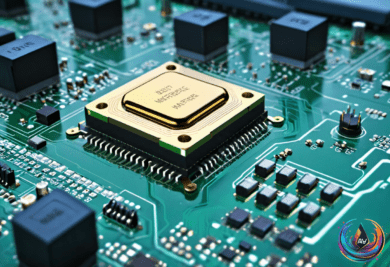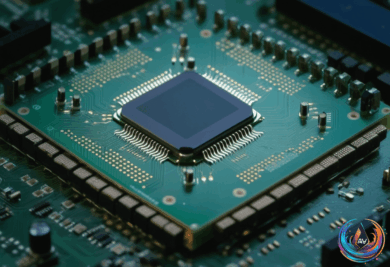
Apple’s relentless quest for independence may be taking an unexpected detour. After years of touting its proprietary M-series silicon, the company now appears poised to incorporate Intel’s latest process nodes into its future lineup. This isn’t about legacy chips or transitional phases—it’s a deliberate move to leverage Intel’s advanced 18A-P and 14A manufacturing processes for low-end iPhones, iPads, and even MacBooks.
Sources indicate that Apple has begun testing Intel’s 18A-P process for its M7 chips destined for entry-level MacBook Air and MacBook Pro models, with a rollout targeted around 2027. The 18A-P node, an evolution of Intel’s 18A process, promises notable gains—up to 9% more performance at the same power, or 18% power savings for comparable performance. This increment is significant in a landscape where every watt and clock cycle counts, especially for mobile devices. The shift hints at a broader industrial strategy: diversify manufacturing sources beyond TSMC, which has been the sole supplier for Apple’s high-end chips until now.
Similarly, Apple is eyeing Intel’s 14A node for upcoming iPhone processors, with a tentative release date around 2028. The 14A process, built on Intel’s 2nd-generation 3nm technology, offers a generational leap in transistor density, speed, and efficiency. The potential for a new A21 chip based on this node could propel iPhones to new heights of performance and battery life—if the manufacturing hurdles can be managed. Apple is reportedly evaluating advanced packaging techniques—Foveros variants—aimed at stacking multiple chip layers to optimize space and performance, making the most of Intel’s packaging innovations.
This collaboration marks a notable shift. Apple’s chips have historically been a showcase for TSMC’s 3nm process, but recent concerns over supply chain risks and strategic independence have pushed the company to explore alternatives. Intel’s aggressive node development, coupled with its manufacturing capacity in Oregon, Arizona, and Ohio, makes it a compelling partner for diversification. Yet, skepticism remains: can Intel deliver at scale without sacrificing the tight integration and reliability Apple demands? Early testing suggests promising results, but real-world production often introduces unforeseen complications.
What This Means for Apple and Its Customers
For consumers, the implications are mixed. On one hand, diversifying manufacturing sources could stabilize supply chains and accelerate innovation—more competition might lead to better chips and potentially lower prices. On the other, it raises questions about quality control, longevity, and whether Intel’s nodes can match TSMC’s maturity, especially for high-end, power-hungry applications. Apple’s move to use Intel’s most advanced nodes for budget devices signals a strategic prioritization: performance and efficiency for the masses, while reserving its proprietary M-series chips for flagship models.
In the broader industry, this signals a potential break from the TSMC monopoly, with Intel positioning itself as a serious contender in high-performance chip manufacturing. If Apple’s experiments succeed, we might see a broader industry shift—more cross-fertilization between chip designers and foundries, and a less centralized supply chain. The coming years will reveal whether Intel’s gamble on these nodes can truly anchor Apple’s plans or if it’s merely a strategic hedge—an expensive experiment in a market where every millisecond and milliamp matters.
Based on
Apple reportedly testing Intel’s 18A-P process to make iPhone and Mac chips — engadget.comApple Shifts Mac and iPhone Chips to Intel’s 18A-P and 14A Nodes — techolam.comApple Intel 18A-P Et 14A : M7 MacBook, A21 IPhone — pausehardware.comApple A18 Pro: Benchmark Scores and Complete Specifications » TenzysTech — tenzystech.comPuce Apple — wikiland.orgApple A18 — wikiland.org