The saga over whether a $400 million extreme ultraviolet (EUV) lithography machine has landed in China just won’t quit.
On June 22, 2026, U.S. Commerce Secretary Howard Lutnick told ASML he suspects one of the company’s EUV machines may have reached China. ASML fired back the next day. They denied any EUV system has ever set foot on Chinese soil.
ASML insists it has never shipped an EUV machine or any parts specifically made for EUV systems to China. “No systems, components, or devices specifically developed for use in an EUV system had been delivered either,” the company said on June 19.
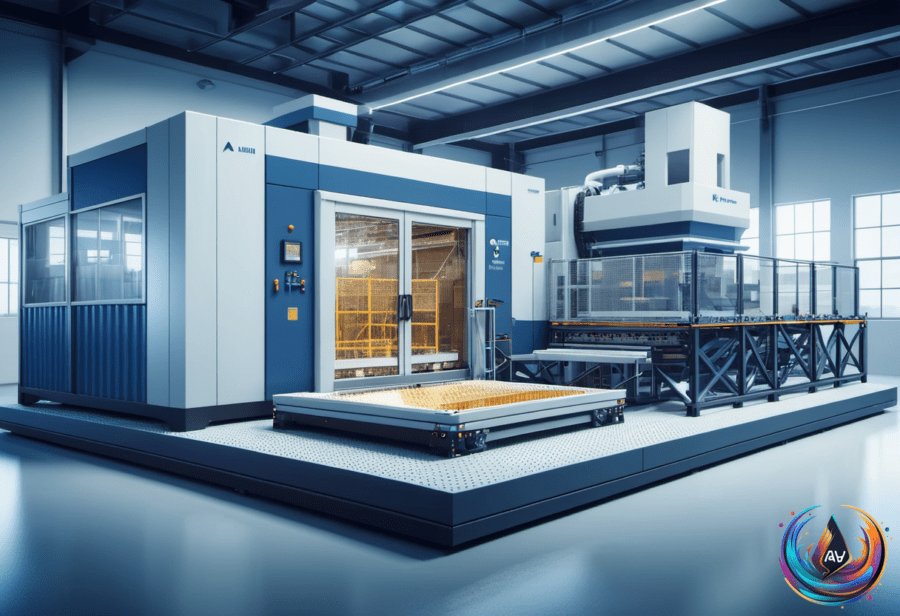
They describe the EUV system as a 180-ton behemoth with roughly 100,000 parts. It takes about 40 freight containers, three cargo planes, and 20 trucks just to move it. Assembly and calibration on site can’t be skipped or faked. “An EUV system does not disappear accidentally in a parcel center,” ASML added.
The U.S. government claims it has evidence of EUV-related components and transport gear shipped to China. But no proof of a full EUV system has surfaced publicly. No serial numbers, locations, or delivery confirmations have been released.
ASML is the only commercial supplier of EUV systems used for advanced logic chips. These machines work with 13.5-nanometer wavelength light, enabling chip features as small as eight nanometers—about 40 silicon atoms wide. That tech powers companies like TSMC, Nvidia, and Apple.
ASML’s market capitalization nears $700 billion, and it controls about 90% of the chip-lithography tool market. Around 20% of their 2026 revenue is expected from permitted sales of less powerful deep ultraviolet (DUV) lithography systems to China. Those DUV systems are different tech, using longer wavelengths and lower precision than EUV.
Export controls have tightened since 2023 and 2024, targeting powerful DUV systems and all EUV gear. ASML says it has adapted its business to these rules. The U.S., the Netherlands, and allies aim to control not just the hardware but software and maintenance services vital to EUV operation.
China reportedly pursues its own EUV systems. A prototype surfaced in December 2025, developed by a team including former ASML engineers. But generating a working EUV source in a lab is grueling. Producing a system with high throughput and low deviations is even harder.
ASML’s CEO Christophe Fouquet stressed the complexity: “The complexity of EUV—where solving a single core technical problem took 20 years alone—made reverse-engineering without physical access effectively impossible.”
ASML’s network of optics, software, metrology, service, and suppliers is a fortress built over decades. That makes the idea of a complete EUV system slipping into China undetected highly unlikely.
One ASML insider quipped, “We can allow customers to go to smaller and smaller features, and that opens up the space for whatever we see now today in AI, which is absolutely mind-blowing.”
For now, the EUV mystery remains. The U.S. worries. China pushes forward. ASML denies delivery. The truth is buried beneath tens of thousands of parts, freight containers, and diplomatic friction.
Based on
- The $400 million machine powering the future of chipmaking — technologyreview.com
- The $400 million machine powering the future of chipmaking – Netherlands — europesays.com
- US Commerce Secretary Accuses ASML of Shipping Advanced Chip-making Equipment to China in Major AI Export Control Dispute — theaiinsider.tech
- ASML Denies EUV Allegations: No Systems Delivered to China — igorslab.de
- ASML’s Crown Jewel Chip Tool: Is It Secretly in China, Fueling US Alarm? – Newstech24.com — newstech24.com