Google’s latest AI work reaches far beyond chatbots. Its research medical system, AMIE, has tested video consultations, while Gemini has become the fastest AI app to reach 1 billion users. Google is also working with Abbott to connect glucose monitoring data to Google Health.
Together, these projects show how the company is building AI for conversations, health tracking, and tasks that require several kinds of reasoning at once. They also raise a basic question: how much should people trust AI with decisions about their health?
AMIE tests a new model for video consultations
Google’s research medical AI system, AMIE (Video), conducted synchronous video consultations with professional patient actors. Clinical evaluators rated it on par with primary care physicians across several core measures.
Fifteen trained actors portrayed conditions across cardiopulmonary, abdominal, HEENT, neurological or psychiatric, and musculoskeletal presentations. The setup gave AMIE a chance to handle both spoken conversation and the information carried through video and audio streams.
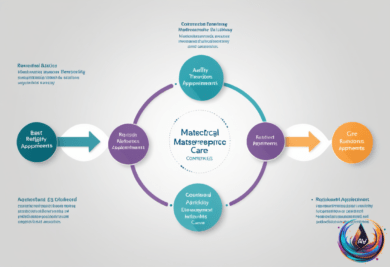
AMIE divides a consultation among three agents. The talker agent handles spoken interaction with the patient, while the planner agent updates differential diagnoses and management plans, identifies missing information, and reprioritizes clinical goals. The perception agent reviews video and audio streams continuously for non-verbal signs, physical findings, and auditory signals.
That structure addresses one of the hardest parts of a live consultation: timing. Latency remains central to AMIE’s architecture, so dialogue, reasoning, and perception processes operate separately. The goal is to let the system respond to a patient while its other processes continue working in the background.
Automated evaluations found that each agent improved clinical measures, including history-taking, clinical reasoning, and treatment recommendations. Those results are notable, but they do not establish that AMIE is ready for clinical use. Google says studies involving real patients and their own health conditions must follow before anyone can draw conclusions about clinical use.
Gemini turns AI into a mass-market product
Google’s consumer AI push has already reached a huge audience. Gemini has surpassed 1 billion users, making it the fastest AI app to achieve that milestone. Gemini is Google’s fastest-growing product ever and the 14th product to reach 1 billion users.
Gemini launched four months after ChatGPT and overtook its rival as the quickest app to reach the 1 billion user threshold. Users generate over 150 million images per day on Gemini, and most users rely on the app’s voice mode feature.
That growth gives Google a large stream of real-world use, but it also fuels criticism. Critics argue that Google uses its search engine dominance to access more web data for training Gemini than competitors such as OpenAI and Meta. The debate adds a data and fairness question to Gemini’s user milestone.
Glucose data brings AI closer to daily health choices
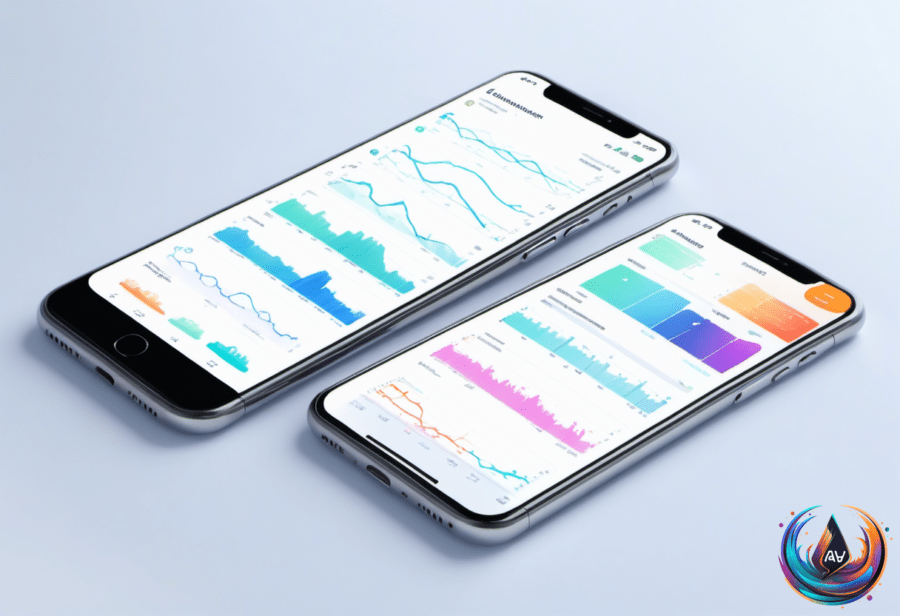
Abbott has partnered with Google Health on a multi-year effort to connect Abbott’s Lingo continuous glucose monitor, or CGM, to Google Health. Lingo is intended for adults who are not using insulin, and users will be able to see their metabolic data within the Google Health app.
The idea is simple: glucose readings could help non-diabetics make better dietary choices. The health benefits remain hazy, though, because non-diabetics’ bodies can typically regulate most glucose spikes. Paying too much attention to blood sugar could even lead to poor eating habits.
Reading CGM results is difficult for laypersons, and even trained medical professionals can struggle with the data. Dr. Idrees Mughal put the concern bluntly: “you don’t even know how to interpret it. So it’s going to be completely useless.”
Abbott and Google Health will conduct a large real-world metabolic health study that integrates different types of data. The study will look for connections between activity, sleep, wellbeing, and metabolic health, giving the partnership a broader goal than simply displaying glucose readings.
From answering questions to doing the work
These projects fit a larger shift across the AI industry. Companies are moving from training chatbots to teaching AI agents to perform entire jobs. AMIE offers a clear example: separate agents share the work of conversation, planning, and perception instead of treating a consultation as one simple exchange.
Tamay Besiroglu, CEO of Mechanize, is mentioned in this context as the industry turns toward agents that can carry out complete work. Gemini’s scale, AMIE’s clinical testing, and the Abbott-Google Health partnership all point in the same direction: AI is moving into systems that interact with people, interpret streams of information, and support decisions.
The promise is broad, but health applications demand careful testing. AMIE still needs studies involving real patients, and CGM data can confuse people who lack medical training. Google’s next step in healthcare will not be measured only by how many people use its AI. It will also depend on whether those systems help people make sound choices.
Based on
- Google tests AMIE for clinical video consultations — artificialintelligence-news.com
- Google reaches massive milestone in AI race after Gemini hits 1 billion monthly users | The Independent — independent.co.uk
- Abbott Partners With Google Health For AI-Powered Glucose Monitoring — engadget.com
- Forget Chatbot Training. AI’s Next Big Data Grab Is About How We Work. – Business Insider — businessinsider.com