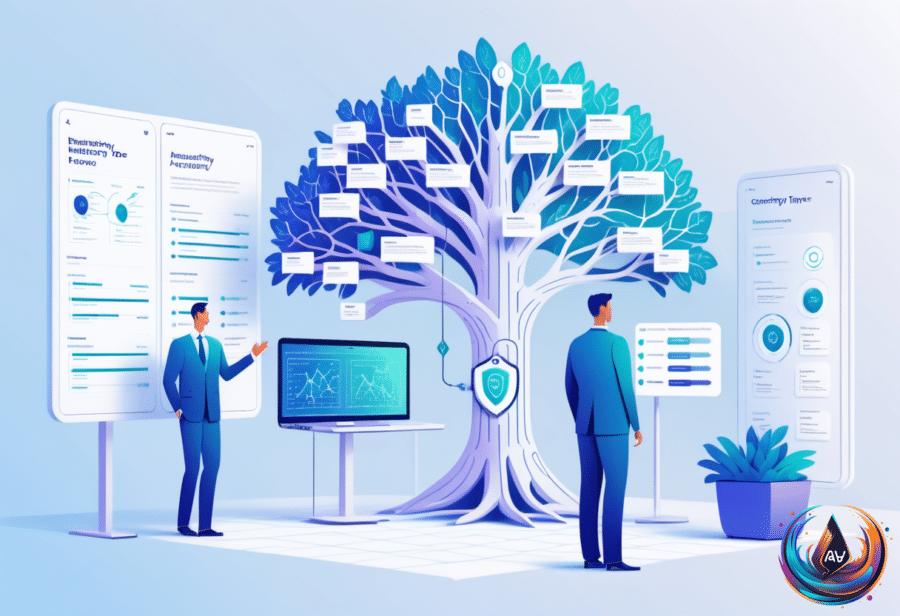
CrowdStrike announced two proposed acquisitions on November 3, 2026. The company plans to acquire Fiddler and Dreadnode, adding controls for evaluating AI agents, testing their defenses and monitoring their behavior after deployment. Both announcements came at Fal.Con EU 2026.
Fiddler’s technology would become Falcon Observe, a product for evaluating and explaining AI-agent behavior. Dreadnode would add automated AI security testing to the Falcon platform before systems reach production. CrowdStrike targets general availability for both planned products in the fourth quarter of its 2027 fiscal year.
Falcon Observe tracks what agents decide
The two products address different points in an AI system’s life. Dreadnode would probe systems before release, Falcon Observe would evaluate whether agents perform their intended tasks, and the platform would monitor decisions after deployment.
Before deployment, teams could use Fiddler to compare prompts, models and configurations while checking whether agents perform assigned tasks safely and accurately. After deployment, Falcon Observe is designed to trace decisions and reasoning paths across the full agent hierarchy, helping identify behavioral drift and unintended actions.
The system would reconstruct the decision process so teams can locate the step that caused a failure. That visibility targets a gap in conventional security controls, which can confirm that an action used valid credentials and approved tools without showing whether the decision followed company policy.
CrowdStrike’s example involves an agent that uses valid credentials and approved tools to approve a refund that violates company policy. Traditional controls may classify the activity as legitimate even though the decision was wrong; explainability is intended to reveal why the agent acted and where its behavior went off course.
Fiddler covers first-party and third-party agents, with instrumentation support through OpenTelemetry, LangGraph, Amazon Bedrock, AWS Strands and Google ADK. Its decision-level records are intended to support compliance and audits, because “the agent did it” is not a useful explanation when someone needs to review a failure.
Inside Falcon, agent intent and behavior would connect with endpoint, identity, cloud and runtime security telemetry. Security teams would then be able to examine why an agent acted alongside what happened across enterprise systems as a result.
Dreadnode tests systems before production
Dreadnode starts with a plain-language description of the desired test. It then probes AI systems, models, model repositories, applications, agents and MCP servers before production, giving teams a way to test weaknesses before deployment turns them into operational problems.
CrowdStrike said Dreadnode runs more than 50 attack techniques, including jailbreaks, prompt injection, multi-turn attacks and agent-specific attacks. The findings are ranked by severity and mapped to the OWASP Top 10 for LLMs, OWASP Agentic Security categories ASI01 through ASI10, MITRE ATLAS and the NIST AI Risk Management Framework.
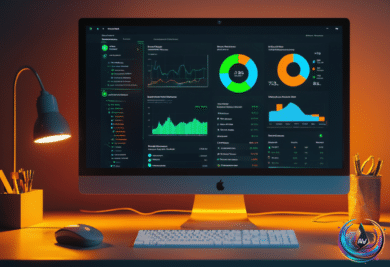
The results feed a combined risk view covering total findings, attack success rates, severity breakdowns, finding outcomes and deeper risk metrics. An exportable report supports go/no-go decisions before a system reaches production — a useful point to discover a problem, rather than after an agent has already made it someone else’s problem.
Human reviewers can inspect the exact attacker prompt and target response, walk through an attack step by step, reclassify findings, adjust severity and document their reasoning. Dashboard metrics recalculate when findings are reclassified, keeping the reported risk aligned with the review.
The planned handoff connects testing with runtime defense. Dreadnode findings would feed Falcon Guardian as policy recommendations, linking weaknesses found before production with controls intended for systems already operating.
Together, the proposed acquisitions give CrowdStrike a broader AI security story: test the system before release, measure whether the agent performs its assigned task, explain each important decision and connect that behavior to enterprise telemetry. The acquisitions remain proposed, but the product plan is clear enough — AI agents need controls before they act, not just alarms after they do.
Based on