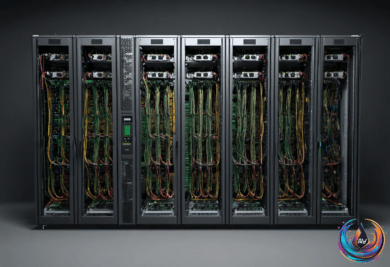
Training large AI models takes a huge amount of electricity. For example, GPT-4 used about 50 gigawatt-hours—enough power for 5,000 U.S. homes for a year. That’s just one model, and AI demand keeps growing. Data centers face a real challenge balancing power use and performance.
One smart way to save energy is tweaking the hardware clock speeds during training. GPUs, the chips that power AI, have separate clocks for their compute cores and memory. By adjusting these clocks dynamically, systems can use less power without slowing down. When the GPU core crunches data, memory clocks slow, and vice versa. This technique, known as dynamic voltage-frequency scaling, can cut energy use by around 14% during training.
This method avoids wasting power when parts of the chip wait on others. Past attempts slowed training too much or lacked precision. But newer approaches fine-tune clock speeds in real time, keeping speed up while trimming waste.
Edge Computing Offers Another Path to Lower AI Energy
Sending all AI work to huge cloud data centers is energy-intensive. Edge computing moves AI tasks closer to where data is created, like on local devices or small servers. This reduces the energy needed to send data back and forth over networks.
Edge devices handle inference tasks—using trained models to make predictions—more efficiently. These devices use hardware built for low power, unlike cloud GPUs designed for heavy training loads. They also avoid the large cooling needs of data centers, which can consume up to 30% of a center’s power. Edge AI fits best where latency matters or when there’s limited network access, such as factories or medical clinics.
However, edge AI isn’t perfect. Each type of edge chip often needs models customized for it. This adds complexity and costs. Also, cloud providers have optimized their data centers for power and cooling. Sometimes running AI locally can use more energy if the setup isn’t right.
New AI Architectures Cut Energy by Changing the Computing Style
Another breakthrough comes from changing how AI processes data internally. Traditional AI systems run all parts in sync, like a marching band. Asynchronous AI lets components work independently, reducing idle time and energy waste. It also supports continuous learning, adapting to new data without full retraining.
Switching to asynchronous AI can cut computing energy by orders of magnitude in some cases. This means big savings on electricity and lower costs for companies. It’s already helping in areas like autonomous vehicles and medical imaging, where fast, ongoing decisions matter.
Still, challenges remain. Asynchronous AI must fit with existing hardware and keep data secure when processed in a decentralized way. But the benefits for energy and learning speed are clear.
Hardware Advances Will Shape AI’s Energy Future
AI chip makers are redesigning hardware to match AI’s unique needs. New chips combine high-bandwidth memory and specialized units for matrix math, the core of neural networks. These changes reduce data movement, a major source of energy use and delay.
Instead of one big chip, new designs use smaller modules called chiplets. This improves manufacturing and lets companies tailor chips for different uses, from edge devices to huge servers. They also focus on skipping unnecessary calculations and using low-precision math to save power.
But packing more chips into smaller spaces creates heat that’s tough to cool. Data centers may need advanced liquid cooling, which adds cost and complexity. Software must also catch up. AI frameworks like PyTorch need updates to fully use new chips’ power.
Looking ahead, optical connections that use light instead of wires could speed data flow and cut energy further. Hardware for both edge and cloud will grow closer in design, letting AI run efficiently everywhere.
Meanwhile, AI itself helps data centers run better. Smart algorithms balance workloads, predict failures, and optimize cooling. This reduces energy waste and cuts costs. Companies investing in AI-driven energy management show they care about the environment and saving money.
In short, a mix of smarter hardware, new AI methods, and edge computing promises a greener AI future. The key is matching the right tools with the right tasks, so AI can grow without draining the planet’s power.
Based on
- Timing Trick Cuts Energy Used in LLM Training by Up to 14 Percent — spectrum.ieee.org
- Can edge computing make AI more sustainable? | TechTarget — b202725ax777777x74656368746172676574x636f6d.gateway.web.tr
- Asynchronous AI cuts computing energy by orders of magnitude while learning continuously
– Life Technology™ — lifetechnology.com
- AI News Today | Nvidia Unveils New AI Chip Set – Blog – MakeAIPrompt.com — makeaiprompt.com
- Data Centers’ Future: AI Models to Reduce Energy Demand
– Life Technology™ — lifetechnology.com