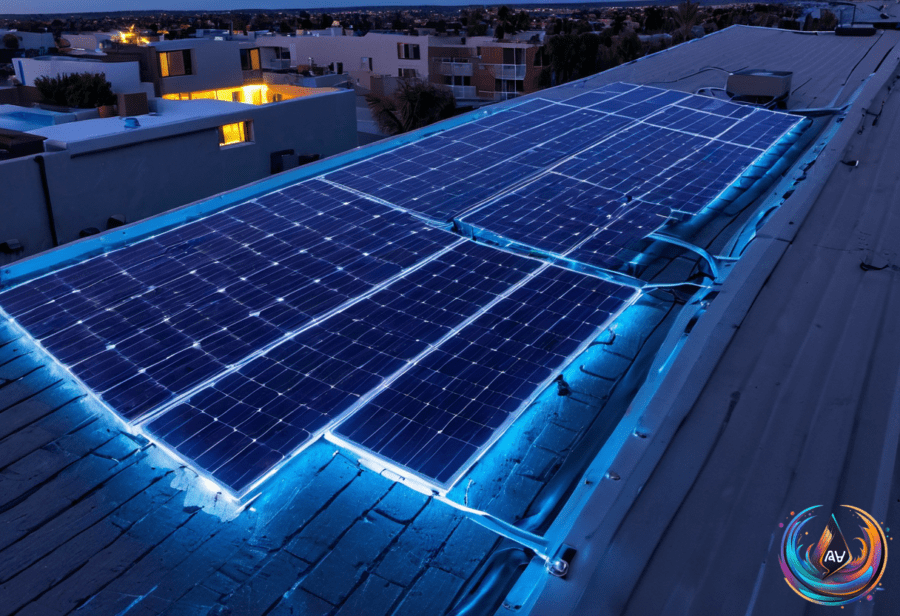
Plug-in solar panels are about to become a lot more common in the UK. Starting August 27, 2026, it will be legal to buy an approved solar kit and plug it right into a wall socket. This is a big change. The UK government updated laws to allow this new kind of home solar setup.
The kits will come with micro-inverters. These devices convert the solar panel’s DC power into the AC power used in homes. The government set a limit: panels can produce a maximum of 2000 watts DC, but typical panels will output around 960 watts. Micro-inverters themselves can only output up to 800 volt-amps. Also, only one device can be plugged into each circuit. This keeps the setup safe and manageable.
The government expects these plug-in solar panels to save people money. Their impact assessment estimates annual savings around £110 for panels facing south at a 30-degree angle. Panels mounted vertically facing east or west could save about £70 per year. These savings help make solar energy more affordable and accessible.
Safety and Standards Shape the Market
Safety remains a big concern with plug-in solar setups. In the US, Utah legalized plug-in photovoltaic systems in March 2026. UL Solutions is working on a testing standard called UL 3700. This standard will address key safety issues. For example, regular household wiring isn’t designed for power flowing back into the outlet. Also, electricity flowing backward through ground-fault circuit interrupters (GFCIs) poses risks.
Ken Boyce, vice president at UL Solutions, pointed out the risks: “There’s this kind of insidious aspect to it, and now you’ve bypassed that protection that’s required to protect consumers from electric-shock hazards.” No balcony solar panels have yet passed UL 3700 certification. This shows how important and challenging safety standards are.
Balcony Solar’s Rise in Germany and the US
Germany’s experience offers a glimpse of what’s possible. After the 2022 Russian invasion of Ukraine, balcony solar panels surged in popularity there. More than 2 gigawatts of balcony solar have been deployed. Germany finalized its own regulatory standard for balcony solar in December 2025.
But Germany’s law forbids net metering for these systems. This means owners cannot sell excess electricity back to the grid. The law also protects renters. If landlords refuse solar panels for aesthetic reasons, renters have legal protections to install them anyway.
In the US, many balcony solar panels are unregistered. Research by the Electric Power Research Institute shows unregistered panels outnumber registered ones two to one. Nadav Enbar, a program manager at EPRI, highlights this imbalance. It shows how much of this market operates outside formal regulation. This raises safety and grid management questions.
Craig Morris, CEO of Bundesverband Steckersolar in Germany, said, “If you get the law, then your work begins.” This means passing laws is only the first step. Implementing and managing new solar technology takes ongoing effort.
Aaron James Darvill, strategic sales director at Anker SOLIX, praised the UK government’s move. He said, “The Government’s announcement is a really important step towards making solar energy available to far more people across the UK.”
As more countries legalize and regulate plug-in solar panels, consumers stand to save money and reduce carbon footprints. Safety standards will play a key role in protecting users and the electric grid. The next few years will show how these policies reshape home energy.
Based on
- The 20 percent rule for solar panels can help you save money in the long run — engadget.com
- Plug In Balcony Solar Power Moves from Hack to Household – IEEE Spectrum — spectrum.ieee.org
- The UK Will Legalize Plug-In Solar On August 27 — engadget.com
- Government announces exact date plug-in solar panels can be sold | The Independent — independent.co.uk
- How this solar-powered pool robot can save you time and money — 10best.usatoday.com