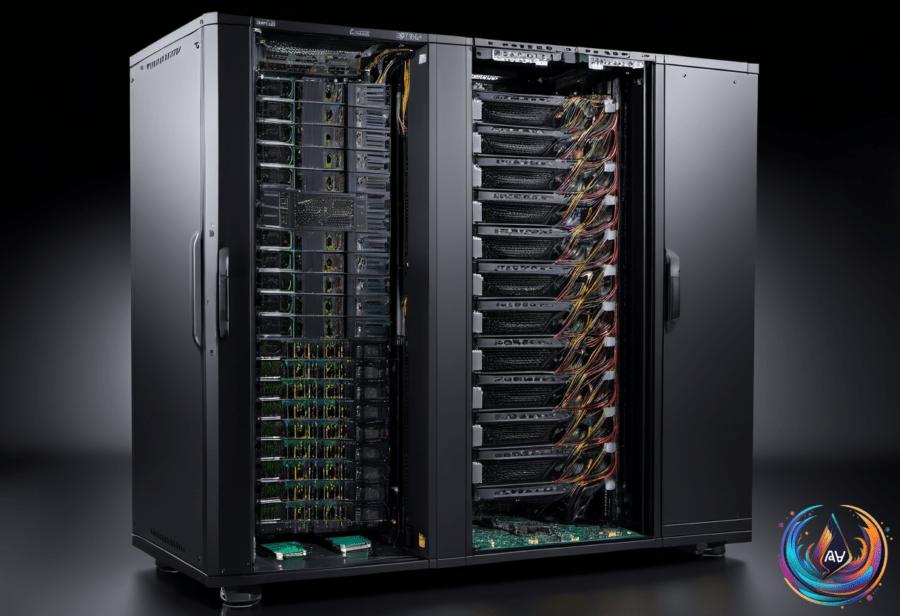
Etched has put a rack in production. The US-based company, which builds inference clusters for AI workloads, raised $700 million in a funding round that values the business at $21 billion. Its first rack shipped to Jane Street last month, giving the company a paying customer and investor willing to run the hardware inside its own operations.
Jane Street led the round and is also Etched’s first customer. The quantitative trading firm tested Etched’s chip and said it was pleased with the early results, then began deploying the technology within its own operations.
“We tested the chip and are pleased with the early results. Etched’s unique approach to inference delivers the precision we will need to support our most demanding workloads. We’re excited to now have our own rack running in our data centre,” Jane Street said.
That rack is more than a ceremonial shipment. Jane Street is using it in its data centre, placing Etched’s hardware inside workloads where precision matters and performance claims must survive contact with production systems. Venture-backed chip companies do not get many chances to skip the demo theater.
Etched is building for inference beyond transformers
Etched’s clusters run large mixture-of-experts models and non-transformer designs. The company supports those systems with two technologies called Low Voltage Inference and Cluster Scale Memory, a hardware strategy aimed at the demands of inference rather than a broad list of AI workloads.
The company claimed it achieved first-pass silicon success within three years of its seed funding. Etched came out of stealth in June with more than 400 staff and a working chip, then disclosed that it is developing three generations of hardware at the same time.
That schedule is unusually ambitious even by AI hardware standards. Building one working chip is difficult; developing three generations while expanding a company past 400 employees is a different kind of exposure to deadlines, capital needs, and engineering risk.
Etched has also secured more than $1 billion in customer contracts spanning public and private AI firms and cloud providers. The contracts give the company a commercial base beyond Jane Street, though the first rack remains the clearest visible test of whether its technology can operate outside a laboratory.
The investor group includes Sequoia Capital, Kleiner Perkins, Andreessen Horowitz, Bain Capital Ventures, Stripes, Positive Sum, Tiger Global, Neo, Primary, and Blackstone. Jane Street’s role as both lead investor and first customer makes the relationship more consequential than a conventional funding announcement.
Jane Street is buying capacity on two fronts
Etched is not Jane Street’s only infrastructure bet. In April, Jane Street agreed to spend approximately $6 billion to use CoreWeave’s AI cloud platform, which will provide computing infrastructure across multiple data centre locations.
That infrastructure will incorporate Nvidia’s Vera Rubin technology. Alongside the CoreWeave agreement, Etched’s rack gives Jane Street a separate path for running its own inference hardware rather than relying only on cloud capacity.
The two arrangements serve different infrastructure models: CoreWeave provides computing across multiple locations, while Etched’s system now runs as a rack inside Jane Street’s data centre. Jane Street’s early test results will matter because they connect Etched’s claims about inference performance to an operating environment with demanding workloads.
For Etched, the $21 billion valuation now rests on more than a working chip and a large contract figure. The company has shipped hardware, secured more than $1 billion in customer contracts, and has a first customer using the system in its own operations.
That is meaningful progress, but it is still the opening act. Three generations of hardware, a workforce of more than 400, and customers across AI firms and cloud providers leave Etched with a large promise to fulfill — and a $21 billion valuation does not make the engineering easier.