WeLion New Energy is building a battery business around a simple goal: pack more power into vehicles and ships while improving safety. The Chinese company is developing liquid-solid hybrid cells, known as semi-solid-state batteries, for products that include electric cars, drones, cargo ships, and ferries.
Its work has already produced battery packs with energy densities ranging from 360 watt-hours per kilogram to 824 wh/kg during testing. WeLion is also preparing larger production capacity and planning new battery products, including an all-solid-state battery for cars expected in 2027.
From Long-Range Cars to Cargo Ships
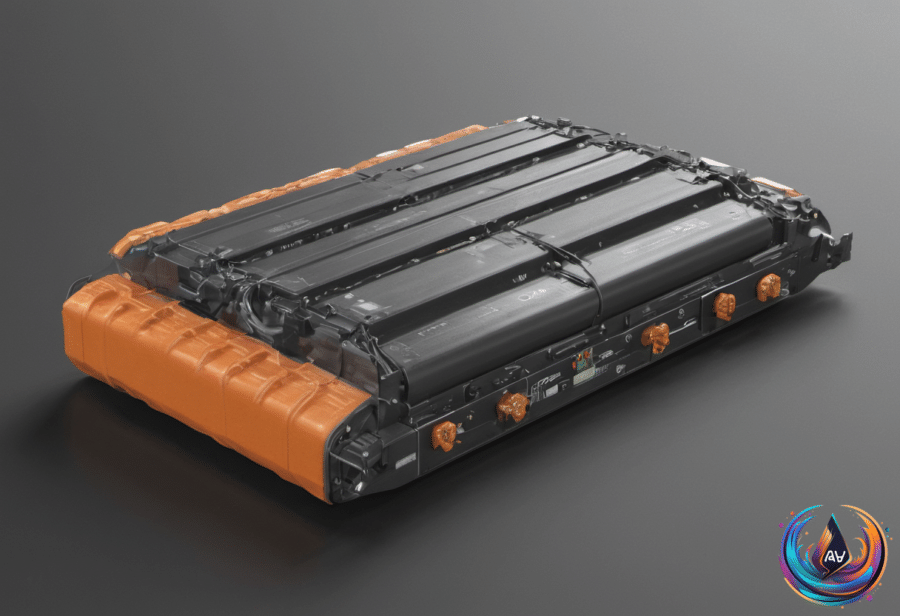
In 2023, WeLion released a battery pack with an energy density of 360 watt-hours per kilogram, or wh/kg. The pack delivered a range of over 1,000 kilometers, equal to 621 miles. That kind of range made the battery notable, but high production costs limited manufacturing to approximately 200 packs.
Nio, a Shanghai-based electric vehicle maker, is partnering with WeLion. The battery company’s semi-solid-state cells could improve safety and offer greater energy density than lithium-ion batteries. They are more expensive than conventional lithium-ion batteries made by larger Chinese companies such as CATL, creating a clear challenge as WeLion works toward broader use.
WeLion is also taking its battery technology beyond passenger vehicles. Through a subsidiary, the company built batteries to power cargo ships and ferries. Two inland cargo ships using WeLion’s batteries are expected to launch in October 2026 in Huzhou, China.
Each ship will have a battery pack capable of carrying nearly 4,000 kilowatt-hours of electricity. The batteries will allow the ships to sail for up to 250 kilometers, or 155 miles. Those figures place WeLion’s technology in a setting where battery size, stored energy, and travel distance all matter at once.
Higher Test Results and New Products
WeLion’s battery development continued in 2025, when a semi-solid-state battery reached an energy density of 824 wh/kg during testing. That figure is higher than the 360 wh/kg energy density of the battery pack released in 2023, though the verified facts do not state that the two products serve the same purpose or use the same design.
The company has also planned a semi-solid-state battery for drones with an energy density of 410 wh/kg. WeLion planned to bring that product to market by the end of 2023. The company also intends to introduce its first all-solid-state battery for cars in 2027, with an expected energy density of 400 wh/kg.
These plans cover several stages of battery development. Semi-solid-state cells are already tied to products for cars, ships, ferries, and drones, while the 2027 car battery would mark WeLion’s first all-solid-state battery for cars.
Manufacturing Capacity Remains the Big Test
WeLion’s battery technology faces a production hurdle as it moves beyond limited output. The company has an annual manufacturing capacity of 11 gigawatt-hours, or GWh. Two additional plants are under construction, and together they are expected to add 18 GWh of capacity.
That expansion matters because the company’s 2023 battery pack reached only a limited production run of approximately 200 units due to high production costs. WeLion’s newer plants could give it more room to produce batteries for several types of vehicles, but the available facts do not state when those plants will begin operation.
Chen Liquan, a cofounder of WeLion and a scientist at the Chinese Academy of Sciences, is connected to the company’s development of these batteries. The company’s work now spans high-density testing, vehicle partnerships, marine transport, and planned products for drones and cars.
WeLion’s path is still tied to both performance and price. Its semi-solid-state batteries have posted a tested energy density of 824 wh/kg, while its earlier 360 wh/kg pack supported over 1,000 kilometers of driving range. At the same time, the batteries cost more than conventional lithium-ion products from larger Chinese companies such as CATL.
The next milestones are clear: inland cargo ships in Huzhou are expected in October 2026, and WeLion’s first all-solid-state car battery is planned for 2027. Whether the company can turn high energy density into products made at larger scale will shape the next stage of its battery business.