Singapore’s semiconductor push has reached a major milestone. VSMC has inaugurated its first 12-inch, or 300mm, wafer fabrication plant in Tampines after a 22-month construction programme, creating a new production base for speciality chips and a launchpad for future manufacturing growth.
The fab has already moved into risk production after processing its first sample lot with yields exceeding 99%. Volume manufacturing is scheduled to begin in the first quarter of 2027, bringing the facility closer to its role as a working part of the global semiconductor supply chain.
A New 300mm Fab Takes Shape in Tampines
VSMC, or VisionPower Semiconductor Manufacturing Company, was established in September 2024. The company is a partnership involving VIS, or Vanguard International Semiconductor, and NXP Semiconductors, bringing together two established semiconductor businesses around a new Singapore manufacturing operation.
At full capacity, which VSMC expects to reach by 2029, the Tampines plant is projected to produce roughly 44,000 12-inch wafers each month and support around 1,600 jobs. Those figures give the facility a clear industrial scale, with wafer output and employment growing together as production expands.
The fab will produce speciality semiconductors on mature nodes between 130nm and 40nm. These process technologies form the manufacturing focus for the new plant, which is designed to add production capacity while supporting VSMC’s broader manufacturing strategy.
Leuh Fang, chairman of VSMC and VIS, described the opening as a turning point for the company and its presence in Singapore.
“Today’s opening ceremony marks a significant milestone for VSMC and reflects VIS’s long-term commitment to deepening its presence in Singapore while expanding its global footprint,” Leuh Fang said.
Rafael Sotomayor, NXP president and CEO, linked the new facility to supply and manufacturing priorities across the company’s operations.
“Building on decades of operations and investment in Singapore, VSMC enhances our geographic resilience, supply control, and cost competitiveness, while advancing our differentiated hybrid manufacturing strategy,” Sotomayor said.
Nexstrom Targets a New Layer of Chip Manufacturing
Alongside the VSMC opening, Nexstrom is developing equipment and processes for another semiconductor frontier: extremely thin materials called transition-metal dichalcogenides, or TMDs. The startup is building a way to manufacture these materials on chip wafers, with the goal of fitting the process into commercial semiconductor production.
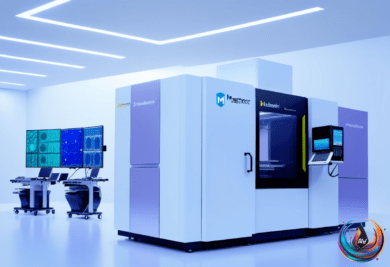
Nexstrom’s product, North Star, is designed to grow TMDs on 300mm, or 12-inch, wafers used in commercial chipmaking. That wafer size matters because it matches the format used by large-scale semiconductor manufacturing, connecting Nexstrom’s material technology to the same production environment represented by the Tampines fab.
The company has already proven material results on wafers using its 12-inch system, which has just been installed. Nexstrom also plans to complete its 8-inch system by the end of October, giving the startup two wafer-scale platforms as it develops its equipment and processes.
Phoebe Tan, Nexstrom CEO, said the company is working toward the material standards required by potential industry partners.
“Our work is focused on delivering material quality that [industry partners] have specified,” Tan said.
Funding Builds a Longer Semiconductor Roadmap
Nexstrom has raised a $12 million seed round from investors including Xora, Foothill Ventures, and SEEDS. The company has raised $15 million in total, funding its work as it moves from material development toward equipment designed for commercial production.
Lance Li, Nexstrom co-founder and chief scientist, is part of the team advancing the company’s wafer-scale approach, while Tan leads the startup as CEO. Nexstrom was incubated by Xora Innovation, which also participated in the seed round.
The company expects its equipment to be ready for commercial production between 2030 and 2035. That timeline places Nexstrom’s technology several years beyond VSMC’s planned start of volume manufacturing in the first quarter of 2027, but the two developments point toward the same larger shift: semiconductor production needs both more wafer capacity and new materials that can work inside established manufacturing systems.
VSMC’s Tampines fab is moving toward near-term output, with full capacity expected by 2029. Nexstrom is building toward a later commercial window, using 12-inch wafer results and an 8-inch system planned for the end of October to advance its process.
Singapore now has two semiconductor stories unfolding at different speeds: a new 300mm fab preparing for volume manufacturing and a startup developing TMD technology for the next stage of wafer production. The next milestones are clear—VSMC’s first-quarter 2027 manufacturing start and Nexstrom’s progress toward commercial equipment between 2030 and 2035.
Based on