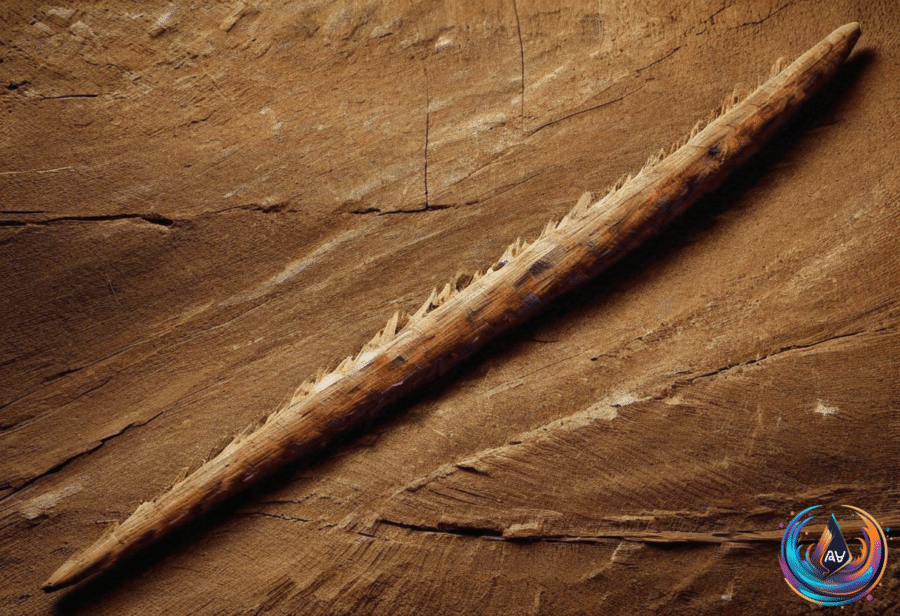
A 1.5cm-wide hole in a Neanderthal shoulder blade may preserve one of the oldest known cases of interpersonal violence involving a spear. The injury belongs to an individual who died more than 70,000 years ago, after a sharpened wooden spear struck the chest and passed through the body.
The remains, named Shanidar A, were unearthed in 2020 at Shanidar Cave in Iraqi Kurdistan. The discovery gives researchers a rare look at a violent event from a time long before agriculture and organized warfare, when early humans and Neanderthals already faced the risks of conflict.
A Spear Wound Frozen in Bone
Shanidar A’s shoulder blade contains a 15 mm puncture wound, with three fractures spreading from the opening. Bone fragments also fill the wound, creating a record of the force behind the strike. The damage points to a sharpened wooden spear entering the chest, injuring a lung and blood vessels, and exiting through the left shoulder blade.
That path would have made the injury devastating. The Neanderthal died from a brutal strike to the chest, although researchers cannot establish whether the attack was deliberate or accidental. The spear may have been used against Shanidar A, or the injury may have happened during hunting.
Emma Pomeroy, a researcher at the University of Cambridge, described the possibility in stark terms: “Le coup fatal était peut-être un tir intentionnel au cœur”. Her statement points to a strike aimed at the heart, but the evidence still leaves room for another explanation.
The rest of Shanidar A’s remains add to the picture. They include the damaged shoulder blade, a face injury that had partially healed, a right hand, three ribs, and some teeth. Together, these bones show both an earlier injury and the later trauma that ended the Neanderthal’s life.
Was This Attack or a Hunting Accident?
The position and shape of the puncture make a spear injury the strongest explanation. The wound is considered the oldest evidence of a human ancestor being killed by a wooden spear, yet the bones cannot reveal the full scene. They do not show whether Shanidar A faced a rival, joined a hunt, or suffered an accident involving a weapon.
Chris Stringer, a professor at the Natural History Museum of London, gave one interpretation: “Une attaque menée par un rival était l’explication la plus plausible”. That possibility places the event within a long history of violence among Neanderthals and other early humans.
Shanidar Cave already held evidence of another injured Neanderthal. In 1957, researchers found remains dating to about 50,000 years ago, including an individual with a partially healed injury likely caused by a stone-tipped spear. The cave therefore preserves more than one sign of dangerous encounters involving weapons.
Violence Long Predates Organized Warfare
A 2022 study pushed the history of Neanderthal violence back much farther. It identified 57 healed cranial trauma cases among 20 individuals dating back approximately 430,000 years, with nine skull fractures considered potentially fatal.
Those injuries do not prove that every case came from a planned attack, and Shanidar A’s wound also allows more than one explanation. Still, the combined evidence shows that violence among early humans and Neanderthals predates agriculture and organized warfare by a vast span of time.
The Shanidar A discovery adds a wooden spear to that record, a weapon whose material rarely survives but whose impact can remain visible in bone. A small opening in a shoulder blade now connects researchers to a violent moment from 75,000 years ago.
The discovery also changes the question researchers ask about Neanderthal life. The evidence is not limited to tools, shelters, or survival; it reveals encounters that could heal, leave lasting damage, or end in death. As more remains emerge from places such as Shanidar Cave, the deep history of human conflict may become clearer.
Based on
- This Might Be the Earliest Known Spear Murder In Earth’s History — 404media.co
- Neanderthal remains may be earliest human ancestor find killed by a spear | Neanderthals | The Guardian — theguardian.com
- Préhistoire : un trou dans l’omoplate d’un Néandertalien lié à une ancienne lance en bois suggère une vie violente – BBC News Afrique — bbc.com