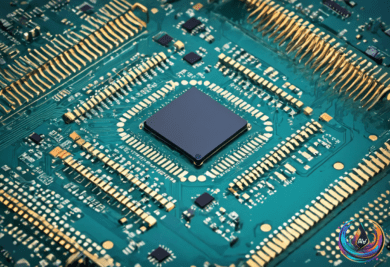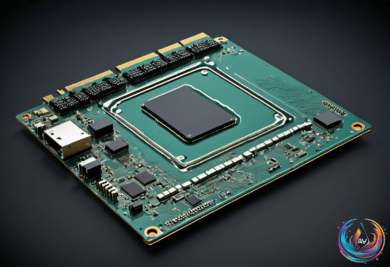
Microsoft’s AI infrastructure plans now look bigger than the target it set for the end of 2024. The company aimed to install 1.8 million AI chips in data centers around the world, but internal figures put its installed total at 2.2 million.
That does not point to a chip shortage holding back Microsoft’s plans. It points to a much larger challenge: turning enormous amounts of computing hardware, electricity, and data center space into useful AI capacity for customers.
Microsoft’s AI buildout has reached a massive scale
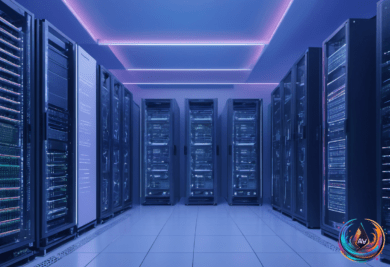
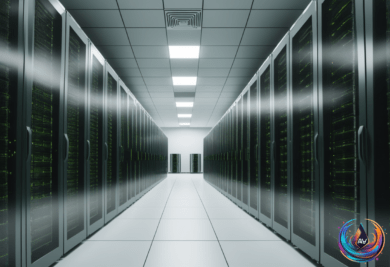
Microsoft has built AI infrastructure at a cost of roughly $280 billion since 2022. The company also claims to have added 5GW of data center capacity over the past two years, while a 2024 internal presentation said 5GW was already installed.
Those figures do not line up as a simple total. If Microsoft had 5GW in place in 2024 and added another 5GW over the following two years, its total capacity should be greater than 5GW and possibly around 10GW. Microsoft’s sustainability reports contain separate figures for electricity usage, so the capacity numbers do not provide a complete picture of the company’s power demand.
A data center footprint of that size would suggest roughly 6.4 million GPUs. That estimate is higher than the 2.2 million AI chips listed in the internal figures, showing how much depends on the type of chip, the way capacity is counted, and whether equipment is installed, energized, or operating.
The central point is clear: Microsoft has not stopped building because it cannot obtain enough AI chips. Its reported chip count has passed its 2024 target, while its spending and power capacity show that the AI race now depends on much more than semiconductors.
Power and capital are becoming the next bottlenecks
AIB Data Centers offers a smaller but useful view of the same infrastructure push. The company contracted power capacity at its CLT-01 data center with 65MW of support and identified about 505MW of prospective AI and high-performance computing capacity across five additional sites. Together, that gives AIB about 570MW of identified capacity potential.
“This quarter we secured the two foundations that matter most at our stage: power and capital,” said Jerry Tang, CEO of AIB Data Centers.
Tang said the company enhanced its power position with a 65MW, 15-year electric service agreement, raised $63.3 million to strengthen its balance sheet, and completed its rebrand to AIB Data Centers. A public offering generated approximately $59 million in net proceeds.
AIB ended the quarter with $52.8 million in cash and $82.7 million in stockholders’ equity. The company also ended the quarter with no traditional debt, giving it capital and financial flexibility for its growth strategy, said Jolienne Halisky, its chief financial officer.
“Our financial position has been fundamentally transformed,” Halisky said. “We ended the quarter with $52.8 million of cash, $82.7 million of stockholders’ equity, and no traditional debt, providing the capital and financial flexibility to execute our growth strategy.”
Capacity does not guarantee strong financial results
AIB’s infrastructure plans come alongside weak operating results. Second-quarter revenue was $2.9 million, down from $4.7 million in the prior-year period. The company posted a gross loss of $0.5 million, a gross margin of (18)%, an operating loss of $3.6 million, and a net loss of $3.5 million.
Its adjusted EBITDA loss was $3.1 million. For the first six months of 2026, revenue reached $7.8 million compared with $9.2 million in the prior-year period, while gross profit stayed below $0.1 million with a 1% gross margin. The six-month net loss was $3.8 million, and the adjusted EBITDA loss was $3.2 million.
The market also places a much lower value on AIB’s energized, operating capacity than on its peer group. As of July 28, 2026, AIB’s market capitalization was approximately $2 million per energized, operating megawatt, compared with a peer-group median of about $26 million per megawatt.
Eyal Rozen, AIB’s chief operating officer, resigned effective August 14, 2026. That change came as the company worked to secure power, raise capital, and develop its AI and high-performance computing sites.
Enterprise AI demand is already moving into production
The pressure to build this infrastructure comes from businesses putting AI to work. Two-thirds of enterprises, or 66%, have AI workloads running in production, and 29% describe their AI use as running at scale. Only 4% have not started running AI workloads.
OpenAI is used by 49% of enterprises, followed by Google Gemini at 48%. Microsoft Azure is used by 47%, Google Cloud by 42%, AWS by 27%, Anthropic by 25%, and Oracle Cloud by 18%.
Azure is the primary platform for 26% of enterprises, while 19% name Google Cloud. A further 13% run a custom open-source, self-managed stack, and 9% operate their own on-premises or co-located GPU cluster.
Running private GPU hardware brings its own problems. Only 47% of enterprises that operate their own GPUs rigorously track AI compute costs and returns, while 69% report utilization of 50% or less. That means many companies may own expensive hardware without using it to its full capacity.
The market remains unsettled. Some 62% of enterprises intend to switch providers or add another provider within 12 months. CoreWeave and Lambda each appear in 3.5% of enterprise stacks, showing that specialized GPU clouds have a place alongside the larger platforms.
Microsoft’s 2.2 million installed AI chips are one measure of scale, but the enterprise figures explain why the buildout continues. AI demand is no longer limited to experiments. The next test is whether companies can supply enough power, run their hardware efficiently, and turn that capacity into sustainable business results.
Based on
- Are Microsoft’s AI plans being held back by a shortage of chips? — theguardian.com
- AIB Data Centers Reports 570 MW of Identified AI/HPC Capacity Potential in Second Quarter 2026 | Markets Insider — markets.businessinsider.com
- Infrastructure and compute: Enterprises are buying AI compute for speed while flying blind on what it costs | VentureBeat — venturebeat.com