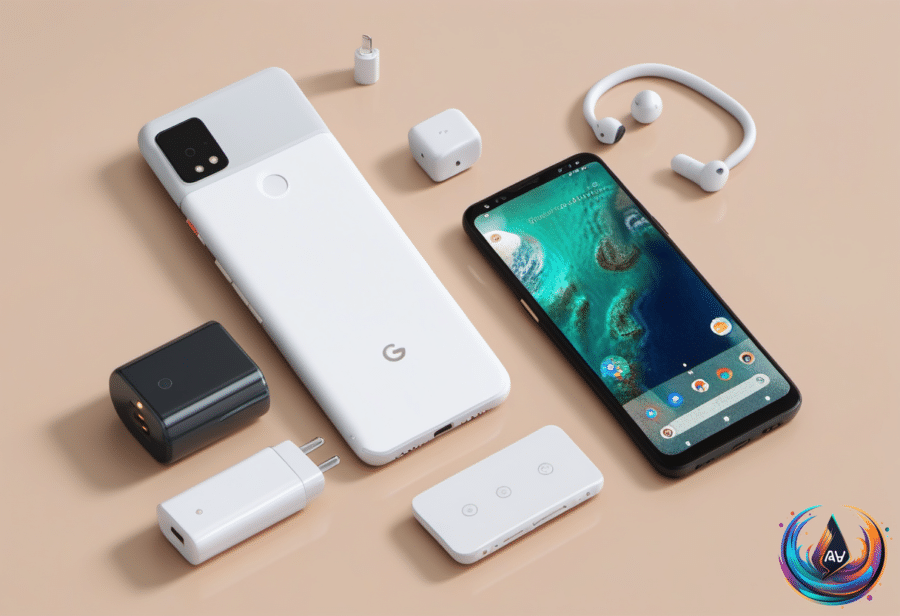
The Google Pixel 8 has entered a new phase in 2026: the former $700 phone can now be found for under $300 on Amazon in refurbished condition. That price changes the question from whether it matches newer flagship phones to whether its long software support, camera system, and premium build still make sense today.
The answer depends on what you need from a smartphone. The Pixel 8 is not the fastest option, and its battery life is not a strong point, but it combines a bright display, capable cameras, wireless charging, and years of Android updates in a package that costs less than the Pixel 10a’s $500 starting price.
A Former $700 Phone With Years Left
Google launched the Pixel 8 in 2023 at $700, giving it a proper flagship position from the start. In 2026, the phone can be bought for under $300 on Amazon, although that price applies to refurbished condition. The shift makes the Pixel 8 a much more interesting choice for shoppers who want strong features without paying for a newer model.
Software support is the Pixel 8’s biggest long-term advantage. The phone can be updated to Android 17, and Google promised seven years of OS and security updates. The Pixel 8 will continue receiving Android updates at least until 2030, giving buyers a clear path forward even though the hardware launched in 2023.
That support also reaches beyond standard Android updates. Google ships “Pixel Drops” to its devices, bringing new quality-of-life features over time, and the Pixel 8 is expected to receive a decent chunk of new Pixel features because it is still relatively new.
The software experience stays minimal and mostly bloat-free, which gives the phone a clean starting point. For buyers who value a simple interface and long support, the Pixel 8 offers a strong mix of useful software and a lower refurbished price.
Bright Screen, Serious Cameras, Premium Hardware
The Pixel 8 carries a 6.2-inch, 120Hz OLED display with peak brightness reaching 2,000 nits. That combination gives the phone a compact screen, smooth scrolling, and a high brightness ceiling. The display remains one of the clearest reasons to consider the device in 2026.
Photography is another major strength. The Pixel 8 uses a dual-camera setup with a 50-megapixel wide camera and a 12-megapixel ultrawide camera. Sam Rutherford described the trade-off clearly: “The Pixel 8 may not be the fastest phone, but it beats most similarly priced alternatives in camera performance.”
The hardware also feels more expensive than the current price suggests. The Pixel 8 has an aluminum frame and glass back, creating a proper flagship build, while its IP68 dust- and water-resistance rating adds protection against dust and water.
Charging features add more flexibility. The phone includes a 4,575 mAh battery with support for up to 27W charging, plus wireless charging at up to 18W. It also supports reverse wireless charging, allowing the Pixel 8 to share power with compatible devices.
The Hardware Trade-Offs Become Clearer With Age
The Pixel 8’s low price does not erase its weaknesses. Its performance suits casual games, but the phone is not designed for high-performance gaming. The Tensor G3 chip has also drawn criticism because its performance trails similarly priced phones powered by Qualcomm’s or Apple’s SoCs.
Some Pixel 8 users have complained about choppy animations, long app launch times, and poor system responsiveness as the device ages. Those concerns matter more for buyers who expect a phone to feel fast through every task, especially when newer alternatives may offer stronger raw performance.
Battery life is another limit. The Pixel 8’s battery life is not considered strong, and the battery’s condition matters even more when buying a refurbished device. The phone may continue receiving software support for years, but its hardware and battery health are more likely to give out before app compatibility issues arise.
That creates the central Pixel 8 decision. The software may remain useful until at least 2030, while the physical condition of an individual refurbished unit will determine how long the experience stays enjoyable.
Who Should Buy the Pixel 8 in 2026?
The Pixel 8 makes the strongest case for buyers who want a compact phone with a bright display, capable cameras, clean software, and long update support. At under $300 in refurbished condition, it delivers features that once belonged to a $700 phone, including wireless charging, reverse wireless charging, and an IP68 rating.
- Choose the Pixel 8 for its cameras: The 50-megapixel wide and 12-megapixel ultrawide cameras remain a central strength.
- Choose it for software support: Android 17 support and updates planned at least until 2030 extend its useful life.
- Choose it for its build: The aluminum frame, glass back, and IP68 rating give it flagship hardware.
- Think twice for demanding gaming: The Tensor G3 chip and casual-game performance do not suit high-performance gaming.
- Check battery health: Battery life is not strong, and refurbished condition can affect the ownership experience.
Adnan Ahmed put the software advantage into one sentence: “The phone can be updated to Android 17 and was launched with the promise of receiving seven years of OS and security updates.” He also described the charging setup directly: “You get a 4,575 mAh battery with the Pixel 8 that supports up to 27W charging. You also get wireless charging at up to 18W.”
The Pixel 8 is not a perfect 2026 phone, but its flaws become easier to accept when the price drops below $300. Buyers get years of promised updates, a strong camera system, a 120Hz OLED display, and flagship construction in one package. The biggest question is no longer whether the Pixel 8 can compete with every newer phone; it is whether the refurbished unit’s battery and hardware can keep pace with its long software future.
Based on