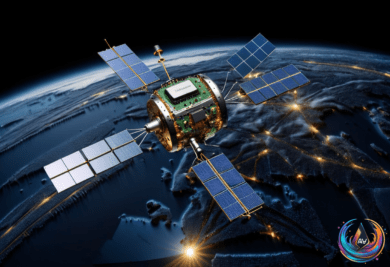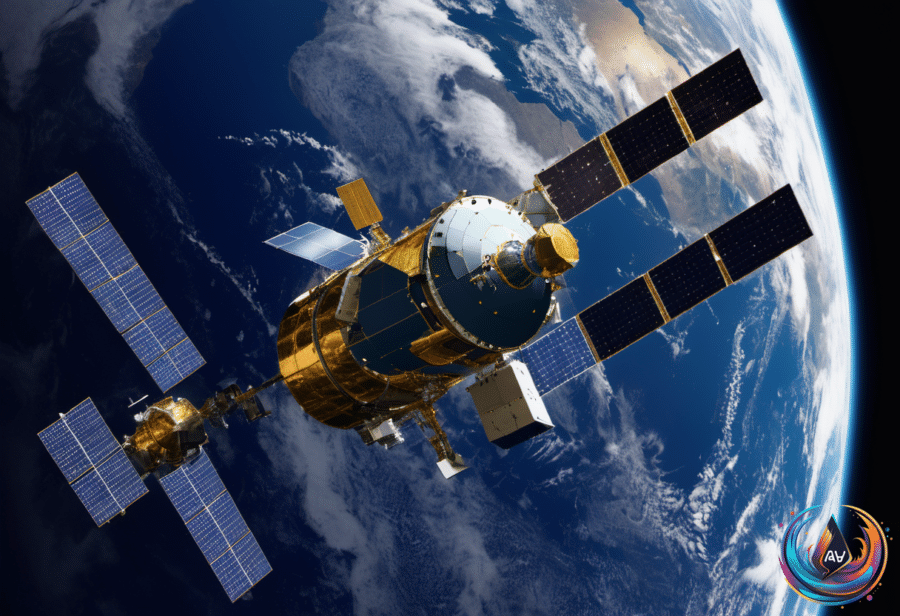
Project Suncatcher has reached its first big checkpoint: a satellite in orbit has generated an AI response using an onboard Gemma 4 model running on a data-center-class Tensor Processing Unit, or TPU.
Google announced the milestone on October 30, 2026. Travis Beals, Google’s Senior Director of Paradigms of Intelligence, called it the mission’s “Hello World” moment. Google described the result as the first-ever AI response from a data-center-class TPU in orbit.
A haiku from orbit
After the satellite completed its initial commissioning work, engineers sent its first prompt during a ground-station pass. They asked Gemma 4 to write a haiku about being in space, then waited for the spacecraft to send the result back to Earth.
As the satellite passed Svalbard, Norway, the downlinked poem confirmed that the test worked:
Blue marble below
Data streams in silent grace
Starlight feeds my core. ✨
The team followed the first response with space-themed limericks and prompts asking the satellite to report technical information about its own orbital conditions. Those telemetry prompts returned the status of the payload systems, giving engineers another way to check how the onboard hardware was operating.
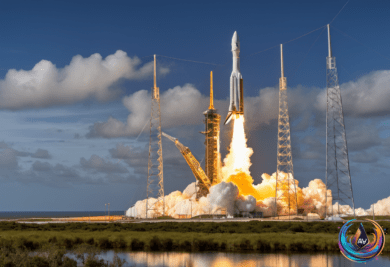
The satellite launched on October 1, 2026, aboard the Transporter-18 rideshare mission with SpaceX. Planet helped build it, and the team confirmed contact with the spacecraft after launch, saying it was operating as expected. The satellite reached orbit alongside about 100 other spacecraft on a SpaceX Falcon 9 rocket.
Four TPUs, but one at a time
Project Suncatcher’s prototype carries four Google TPUs and can generate up to 1 kW of electricity. The power demand means the spacecraft can operate only one TPU for about 20 minutes at a time, a limit that shapes how engineers run tests in orbit.
Over about three weeks, the team worked through a commissioning checklist that included powering up the host system and TPU trays, checking spacecraft subsystems, and running early machine learning tests. That process prepared the satellite for the prompt that produced the first haiku.
The mission is not only a demonstration of an AI model writing poetry from space. Google designed it to gather in-orbit data on how TPUs handle the physical stress of launch, along with the radiation and thermal extremes found in space.
Before launch, engineers tested whether the hardware could survive the trip to low Earth orbit. The rocket ride lasts about 10 minutes and can expose the spacecraft to sustained acceleration loads of up to 10 times the force of gravity.
Why put AI hardware in orbit?
Google announced Project Suncatcher on November 4, 2025, as a long-term research moonshot. The idea is to explore whether an interconnected network of solar-powered satellites equipped with TPU AI chips could one day scale machine learning in space.
In a behind-the-scenes engineering post published September 24, 2026, Google said satellites in low Earth orbit can access near-constant sunlight and generate up to eight times more solar power than on Earth. The company also said multiple satellite constellations could eventually link together, allowing them to manage larger AI workloads while in orbit.
That plan depends on more than solar power. The satellites must keep their processors working through radiation and temperature changes, and they must exchange data fast enough to support useful workloads. Google’s initial research, shared in a preprint alongside the 2025 announcement, covered satellite constellation design, control, communication, and early radiation-testing results for its TPUs.
Radiation presents a specific computing problem. It can cause “bit flips,” which change stored values in computer memory and can corrupt data without triggering normal monitoring tools. Tests on the ground suggested that radiation would have a minimal effect on inference workloads, while training a model could face more trouble.
Google’s next tests will focus on how the TPUs perform under thermal stress and radiation exposure in orbit. “Verifying our TPUs can reliably execute workloads in space paves the way for our next milestone of twin interconnected satellites in 2027,” the company said.
The next step: connected satellites
The original plan called for a learning mission with Planet to launch two prototype satellites by early 2027. If the current TPUs prove capable, the next spacecraft will support higher power generation and demonstrate inter-satellite optical links.
That connected design sets Suncatcher apart from other space-based data-center ideas. Google’s plan centers on close-flying satellites that can share processing and support coherent distributed workloads, while Starcloud and Cowboy Space expect to run inference loads on individual satellites. SpaceX’s data centers are also expected to use laser links, but their satellites may orbit too far apart to share processing effectively.
The project is aimed at infrastructure that could become economical in the 2030s, not at replacing Earth-based data centers today. Its first orbital haiku is a small output, but it confirms that the basic hardware stack can receive a prompt, run a model, and send the answer home.
A peer-reviewed paper detailing the research behind the mission is now available in the journal Joule. The continuing test campaign will show whether the same system can move beyond a single response and support reliable machine learning across connected satellites.
Based on
- Project Suncatcher’s Orbiting TPU Delivers Its First AI-Generated Haiku — unite.ai
- Google’s satellite AI server transmits its first response to Earth | The Verge — theverge.com
- Google’s first data center satellite is online and writing poetry | TechCrunch — techcrunch.com
- Google announces Gemini 4 Carbon, its latest frontier AI model that you can’t use | Ars OpenForum — arstechnica.com
- Google AI gets cagey when asked who won the 2020 elections | Ars OpenForum — arstechnica.com