What happens when an actor licenses his face instead of simply performing on camera? Shortical is testing that question with Inevitable, a wholly AI-generated microdrama starring Israeli film and television star Aki Avni, and the experiment points toward a new production model for Hollywood.
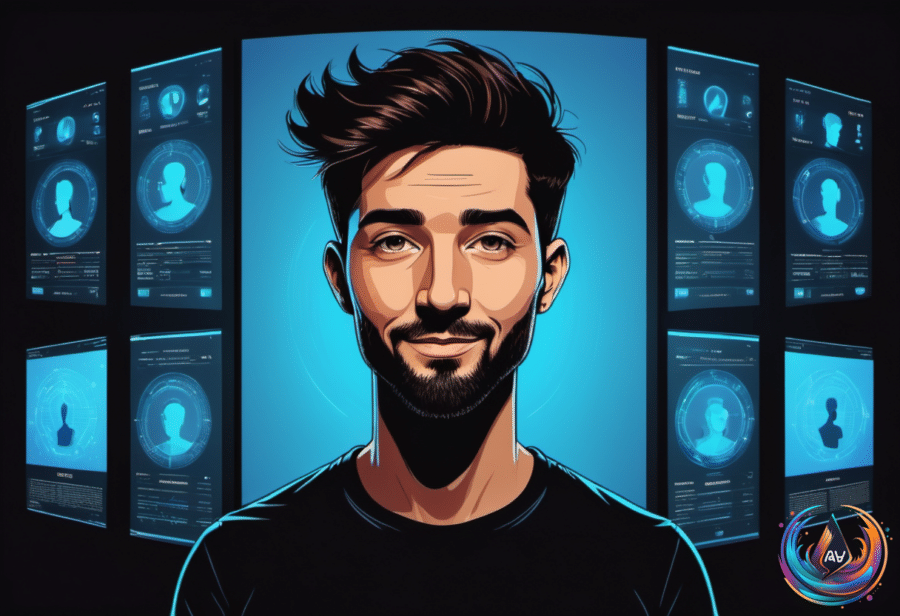
The series premiered in Los Angeles last week, with Avni appearing as a digital avatar created from his face. In the story, he plays himself and licenses his face to a film studio, triggering a chain of thriller-like antics. “Look, it’s a new era for artists,” Avni said. “AI is a new kind of art. It’s a new format. It’s always great to be the pioneer in something.”
Shortical Turns Two-Minute Drama Into a Subscription Engine
Founded last January, Shortical builds its business around bite-sized, two-minute episodes packed with soapy, melodramatic storylines that are almost always risqué romances. The platform typically gives viewers the first 7-10 episodes of a microdrama for free, then asks them to pay a small monthly fee to unlock the rest of its content.
That model has supported a steady stream of live-action romances over the past year, including “Crossing the Line with My Neighbor,” “Accidentally Married My Boss,” and “Spoiled by My Billionaire Sugar Daddy.” Now, Shortical’s homepage is covered in AI-generated content, opening a new path for a company already built around fast-moving serialized entertainment.
The reason is simple: AI content costs substantially less to produce than live action, while the profit potential is substantially higher if the company can draw an audience. Many of Shortical’s existing AI-generated programs appear to have millions of views, giving the startup a strong reason to push this format beyond a single experiment.
Guy Shimoni, Shortical’s CEO, sees AI as a way to expand the size of the stories the company can make. “One of the things that AI does is it enables smaller teams to be able to produce these movie-scale productions,” Shimoni said.
“When we were doing mobile-first live action, we were limited by budget, but now we can serve them with epic fantasies. We have kingdoms and dragons. We have superheroes. We have werewolves.”
Aki Avni’s Face Opens a New Deal for Performers
Avni has been visible in American television for years, including a stint on Fox’s 9/11-era thriller “24.” With “Inevitable,” he is trying a new arrangement: licensing his face to Shortical for AI content rather than appearing only through traditional live-action performance.
This is Shortical’s first use of a real person’s likeness. The agreement happened directly with Avni instead of through the company’s platform, and Shortical hopes the series will draw more attention to face licensing before it promotes the offering more actively after the launch.
The company is not sharing a specific figure for Avni’s contract. A Shortical representative said Avni came “on as a partner in the project,” with compensation in line with industry standards for a comparable non-AI acting role. When asked whether creators receive royalty-based compensation, Shimoni answered, “It’s a case by case [basis].”
Shortical’s broader face-licensing plan is still taking shape. Its website advertises “LICENSE YOUR FACE” and asks interested parties to submit their social media handles. The company then decides whether to offer “a contract setting out the terms” for using a person’s persona in AI-generated content.
A company representative said the “offering is still in its early days and hasn’t yet resulted in any signed contracts.” The company’s experiment with Avni is therefore both a finished production and a public test of whether other creators will surrender their likenesses for compensation.
The microdrama industry originated in China, where AI-generated content is big and face licensing is already a trend. A recent report found that microdrama firms were paying people “between US$15 to US$700 to license their facial likenesses.” Shortical is not saying how much it offers for its own deals.
AI Microdrama Moves From One Startup to a Global Race
China has the biggest microdrama audience globally, but Shimoni says most of Shortical’s viewers are in the U.S. The industry’s viewers skew heavily female, and many may watch these shows to wind down at night, collecting minor dopamine hits as they drift off to sleep.
That viewing habit creates a huge opening for creators who can deliver endless short stories, and new contests are pushing more people into the production pipeline. Vigloo has launched its second global Short Drama Festival, inviting creators worldwide, including those in the United States, to turn videos into full microdrama series. Entrants submit a video up to three minutes long, with more than $20,000 in prizes available.
Vertical Future Inc. has also opened PilotRush, a global contest for original AI-native microdrama pilots run through microdra.ma in partnership with AdArena. Entry is free, and AdArena brings a community of approximately 1,000 creators to the competition. The contest offers $5,000 across 40 winning places, while the winner may receive an invitation to a paid Season 1 deal worth up to $10,000. Entries close on Thursday, 19 November 2026, at 3:00 pm EST.
Another platform is changing the format from passive viewing to active choice. OvO TV, an AI-powered short-drama platform headquartered in Ohio, has reported millions of registered users worldwide and US$20 million in first-quarter gross revenue following its launch in early June 2026.
OvO TV credits its growth to interactive drama, where viewers influence storylines through character choices, branching narratives, and multiple endings. That approach gives audiences a more participatory role in how short-form stories develop and conclude.
The wider creative shift is visible beyond serialized drama. Ari Kuschnir, who spent more than two decades making videos for some of the world’s biggest brands, now uses AI to create hilarious videos mocking powerful technology executives. Posted on YouTube and X, his satirical creations have attracted millions of views with AI-generated tech leaders placed in bizarre situations, often through cheesy 1980s infomercials or retro crime dramas.
A decade ago, making something similar would have required a production team, several weeks of work, and a budget of about $200,000. Today, one actor’s face, a small team, and an AI production pipeline can open the door to stories that once demanded far more money.
Shortical’s “Inevitable” now stands at the center of that shift. If audiences embrace Avni’s digital performance, face licensing could move from an unusual experiment to a standard deal in the expanding world of AI entertainment.
Based on
- Is selling an AI version of your face to this microdrama startup the future of Hollywood? — techcrunch.com
- How AI Lets Filmmaker Ari Kuschnir Make $200,000 Videos for $1,000 – Business Insider — businessinsider.com
- Vigloo Launches Global Search for Its Next Microdrama Series with Short Drama Festival 2 | Markets Insider — markets.businessinsider.com
- Vertical Future Opens PilotRush to AI Microdrama Creators Worldwide, Entries Close 19 November – USA Today — usatoday.com
- OvO TV Reports Strong Early Growth Following Launch of Its Interactive Drama Platform – USA Today — usatoday.com