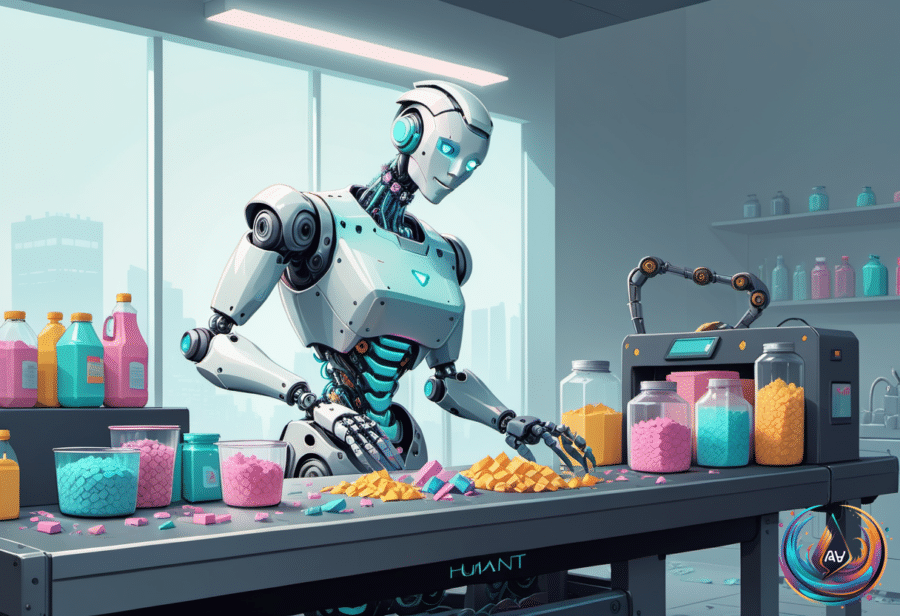
The hand remains robotics’ stubborn final exam. Dexterity is the one thing stopping AI from taking over the world—or at least everyone’s jobs—and engineers have spent years trying to replicate the anatomical marvels attached to human arms. Experts are now racing to change that.
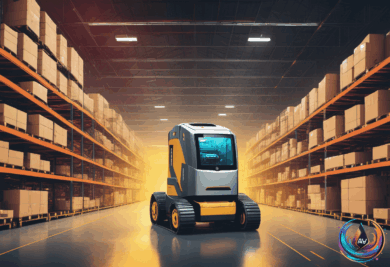
Just outside Luton, an Amazon warehouse the size of four football pitches offers a preview of the current compromise. Yellow shelving units pirouette in a digitally choreographed dance, while tubs containing a Lego Spider-Man kit, dishwasher tablets and muscle building protein powder travel along conveyor belts toward a human worker.
The shelving unit stops at a workstation, where the worker stacks each item. Amazon calls this the “symphony of people and technology” behind its success, a delivery shaped by negative publicity about working practices and followed by free public tours of fulfilment centres that began a decade ago.
The guide lists competitive rates of pay, pensions, dental cover and flexible working options. The delivery is somewhat robotic: “You will see robots and humans working in harmony.” Everything is designed to maximise what humans and robots do best, including “working without getting tired”.
Almost every judgment call in the warehouse comes from a computer. A light marks the exact spot on a shelf for each item, while the system decides which box size to use and precisely how much tape should seal it.
The human beings are here to provide the hands, not the brains. So far, no hardware or software can rival a human hand, leaving people to handle the physical work that automated systems still cannot complete.
Why dexterity is so difficult
Humanoid robots, often called “embodied AI”, have made great strides over the past decade. China’s recent five-day robot Olympics showed that progress, but producing one machine that can pack a shelf, tighten a bolt and pick a raspberry remains surprisingly difficult.
Replicating the breadth of function in a human hand is one of robotics’ biggest remaining challenges. Elon Musk put the problem plainly: “Human hands have evolved to be this incredibly sophisticated machine. Your hand is actually a remarkable thing,” and “In order to create a robot that can be a generalised humanoid, you must solve the hands problem.”
The work under way at the Hubei Humanoid Robotics Innovation Center in Wuhan shows why solving it requires more than a convincing demonstration. In the top floor of the three story building, more than 100 computer science and engineering graduates wear gloves and outfits fitted with motion and tactile sensors while cameras record their movements.
One graduate pours water into a jug. Another places cutlery and chopsticks into a container, while a third unscrews a flashlight, removes its battery and replaces it. The movements are slow, meticulous and repeated over and over again because the recordings become training data for humanoid robots.
“It was fun at first,” says 22-year-old intern Mei. “It gets a little boring in the middle.” The reward arrives when the model works: “But it’s such a proud moment when we get the model trained.”
Another graduate uses a remote control beside a humanoid robot, moving his hand while the machine copies the motion. “We need to run this hundreds or thousands of times,” he says. “We have only completed 500 iterations so far.”
The job question arrives with the robots
China produces nearly 1 million engineering graduates each year, compared with about 140,000 young engineers entering the United States job market annually. That pool of workers, paired with a government pledge to invest more than £100bn in robotics and high-tech industries over the next two decades, gives the effort a scale that is difficult to ignore.
Tesla halted production of its Model X and Model S cars so factories could focus on producing Optimus humanoid robots. At the G20 summit in September, Musk declared that within 10 years “there will be well over a billion humanoid robots, and productivity of a robot will be five-times that of a human.”
China’s goals are framed less as a productivity fantasy and more as a response to pressure. The country has an aging, shrinking population, one of the fastest demographic shifts playing out anywhere in the world, creating urgency around manufacturing, logistics, retail and healthcare.
Prof. Jiyin Cao, who runs the Hubei centre, says, “Our main goal is for these robots to serve humans in household and industrial settings.” The plan reaches from factory workshops and homes to nuclear energy sites, elderly care services and personal assistants: “I believe future robots will be deployed across all industries.”
That future still faces the mess of ordinary life. “Home environments are unstructured, far from simple,” Cao says. Early robots work in “simple, fixed, structured settings”, but every household is unique. A home robot could arrive in three to five years, she says—or it could take 10 years.
The timescale remains unsettled, but the direction does not. China is working at breakneck speed and on a monumental scale to bring humanoid robots into mainstream consumer life, while ensuring Chinese companies develop and manufacture them through the country’s industrial manufacturing system and full supply chain.
Until robots become dexterous, human workers remain necessary. If engineers manage to replicate human hands, then potentially no job will be future-proof—and Amazon employs more than 1.5 million people worldwide today.
“If a task could be done more efficiently by a machine, Amazon would rather leave it to a robot.” Artificial dexterity combined with artificial intelligence will be hugely consequential for humanity. The machines are not there yet, but the hands problem is being solved one repetitive motion at a time.
Based on
- ‘The doom of humanity’: will the quest to make robotic hands render us obsolete? — theguardian.com
- Opinion + AI (artificial intelligence) | The Guardian — theguardian.com
- Anthropic researcher: Most of humanity will be unemployable due to AI — thehill.com
- Robot Archive for November 2026 – Page 1 | The Verge — theverge.com
- Inside China’s relentless race to develop humanoid robot helpers and get them into our homes – CBS News — cbsnews.com