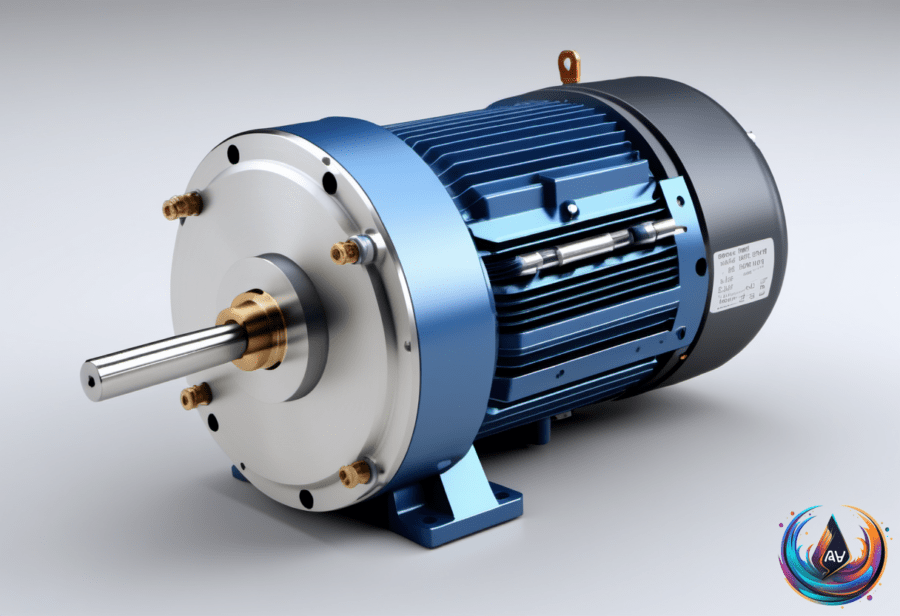
Electric motors power about half the world’s electricity. Most of these motors run inefficiently. That wastes energy and money. A UK startup named Luffy AI wants to change that. They just raised £8.1 million in a Series A funding round to do it.
Luffy AI is based in Abingdon. It was founded by two former nuclear physicists, Dr Matthew Carr and Dr Alex Meakins. They worked at the UK Atomic Energy Authority before starting this company. Their goal is to put AI models directly inside electric motors. This helps motors tune themselves for better performance.
These AI models don’t just sit in the cloud. They run inside motor control systems and variable-frequency drives. That includes things like industrial pumps, fans, and conveyors. The idea is to reduce energy waste and improve efficiency in common industrial machines.
Dr Matthew Carr, Luffy AI’s CEO, said, “AI has been transformative for language and image generation, but has yet to make a substantial impact in industry beyond predictive maintenance and dashboards.” This shows why Luffy AI’s approach is different. It embeds AI inside physical systems instead of just monitoring them.
Kate Ronayne, an investor at BGF, which led the funding round, said Luffy AI is “disrupting an industry norm that has stood for 100 years.” She highlighted that the company reduces the need for specialist engineers to set up these motors. That could save a lot of time and cost in industrial settings.
More AI Moves in Industry and Funding
Luffy AI’s raise fits a bigger trend of AI startups attracting strong investments. For example, Turing, a self-driving startup, recently raised $79 million in an extension to its Series A round. AMD Ventures joined as a new backer, and Turing now uses AMD GPUs for about 10% of its AI training.
Turing’s CEO, Issei Yamamoto, said, “We’re the ones with the most advanced tech in this field, at least here in Japan.” The company was valued at about $600 million after the funding extension. This shows how AI continues to attract major money and hardware partnerships.
AI Research and Ambitions for the Future
Yann LeCun, a leading AI researcher, left Meta in 2025 to found Advanced Machine Intelligence Labs, or AMI Labs. The company raised more than $1 billion earlier this year. LeCun is working on a new AI system called Joint Embedding Predictive Architecture, or JEPA.
LeCun said AMI Labs will spend the rest of this year refining their AI model. They hope to apply it in industrial settings next year. He also shared a vision for AI’s future, saying, “Eventually down the line we’ll have sort of general generic intelligence systems that can be applied to just about anything in the world with minimal training or fine tuning.”
LeCun added, “Our interaction with future AI systems—even if they are smarter than us—is going to be like the interaction between a captain of industry or a political leader with their staff of assistants—many of whom are smarter than they are.”
Global AI Developments and Market Moves
In China, a startup named Zhipu launched its AI model GLM-5.2 last month. Their AI service is called Z.ai. On the semiconductor side, SK Hynix plans a $29 billion stock offering this week. These moves show how AI’s impact is global and spans both software and hardware industries.
Back in the UK, Luffy AI’s work could lead to big energy savings. Since electric motors consume half the world’s electricity, even small efficiency gains matter. Embedding AI inside these machines might be the key to reducing waste and costs in many industries.
With strong funding and fresh ideas, startups like Luffy AI are pushing AI beyond software. They are making it a part of everyday technology that powers the world.
Based on
- Luffy AI raises £8.1M to put self-tuning AI inside the world’s electric motors — thenextweb.com
- Self-driving startup Turing gets AMD backing and adopts AMD GPUs – The Japan Times — japantimes.co.jp
- Artificial intelligence: Yann LeCun works on more flexible AI — bbc.com
- SK Hynix: $29 billion stock offer going live this week will test investor appetite for AI stocks | Fortune — fortune.com
- A cheap Chinese model is catching up with U.S. AI giants on their home turf – The Japan Times — japantimes.co.jp